By Staff Reporter
ISLAMABAD: Pakistan offered Saudi Arabia tax-free space to store oil on its territory, pitching itself as a hedge against disruption in the Strait of Hormuz and the Red Sea.
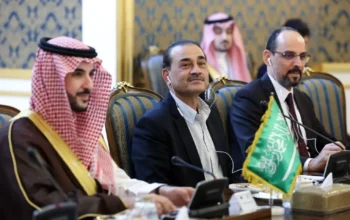
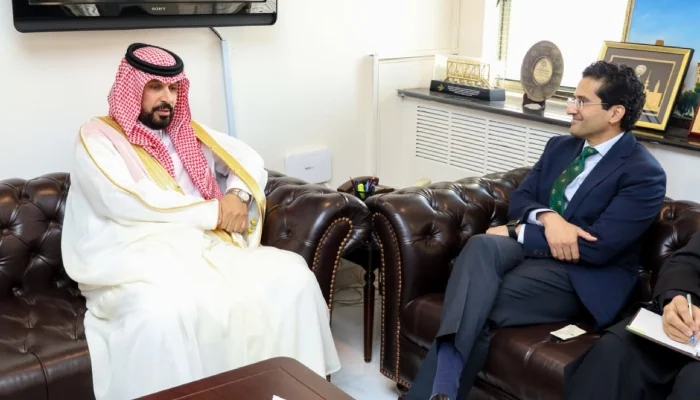
Petroleum Minister Ali Pervaiz Malik put the proposal to Saudi Ambassador Rajeh bin Tami Al-Baqami on Friday, the Petroleum Division said. The two sides agreed to deepen cooperation in oil storage, refinery upgrades, crude and liquefied petroleum gas purchases, and minerals. The statement gave no volumes, investment figures or timelines.
Pakistan approved a bonded-storage policy in August that lets foreign suppliers hold crude and fuel in the country without paying duties or taxes until the products are sold locally. They can re-export the stocks without prior approval. Malik said the framework was modeled on hubs such as Fujairah and Singapore.
“Under this framework, Saudi companies can establish commercial oil reserves in Pakistan without local tax liabilities, offering an opportunity to diversify maritime transit risks associated with the Strait of Hormuz and Bab al-Mandab while facilitating access to Asian markets,” the ministry said.
The policy carries conditions. Pakistan’s oil regulator gets first right of refusal, with two days to decide, on the final 10% of bonded stocks. The government can also take privately owned stocks during a declared emergency, including war or a collapse in domestic supply, paying the international market price in foreign currency within 15 days. Suppliers face no minimum-stock requirement.
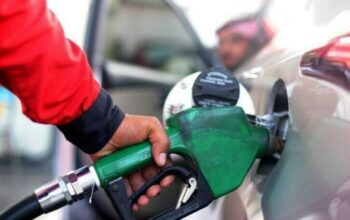
Pakistan has no strategic petroleum reserves, and the US-Iran war has exposed that. Iran has blocked most shipping through Hormuz since the conflict began in late February, and Prime Minister Shehbaz Sharif ordered a four-day government workweek and school closures in March to save fuel. Brent crude traded near $117 a barrel on Friday and was on course for a fourth straight monthly gain after a tanker was struck in the strait. Traders are also weighing whether the US resumes strikes on Iran after next week’s midterm elections. Yemen’s Houthis said on Thursday they attacked Saudi energy sites, including the Ras Tanura and Rabigh refineries and the Abqaiq processing facility, adding to threats against Red Sea shipping.
Malik told the ambassador that storage in Pakistan would give Riyadh more flexibility in managing supply routes and reaching regional markets. He said Pakistan plans a petroleum storage and refining complex at Hub in Balochistan with guidance from Technip Energies UK. It would be able to take Very Large Crude Carriers and “strengthen Pakistan’s potential as a regional energy corridor serving Central Asian and Chinese markets,” the statement quoted him as saying. He said the project has the backing of the prime minister and the chief of defence forces.
Malik also pitched Saudi investment in Pakistan’s refinery upgrade program, which aims to modernize plants and move the country to Euro-5 fuel standards. He thanked Saudi authorities for prioritizing crude cargoes to Pakistan at the Red Sea port of Yanbu. He said he discussed with Saudi Aramco larger crude purchases and dedicated LPG shipments, in view of an expected rise in domestic gas demand this winter.
Malik said the Saudi embassy in Islamabad has introduced same-day processing of visa applications for Pakistani citizens. Pakistan waived visa requirements for Saudi nationals in April 2025.
Al-Baqami, a retired major general who took up the post this year, thanked Pakistan for its longstanding support and said the two countries stand together in all circumstances, the ministry said. Pakistan and Saudi Arabia signed a mutual defense agreement in September 2025. Both sides said that partnership underpins broader regional stability and economic cooperation.
An earlier version of Pakistan’s bonded-storage policy, formulated in 2023, drew no takers, with investors worried about exposure to local taxes, Arab News reported. Officials told the newspaper that Saudi Aramco, Kuwait Petroleum Corp., Vitol Group and Trafigura Group are among the companies interested in building storage under the new rules. Reuters reported that Pakistan shared the framework with Aramco, Abu Dhabi National Oil Co., Kuwait Petroleum, QatarEnergy, PetroChina, Vitol, Trafigura and tank operator Vopak. Malik has said building reserves is “easier said than done” for a country in an International Monetary Fund program. Sharif directed authorities in July to increase strategic reserves.
Al-Baqami later met Commerce Minister Jam Kamal Khan. “We discussed expanding bilateral trade, investment, agricultural cooperation and industrial partnerships,” Khan wrote on X.
Malik invited Saudi Vice Minister of Mining Khalid al-Mudafier to the Pakistan Minerals Investment Forum, scheduled for Nov. 12-13 in Islamabad.
Copyright © 2021 Independent Pakistan | All rights reserved