By Staff Reporter
ISLAMABAD: Pakistan is working on a system that would direct electricity relief to poor households rather than to everyone consuming up to 200 units a month, after wealthier consumers installed solar panels to push their grid usage under the cutoff, Energy Minister Awais Ahmad Khan Leghari told the Senate on Tuesday.
The government is also trying to raise the existing threshold to 250 units, Leghari said, though he gave no timeline for either change. The plan would focus relief on people living below the poverty line.
About 20 million consumers now fall in the up-to-200-unit category, most of them using solar power, Leghari said. He said tariff slabs need to be set more carefully to avoid a repeat of the problem. The minister previously put the number at about 18.3 million. In May he said the subsidy for such households would stay in place.
The cliff at 200 units has been a source of public anger for more than a year. Senator Abid Sher Ali told the chamber that bills have become unaffordable even for protected consumers. “If a consumer uses just one unit more than 200 units, the electricity bill suddenly doubles,” he said. He also asked whether the cost of power theft at distribution companies was being passed on to poorer customers. A National Assembly committee agreed in July 2025 to take up the gap in charges between the 200th and 201st unit. Only two members were present on the government benches during Tuesday’s proceedings.
Leghari also addressed the finances of the power sector. He said circular debt, the backlog of unpaid bills that runs through the power chain, had fallen to Rs1.67 trillion. The government has set a target of eliminating it over the next four years, he said, and the debt-servicing surcharge tied to it would be abolished in the same period.
The Power Division told the National Assembly this month that the stock stood at Rs1.675 trillion on June 30, 2026. That is slightly above the Rs1.614 trillion recorded in June 2025, but well below the February 2025 peak of Rs2.531 trillion. The government raised Rs1.225 trillion from 18 commercial banks in September to contain the debt.
Leghari said the ministry received Rs1.18 trillion in budget support when the government took office. The figure has fallen to Rs700 billion this year. He said losses at distribution companies, known as DISCOs, have declined every year, but he acknowledged that the benefits have not yet reached consumers.
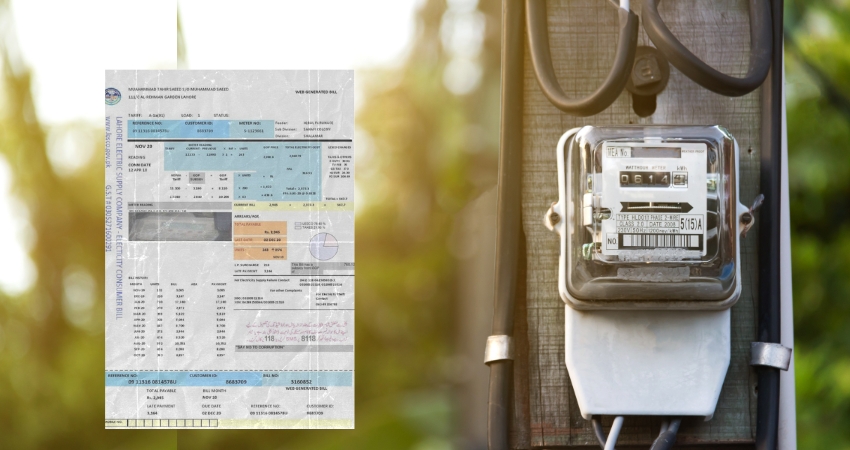
Billing practices at the DISCOs are a separate pressure point. Last week Leghari took notice of what he called excessive and unjustified detection bills, which companies use to recover estimated losses from slow meters, theft or technical faults, and warned that no incorrect or arbitrary charge would be levied on any consumer. In a statement, the Power Division ordered all DISCOs to issue detection bills only through a centralized online portal run by the Power Information Technology Company, or PITC. It banned manual and discretionary bills by field staff and sub-divisional officers outright. Issuing a manual bill will be treated as severe misconduct, punishable by disciplinary proceedings and major penalties. DISCO boards and their customer services committees have also been told to review detection bills every month.
The Power Division will submit proposed amendments to the Consumer Service Manual in the coming days, with the aim of tying each process to defined timelines.
Copyright © 2021 Independent Pakistan | All rights reserved