By Staff Reporter
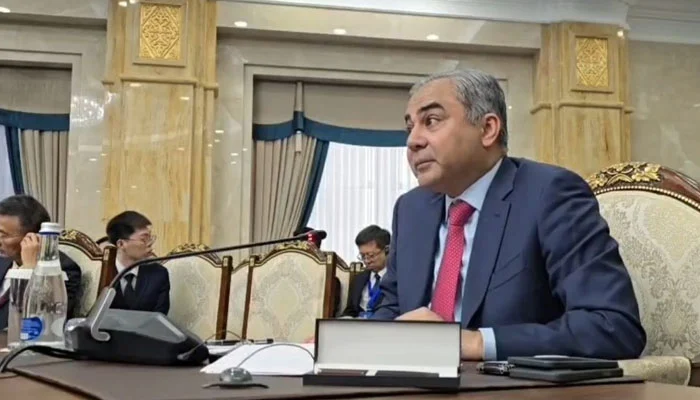
ISLAMABAD: Interior Minister Mohsin Naqvi arrived at a gathering of the Shanghai Cooperation Organisation’s security ministers in Oslo on Friday carrying two distinct, and increasingly urgent, messages: that the region’s governments must forge a unified front against a new generation of technologically sophisticated threats — and that the diplomatic window for ending a dangerous escalation between the United States and Iran was narrowing fast.
Speaking at a special session of SCO interior and public security ministers, Naqvi described a security landscape he said had grown “serious and complex,” one in which terrorist networks and criminal organizations were no longer merely adapting to the digital age but exploiting it — deploying artificial intelligence, encrypted online platforms and cryptocurrency transactions to finance operations, recruit followers and move money across borders with an agility that national law enforcement agencies have struggled to match.
“Our challenges are common, so our efforts must also be collective and coordinated,” Naqvi told the assembled ministers. “The common goal of our joint efforts is a peaceful and secure SCO region.”
The address placed Pakistan firmly within the rhetorical tradition of the Shanghai Spirit — the bloc’s founding framework of mutual trust, sovereign equality and non-interference — while pressing its member states to move beyond declarations and build the kind of real-time intelligence-sharing and joint forensic capacity that such threats demand. Naqvi specifically called for more robust engagement through the SCO’s Regional Anti-Terrorist Structure, known as RATS, which he said should serve as a clearinghouse for joint threat analysis and a coordinated campaign against online radicalization.
On narcotics, he issued a pointed warning: the illegal drug trade, he said, remained one of the primary engines of terrorist financing across the region, and interdiction efforts fragmented by national borders were no match for trafficking networks that operated across them with impunity. Pakistan’s Anti-Narcotics Force, he said, was actively engaged in SCO counter-narcotics programs and prepared to deepen those partnerships.
Naqvi also pressed for tighter coordination on border security — specifically around forged travel documents and human smuggling — and described Pakistan’s overhaul of its anti-money laundering regime as a model for the kind of financial monitoring infrastructure the region needed to choke off illicit flows. No single country, he argued, could confront transnational threats working alone.
Pakistan, he noted, had paid a steep price in making that case credible. He cited what he called the country’s “unparalleled sacrifices” against terrorism, and described the National Action Plan — under which Islamabad has worked to tighten intelligence coordination, harden border management and enforce AML standards — as evidence of sustained institutional commitment, not merely diplomatic posture. Pakistan, he announced, would host the SCO summit in Islamabad in 2027.
US-Iran Crisis
On the sidelines of the Bishkek gathering, Naqvi sat down with Iranian Interior Minister Eskandar Momeni for talks that Pakistan’s interior ministry described as focused on bilateral relations and the deteriorating regional situation. The exchange came one day after Islamabad issued a public condemnation of Iranian drone and missile strikes on Kuwait and Bahrain — attacks that Pakistan warned were eroding the fragile diplomatic scaffolding erected over months of painstaking back-channel work.
“Both interior ministers stressed the need to continue diplomatic efforts consistently to achieve lasting peace in the region,” the ministry said in a statement.
The meeting underscored the peculiar position Pakistan now occupies in one of the world’s most volatile diplomatic crises. Since fighting between U.S. and Iranian forces erupted in late February, Pakistani officials have worked to keep lines of communication open between Washington and Tehran, shuttling proposals and relaying messages at senior levels. That effort helped produce a ceasefire on April 8 — a tenuous arrangement that has largely held, even as both sides have continued to exchange sporadic strikes.
Naqvi himself has traveled to Iran in recent weeks for high-level meetings, part of a pattern of engagement that Pakistani officials have described as a sincere mediation effort rather than a play for regional influence.
The peace talks, however, have stalled. The central sticking points — Iran’s uranium enrichment program and the status of the Strait of Hormuz, which Tehran closed in the immediate aftermath of joint U.S.-Israeli strikes on the Iranian capital — have proved intractable, and a round of high-level talks in April brokered in part by Islamabad ended without a breakthrough.
Copyright © 2021 Independent Pakistan | All rights reserved