By Staff Reporter
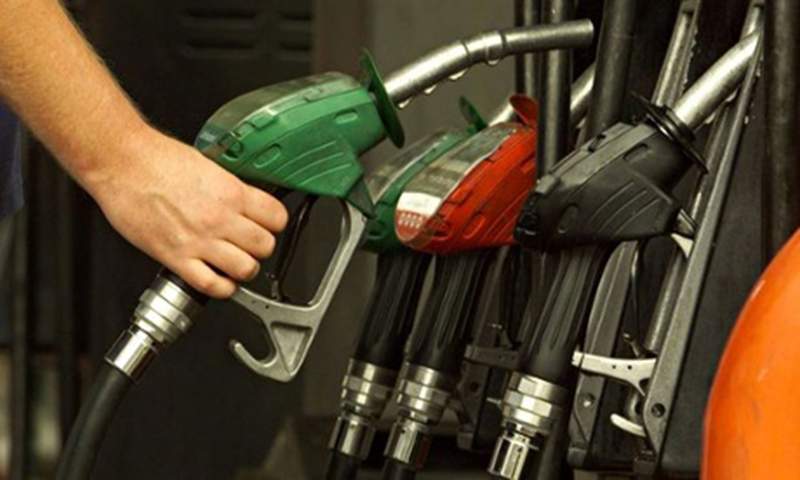
ISLAMABAD: Pakistan increased the price of petrol and lowered that of diesel for Tuesday, the latest in a string of daily adjustments that have kept fuel costs far above pre-war levels and strained household budgets.
The government raised petrol by 88 paisas to Rs393.64 a liter and cut high-speed diesel by Rs1.88 to Rs397.76, according to a Petroleum Division notification issued on Monday. Taxes and duties remain at Rs114 a liter on petrol and Rs100 on diesel, or roughly 29% and 25% of the pump prices.
The revision follows increases of Rs2.10 for petrol and 30 paisas for diesel covering Oct. 3 to 5. Based on notified prices, petrol is up Rs6.24 a liter since Oct. 1, when it was Rs387.40, while diesel is down Rs2.59 from Rs400.35.
Petrol was cut by 14 paisas and diesel by Rs1.89 for Oct. 1. The following day petrol rose Rs3.26 to Rs390.66, while diesel fell Rs1.01 to Rs399.34.
Month on month
Local media reported petrol at Rs342.79 on Sept. 1, with a September peak of Rs393.75 on Sept. 22. Monday’s notified price is 11 paisas below that level and about 15% above the start of September.
Prices remain well off their highs. Petrol peaked at Rs458.41 on April 3, and diesel at Rs520.35 the same day. Today’s levels are about 14% and 24% below those peaks. They are still far above where they stood when the US-Iran war began on Feb. 28. Diesel was then near Rs281 and petrol was around Rs266 in early March, so both are up roughly 40% to 48%.
How the system works
Petroleum Minister Ali Pervaiz Malik announced on July 17 that prices would be set daily instead of weekly, after renewed hostilities between Iran and the US caused swings in international markets. The cabinet and Prime Minister Shehbaz Sharif gave the Oil and Gas Regulatory Authority responsibility for the daily calls, based on global trends. Weekly revisions had been the norm since early March, when the government also began conservation measures over fears of supply disruption. In April it announced targeted relief for subsidized fuel.
The stakes are broad. Petrol is used mainly by private transport, rickshaws and two-wheelers, so price changes hit the middle and lower-middle classes. Diesel powers heavy transport, power plants and large generators, so its price feeds into the cost of goods. Petrol and diesel are the main revenue earners, with monthly sales of about 700,000 to 800,000 tonnes, against roughly 10,000 tonnes of demand for kerosene.
Relief and austerity
On Sept. 13, Sharif announced a relief scheme offering Rs100 off each liter of petrol for motorcycles, three-wheeler rickshaws and cars of up to 800cc. It is expected to reach about 11.8 million people. Some 10 million two-wheeler users and 800,000 three-wheeler users would get relief on 20 liters a month, a maximum of Rs2,000 each. A further one million owners of small cars would get relief on 30 liters, worth up to Rs3,000.
Four days later, the Cabinet Division reintroduced austerity and fuel-conservation measures with immediate effect. Shops, markets, malls, bazaars and grocery stores must close by 9 p.m. daily. Marriage halls and other event venues must close by 10 p.m., and restaurants and food outlets may stay open until 11 p.m. Takeaway and home delivery are exempt. Fuel allocations for official vehicles have been cut by 50% for three months.
Pakistan imports most of its petroleum needs, so shifts in global crude feed quickly into pump prices. The main drivers are OPEC+ decisions, Middle East conflict, sanctions on producers and disruption to shipping lanes, including the Strait of Hormuz and the Red Sea.
Oil edged lower on Monday. Brent futures fell $1.10, or 1.08%, to $101.15 a barrel by 11:59 a.m. in New York, and West Texas Intermediate dropped 89 cents, or 0.98%, to $90.22. Prices were supported by higher Middle East crude exports and a G7 agreement on Friday to release 100 million barrels of diesel and crude from emergency reserves. Reports said regional exports have risen above pre-war levels despite tanker attacks near Hormuz.
Risks remain high. Yemen’s Houthis said they fired missiles and drones at Saudi Aramco facilities in Riyadh and Khurais, and the Saudi-led coalition called the claims misleading. Iran’s parliament speaker said Hormuz would stay closed until Washington meets seven conditions.
“A truce in the Middle East remains elusive, and renewed hostilities between Saudi Arabia and the Iran-backed Houthis will ensure that attacks on energy infrastructure and vessels will continue, keeping the geopolitical risk premium at an elevated level,” said Tamas Varga, an analyst at PVM Oil Associates.
Copyright © 2021 Independent Pakistan | All rights reserved