By Staff Reporter
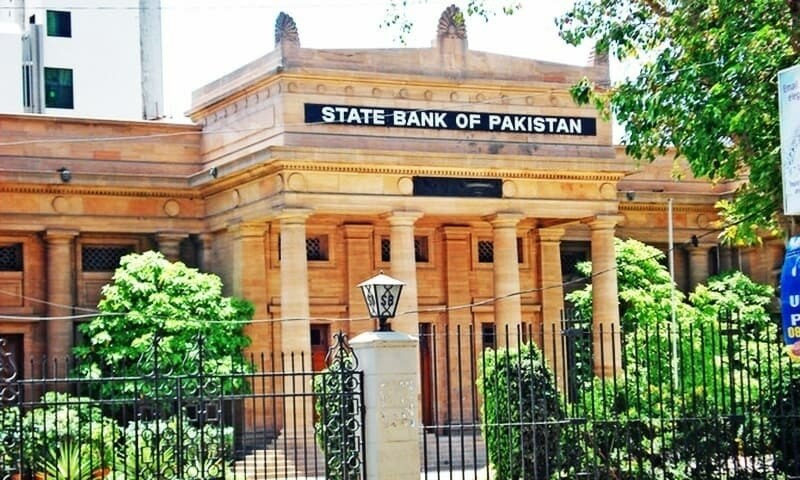
KARACHI: The State Bank of Pakistan is expected to raise its benchmark interest rate on Monday for the second time this year, with most analysts forecasting a half-point increase to 12% and some bankers arguing for a full point to contain inflation that has run above 10% on costlier oil imports tied to the Middle East war.
The central bank’s Monetary Policy Committee meets on Monday, with the policy rate at 11.5%. A Topline Securities survey found 61% of respondents expect an increase, 54% of them a half-point move and 7% a full point, while the remaining 39% expect no change. AL Habib Research puts the odds of a 50-basis-point hike at 54%, against 39% for a hold, 6% for a 100-basis-point move and 1% for a quarter-point increase. Topline, Optimus Capital Management and Foundation Securities are among the brokerages forecasting a move to 12%.
Analysts and bankers said policymakers are caught between defending price stability and protecting a recovery in growth that the government has been counting on.
“I am sure of a 50bps increase in the interest rate, but the market requires a 100bps hike to tame rising inflation,” said Rashid Masood Alam, a senior banker. He said the prospect of US attacks on Iran is another risk that may push inflation higher and strengthen the case for tightening.
The oil backdrop has worsened since the committee last met. Brent crude settled at $116.72 a barrel on Friday, up about 6% on the week. The price is at its highest in about six months, on fears of renewed US strikes against Iran and continued attacks in the region, with the war nearing its eighth month. Houthi attacks on Saudi energy facilities and an evacuation order for Aramco staff in Dhahran added to Friday’s jump.
Inflation has been well above the central bank’s 5% to 7% target for most of this year. Consumer prices rose 10.3% in September from a year earlier, down from 11.15% in August, and first-quarter inflation for the fiscal year averaged 10.2%, compared with 4.3% a year earlier. Prices have risen at double-digit rates in five of the past six months. Real interest rates are thin: the ex-post rate sits below its historical average of about 2.5%, which means policy is less restrictive than usual. Foundation Securities estimates a half-point hike would lift it to about 2.5% on its October inflation forecast, from roughly 1.2% in September.
A report from Growth Securities projects headline inflation of about 10% in October, with the national consumer price index up 1.5% from September. That compares with a 1.7% monthly rise in October last year, when annual inflation was 6.2%. Average inflation for the first four months of the fiscal year is seen at 10.2%, against 4.8% a year earlier and above the government’s 8.9% forecast for the full year.
The report points to fuel, power and food. The average petrol price is put at 396.06 rupees a litre, up 5.5% on the month and 48.3% on the year, which brokerage expects to lift the transport index by 0.15% to 0.20%. Higher electricity charges and a projected 6.2% monthly rise in LPG prices are seen pushing up the housing index. The food index is forecast to rise 0.25% to 0.30%, led by increases of 10% in wheat, 14% in chicken, 11% in gram pulses and 5% in garlic.
Analysts said real interest rates turned positive in June and should reach 1.5% in October, compared with 1.2% in September. They expect inflation to stay between 9% and 10% through March 2027 if average fuel prices hold between 390 and 400 rupees a litre, with the fiscal-year average at 9% to 9.5%. If fuel prices stay elevated, they expect the committee to raise rates by 50 to 100 basis points.
The case for patience rests on Pakistan’s external position. Mohammed Awais Ashraf, director of research at AKD Securities, argues that robust remittances, improving exports, record-high foreign-exchange reserves and a contained current account give the central bank room to hold. He cites a $3 billion Eurobond sold at record-low spreads and a slowdown in large-scale manufacturing as additional support for no change.
Ashraf nonetheless raised his fiscal 2027 inflation forecast to 9.1%, on an oil assumption of $96.3 a barrel versus $72.5 before. He kept his fiscal 2028 forecast at 6% and pushed the start of monetary easing back to April 2027 from October 2026, citing prolonged high oil prices and a larger-than-expected rise in wheat prices. He expects real rates to average 3.4% over the next 12 months, assuming normal rupee depreciation and a gradual normalisation of oil prices through February 2028.
Others say growth gives the committee cover. Economic activity expanded 2.8% from a year earlier in 3Q26, after a 0.6% contraction in 2Q26, which analysts read as a sign the economy can absorb tighter policy. A broadly stable rupee and rising dollar buffers leave room to stay on hold, they added, but above-target inflation and rising inflation expectations make a stronger case for tightening.
Faisal Mamsa, chief executive of Tresmark, favors the smaller move. “A 50bps hike looks like the sensible middle ground. Enough to acknowledge the changing risks, without unnecessarily damaging growth,” he said. A full-point increase would raise borrowing costs for the government and private sector with limited additional benefit, he said, adding that “Pakistan has become better at maintaining stability, but we also need to find a way to grow without losing it.”
Business groups want the opposite. Saleem Mukati, chairman of the Pakistan Chemicals and Dyes Merchants Association, said raising rates “in the name of controlling inflation would not prove effective in any way” and that traders and industrialists bear the burden. The Korangi Association of Trade and Industry and the SITE Association of Industry have also called for single-digit rates.
The committee held the rate at 11.5% on Sept. 14, in a seven-to-ten member majority decision. It said then that the conflict had pushed up global commodity prices, prolonged supply-chain disruption and raised uncertainty. Headline inflation had climbed to 11.1% in August from 9.2% in July, with core inflation at 8.7% and consumer and business inflation expectations rising. The committee expected inflation to ease gradually toward the upper end of its target range by June 2027 but warned that risks to that path had risen significantly, citing volatile commodity prices, electricity and gas tariff changes, supply disruptions and food-price swings from worsening El Niño conditions.
The bank raised the rate by 100 basis points to 11.5% in April, its first increase in almost three years, after a surprise half-point cut in December. Other major central banks have also tightened, according to analysts, and the International Monetary Fund expects global inflation of 4.7% in 2026 and 4.1% in 2027.
The committee’s next scheduled meeting after Monday is Dec. 14.
Copyright © 2021 Independent Pakistan | All rights reserved