By Staff Reporter
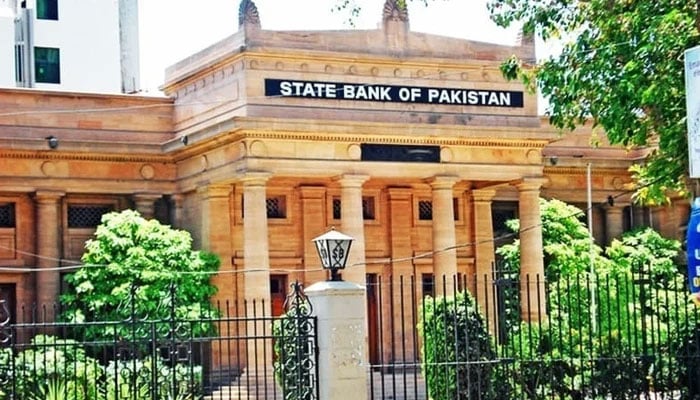
KARACHI: Pakistan’s central bank is all but certain to leave its benchmark interest rate unchanged next week, as a resurgence in global oil prices tied to the widening conflict between the United States and Iran forces policymakers to shelve any near-term plans for further easing.
Some 97% of respondents in a survey by brokerage Topline Securities published this week expect the State Bank of Pakistan to hold its policy rate at 11.5% when the Monetary Policy Committee meets July 27, with just 3% forecasting a 100-basis-point cut. Topline itself expects a hold, as does rival brokerage AKD Securities — a rare instance of near-unanimity among analysts covering the South Asian economy.
The expected pause would extend a stretch of unchanged policy that has now lasted three consecutive meetings, following a volatile year in which the central bank first cut rates and then abruptly reversed course. The State Bank trimmed its policy rate by 50 basis points to 10.5% in December before an unexpected 100-basis-point increase to 11.5% on April 27 — a move that caught much of the market off guard. It has held there since, resisting sustained pressure from trade and industry groups for cuts of at least 200 basis points to spur growth.
What’s shifted the calculus in recent weeks is crude. Brent futures, which had slid back toward pre-war levels in June, jumped more than 3% in early July after the U.S. and Iran resumed hostilities, breaking a fragile ceasefire. The rally has continued in fits and starts since: prices touched roughly $98 a barrel in the past week, still up more than 10% for the period, even as they eased slightly on Friday on reports that Pakistan — working with China — was pushing to revive a diplomatic track between Washington and Tehran. The US carried out its 13th consecutive night of strikes on Iranian targets this week, and President Donald Trump has threatened further escalation if Tehran-aligned Houthi forces continue attacking tankers in the Red Sea, two of which were struck near Saudi Arabia’s export routes in recent days.
For Pakistan, which imports the bulk of its energy needs, that volatility feeds directly into the inflation and currency risks the central bank is mandated to manage — and explains why a rate cut once seen as likely has all but vanished from the table.
A reversal in sentiment
The shift has been swift. After Washington and Tehran signed a memorandum of understanding on June 18 that briefly de-escalated tensions and pulled oil prices lower, investors piled into bets that the State Bank would deliver cumulative cuts of 100 to 150 basis points over its next two or three meetings. Renewed fighting over the past two weeks unwound much of that positioning.
The reversal shows up clearly in Pakistan’s debt market. Six-month Treasury bill yields, which stood at 12.46% before the central bank’s previous meeting, sank to 11.30% in early July as the MoU raised hopes for easing. They have since climbed back to around 11.5% — essentially in line with the policy rate — over the past 10 days, a sign that traders no longer see a cut as imminent. Six-month KIBOR, the benchmark used to price corporate and trade loans, was last around 11.67%.
“The recent rebound in oil prices warrants a cautious approach before considering any policy easing,” Topline said in its report, citing the heightened geopolitical backdrop.
AKD Securities struck a similar note, pointing to a list of fresh risks: Iran’s re-closure of the Strait of Hormuz, threats from Houthi forces of a naval blockade targeting Saudi Arabia, and forecasts for flooding in Pakistan in the final week of July that could add further inflationary pressure. Those risks, the brokerage said, outweigh signs of economic softness that would otherwise argue for easing — including weakening leading indicators and a contraction in money supply. “We expect the SBP to maintain the policy rate unchanged at the upcoming MPC meeting,” AKD said.
Growth takes a back seat
The State Bank’s posture reflects a broader wariness about disturbing macroeconomic stability while growth remains fragile. The World Bank has projected Pakistan’s economic expansion will come in below 4% in the fiscal year through June 2027, short of the government’s own target of more than 4%.
Commercial banks have mirrored the central bank’s caution. Lenders funnelled 5.9 trillion rupees into government securities during the last fiscal year, versus just 1.4 trillion rupees to the private sector — much of it short-term working-capital financing rather than the kind of longer-term credit needed to drive investment. That imbalance has fueled complaints from industry that tight policy is starving the real economy of credit, complaints the central bank has so far resisted acting on.
Analysts see little prospect of the State Bank moving in either direction for now. A cut risks reigniting inflation just as oil prices climb; a hike would deal a further blow to already-tepid growth. That leaves a hold as the path of least resistance — a view Topline’s survey shows is shared by the overwhelming majority of market participants.
Views diverge further out
Consensus thins considerably when the question turns to the rest of the year. Topline’s survey found 49% of respondents expect the policy rate to still be at 11.5% in December, while 46% see further cuts and a small minority — 6% — expect an increase. Topline’s own house view breaks with the median: it expects the rate to fall below current levels by year-end as inflation continues to ease.
On price growth itself, Topline forecasts average inflation of 7% to 8% for the fiscal year, while AKD is notably more sanguine, projecting a drop to 5.9% from 7.1% the prior year — a call it attributes largely to disinflation in transport costs, on expectations that oil prices will ease as prospects improve for a lasting resolution to the U.S.-Iran conflict. Survey respondents were more cautious, with the largest cohort expecting inflation in the 8% to 9% range for the year.
The rupee, meanwhile, is expected to hold relatively steady. Nearly half of those surveyed see the currency trading between 280 and 285 to the dollar by December, suggesting limited concern for now that the oil shock will translate into significant currency pressure — though that assumption, like much else in the outlook, hinges on how the conflict in the Gulf evolves from here.
Copyright © 2021 Independent Pakistan | All rights reserved