By Staff Reporter
ISLAMABAD: The federal cabinet has ratified a defence cooperation agreement with Kuwait, one of several Gulf states targeted by Iranian missiles and drones during the recent war involving Iran and the United States.
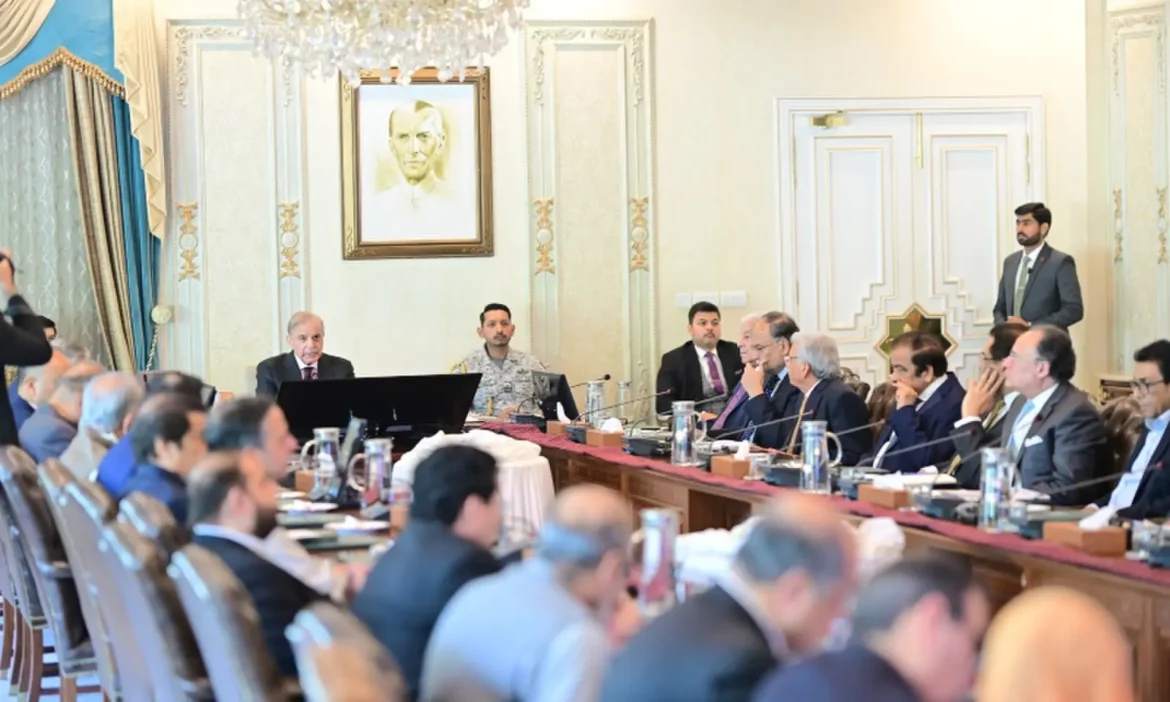
The agreement, signed on 11 June 2023, was approved at a cabinet meeting on Wednesday, according to a statement from the Prime Minister’s Office (PMO). The PMO said Kuwait completed its own ratification on 19 July. Kuwaiti media reported the ratification in late July, three years after the deal was signed.
The pact sets out a framework for cooperation between the two armed forces, covering military training and education, intelligence sharing, logistics, defence technology, research and the exchange of expertise. It also provides for cooperation on military manufacturing, electronic communications systems, scientific research, military media, and cultural and sports activities.
A joint military committee will oversee implementation, including joint exercises and official visits. The agreement runs for five years and renews automatically unless either side ends it. Both countries commit to protecting classified military information and to settling disputes through diplomatic channels.
The PMO said the agreement was intended to foster defence cooperation between “the two brotherly nations”.
Kuwait has been among the Gulf states targeted by Iranian missile and drone attacks during the escalation. Tehran has said the strikes were aimed at US military facilities hosted by Gulf countries. Kuwaiti authorities said their air defences intercepted projectiles that entered the country’s airspace.
Reuters reported in July, citing five sources, that Pakistan was negotiating an expanded defence pact with Kuwait in exchange for energy cooperation and investment. Kuwait’s foreign minister visited Islamabad on 29 July, when Deputy Prime Minister Ishaq Dar welcomed the ratification as a milestone.
Mediation role
Addressing the cabinet in televised remarks, Prime Minister Shehbaz Sharif said global oil prices had “skyrocketed” because of instability in the region.
“Pakistan is playing its role as before in restoring peace in the region,” he said. He pointed to recent contacts with Tehran and to engagements under the Makkah Joint Defence Agreement between Pakistan, Saudi Arabia and Turkiye.
That pact was signed in Makkah on 7 August. Last month, Chief of Defence Forces and Chief of Army Staff Field Marshal Asim Munir, accompanied by Interior Minister Mohsin Naqvi, visited Iran as part of Pakistan’s efforts to mediate between Washington and Tehran. On 26 October, Field Marshal Munir, Saudi defence minister Prince Khalid bin Salman and Turkish intelligence chief Ibrahim Kalin met Iranian leaders in Tehran. Iran’s foreign ministry said Field Marshal Munir had proposed the meeting. The military’s spokesman said last week that Pakistan remained “cautiously optimistic” about its mediation between the US and Iran.
The war began in late February after joint US-Israeli strikes on Iran, and a ceasefire took effect on 8 April. Pakistan’s earlier mediation led to an interim peace agreement in June but collapsed within weeks amid mutual violations, renewed military strikes, and the re-imposition of a US naval blockade.
Fuel and gas
Sharif said the government had prevented a planned Rs15-a-litre rise in petrol prices from reaching consumers, after the petroleum minister, Ali Pervaiz Malik, persuaded refineries to absorb the cost from their windfall profits.
“We will not let a common man bear this burden,” he said.
He said the fuel subsidy scheme would run until the end of December. About Rs28bn had been spent so far, he said, and 15 million people had used tokens under the scheme. Assuming an average family of five, he said, at least 75 million people had benefited.
He described the scheme as running “successfully and transparently”, with the Intelligence Bureau monitoring it. After reports of irregularities at some petrol pumps, he directed the petroleum minister to shut outlets found to be involved in malpractice.
On liquefied petroleum gas (LPG), Sharif said the era of the import “mafia” was over. Imports would be opened to competition and the locally produced quota auctioned, with the profits used to subsidise consumers, he said. He named Pakistan State Oil and Pakistan Petroleum Limited among the institutions now handling imports.
LPG supply has been disrupted by the closure of Iranian border crossings, leaving cylinders selling for twice the official rate on the open market.
The prime minister said ministers were meeting “day and night” to secure LPG, liquefied natural gas, petrol and gas supplies before winter, despite the closure of maritime routes.
Khyber Pakhtunkhwa
The cabinet approved the transfer to Governor Faisal Karim Kundi of the powers delegated to the Khyber Pakhtunkhwa chief minister for running the province’s day-to-day affairs during the emergency.
The federal government imposed an emergency and governor’s rule in the province on 11 October. That suspended the provincial government of Sohail Afridi, of the Pakistan Tehreek-e-Insaf (PTI) party. The presidential proclamation cited an extraordinary surge in terrorist incidents. The law minister said the arrangement would last six months.
The PMO said the governor would submit a monthly report to the federal government on how he used the powers. The cabinet said it hoped the province’s advisory council, led by Mr Kundi, would work for the welfare of the people and help restore peace and security.
Sharif said a Rs160bn development package for the province had been finalised.
“Security is our number one, two and three priority in KP,” he said. He praised the province’s people for resisting terrorism for decades and said a large number of militants had been killed.
He said Balochistan had also suffered long-running terrorism, which he said had been eliminated in 2018 but had resurfaced. He expressed hope it would again be comprehensively suppressed.
New banknotes and a Rs10 coin
On the finance ministry’s recommendation, the cabinet approved designs for new banknotes after a detailed briefing. Proposals were invited from artists and designers across the country, and a cabinet committee set up by the prime minister consulted stakeholders.
The new notes will carry stronger security features against counterfeiting and use modern materials meant to make them last longer, the PMO said. The cabinet also approved a Rs10 coin to replace the Rs10 note. The statement did not say when the new notes would enter circulation.
A State Bank of Pakistan deputy governor has told a Senate committee that new notes could take another year to introduce even after cabinet approval. In January, cabinet members raised questions about the proposals, including replacing the Rs10 note with a coin, and referred the matter to a committee. A report reviewed by the cabinet found that a Rs10 note lasts six to nine months on average, against 20 to 30 years for a coin.
The cabinet also ratified decisions of the Cabinet Committee on Government-Owned Institutions, taken on 26 October, and of the Cabinet Committee on Legislative Cases.
Copyright © 2021 Independent Pakistan | All rights reserved