By Staff Reporter
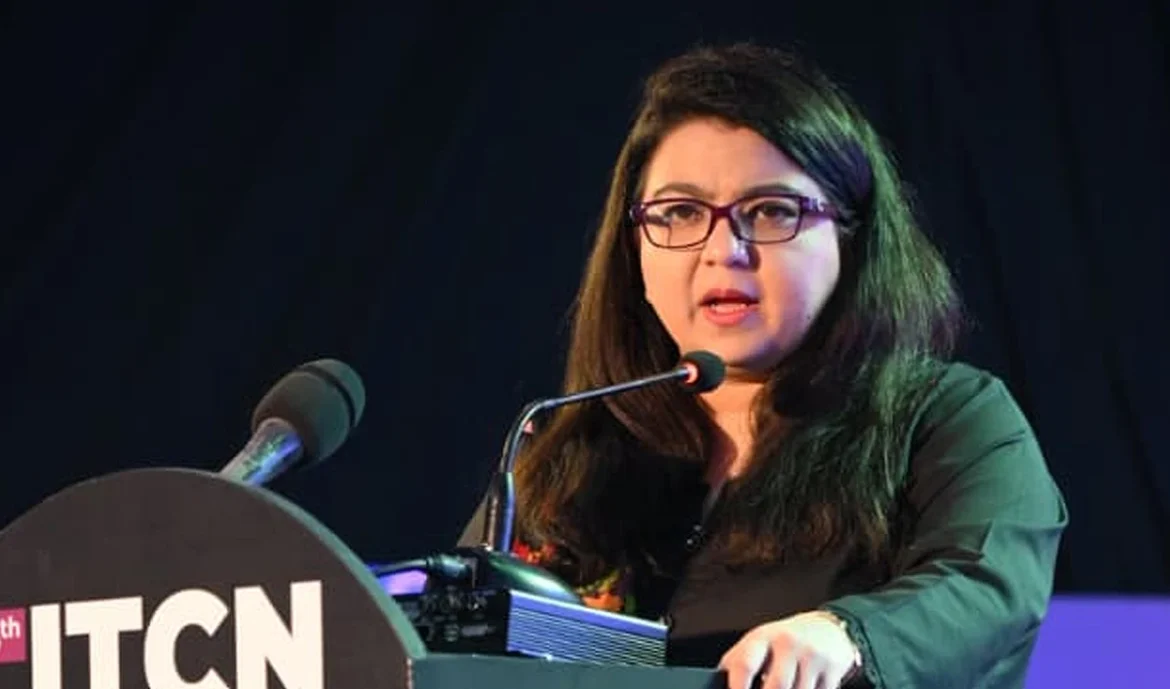
ISLAMABAD: Pakistan is in the final stages of completing rules for low-Earth-orbit satellite internet services, Information Technology Minister Shaza Fatima Khawaja said, as the government seeks to lure foreign operators and extend broadband to areas that fiber and mobile networks have struggled to reach.
“We’re in the final phases of finalizing the regulations around LEO satellites,” Khawaja said Tuesday at an Asia-Pacific Telecommunity symposium in Islamabad. She said the licensing framework for fixed satellite services, or FSS, is “almost complete,” and that the government is consulting regulators so that companies can enter “seamlessly without friction” and find a business case in Pakistan. Her ministry would provide a business-friendly environment for investors in the sector, she said.
The rules have been a long time coming. In August, the government told parliament that the Pakistan Telecommunication Authority had developed the FSS licensing framework and that draft satellite communications regulations had been prepared, with the framework expected to go before the federal cabinet shortly. It was not clear Tuesday when the cabinet would take it up.
Global operators have been waiting. Starlink, the satellite internet service run by Elon Musk’s SpaceX, received provisional registration in March 2025 to plan ground infrastructure and complete regulatory requirements. Amazon.com Inc.’s Project Kuiper has said it plans to start satellite broadband in Pakistan by the end of 2026, and local media have reported interest from OneWeb and Shanghai Spacecom Satellite Technology.
Starlink’s path remains unsettled. The PTA recently told a Senate committee that satellite operators must meet regulatory and security requirements before being permitted to operate, and that no Starlink license application was pending before it. Starlink’s Pakistan director, Sikander Naqi, said last month that, to the company’s knowledge, the framework had been finalized and that the delay was hurting underserved areas, including schools and hospitals.
Khawaja framed the push as part of a wider build-out. Three submarine cables have landed in Pakistan over the past two and a half years, she said, and work is under way on alternative routes and new connections to strengthen international capacity. The Universal Service Fund, the government-backed body that finances telecom expansion in underserved areas, has laid more than 17,000 kilometers of optical fiber, she said. It has invested about $1 billion over the years, completing 158 projects that brought coverage to about 38.4 million people.
Fiber home passes rose from fewer than 3 million in 2024 to more than 5 million, she said. The share of mobile towers connected to fiber has climbed from less than 15% to more than 19%. The government aims to lift that to at least 60% within three years, a goal she called more pressing after Pakistan auctioned 480 megahertz of spectrum in March and introduced 5G. Connecting towers to fiber is essential to delivering effective 5G, she said.
“That is our next target, that how will we fiberize at least 60 percent of our towers in the next three years,” she said.
Khawaja said the gender gap in mobile internet use has narrowed to 8% from 38% over the past two years, the fastest reduction in the world, citing the GSMA, the mobile industry body. “Our 50 percent population almost is that of women and there is no conversation of moving forward without including women in the mainstream economic agenda,” she said.
The government is also opening a route for local entrepreneurs to provide internet at the district level through Class Value Added Services licenses, she said. It is developing a model that would let people in rural areas become internet service providers. Prime Minister Shehbaz Sharif chairs fortnightly meetings to review progress on the National Connectivity Plan, she said.
She also pointed to technology-based public services. More than 10 million people have received fuel subsidies through a digital system that does not require a smartphone, she said, so that as many citizens as possible can benefit.
About 2.2 billion people worldwide still lack internet access, Khawaja said, including roughly 48% of the population in the Asia-Pacific region, above the global average. “Digital connectivity means access to education, means access to health, means survival in disasters,” she said. “It translates all the way into our national security.”
She called for a shift from expanding coverage to making connectivity affordable, reliable and useful, and urged participants at the two-day symposium to draw up measurable roadmaps with clear timelines, resources and performance indicators.
Copyright © 2021 Independent Pakistan | All rights reserved