By Staff Reporter
ISLAMABAD: Pakistan will determine in due course whether to send troops to a proposed international stabilization force for Gaza, the country’s foreign office said on Friday, emphasising that the decision would rest with the national parliament amid broader consultations.
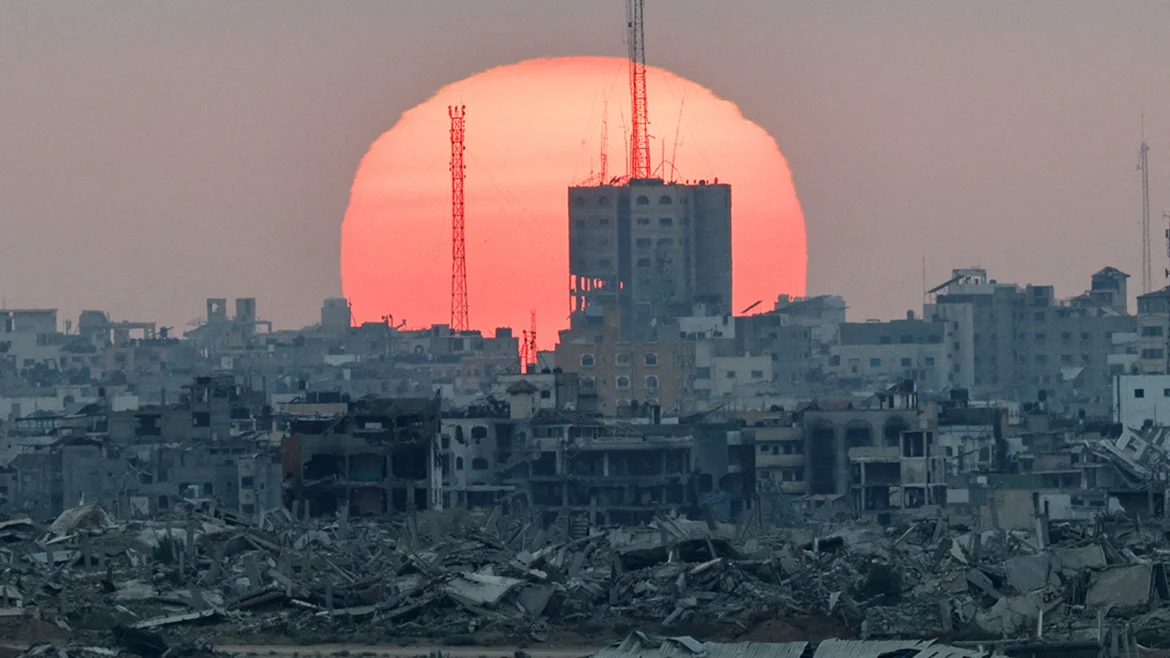
The announcement came as part of a weekly briefing by the foreign office spokesperson, Tahir Andrabi, who addressed a range of regional issues, including escalating tensions along the border with Afghanistan and Pakistan’s views on American diplomacy in South Asia. The Gaza force, envisioned as a multinational security deployment, is intended to bolster a post-conflict ceasefire, aid in reconstruction efforts and facilitate a phased withdrawal of Israeli forces from the Gaza Strip. It forms a key element of a peace framework advanced by the United States, which has sought input from several Muslim-majority nations.
Responding to queries on Pakistan’s potential involvement, Andrabi indicated that the matter remained under review at the highest levels of government. “You asked me about the Gaza stabilisation process,” he said. “The decision will be taken in due course, as and when required. Certain level of leadership has stated that the decision will be taken with the advice of the government. That is also a fact.”
Shifting to the volatile border with Afghanistan, Andrabi highlighted a recent clash in Chaman, Balochistan, earlier that day, describing it as an unprovoked attack that has hindered efforts to resume trade crossings. “These are the kinds of incidents which are stopping the opening of borders,” he said. “If with closed borders, at the crossings or around the crossings, we face this kind of unprovoked attacks, then obviously the security situation warrants that these border openings are kept closed.”
He reiterated a stance from the previous week, noting that any reopening would hinge on a thorough security assessment. “As I said last week also, the opening of borders will depend on the evaluation of the security,” Andrabi added. “So obviously, today’s incident … does not contribute any positive assessment to the evaluation of borders that would lead to the opening of these border crossings.”
The spokesperson confirmed that the border issues is on the agenda in Istanbul talks, where Pakistani and Afghan officials aim to iron out details of an Oct. 19 ceasefire brokered in Doha. That agreement followed some of the most severe border skirmishes between the two neighbors in decades.
On the diplomatic front, Andrabi praised President Donald J. Trump of the United States for his “positive role” in easing tensions with India, particularly during what he termed the “90-hour war” in May, which ended with a US-brokered ceasefire. “President Trump has played a positive role in this conflict, particularly in its aftermath, when India asked, requested the US side to end this conflict,” he said. “The role of the president, the US president, was positive. And we hope that it would remain positive in the future also, because the warmongering from India continues.”
He went on to criticise certain Indian political figures as “serial war-mongers,” underscoring the importance of restraint and responsible leadership to maintain stability in the region. Addressing questions about recent engagements between Washington and New Delhi, Andrabi made clear that Pakistan’s relations with the United States operate independently. “The relations between India and the United States are between the two sovereign countries, so we do not have any particular position on that,” he said. “When it comes to Pakistan-US relations, we follow an independent course, not anchored or not dependent on the third country.”
Copyright © 2021 Independent Pakistan | All rights reserved