By Staff Reporter
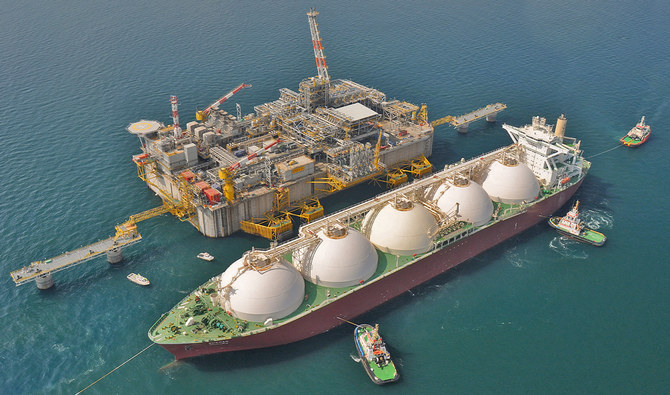
ISLAMABAD: Pakistan’s power distributors are seeking to recover an additional 36.5 billion rupees from consumers next month after the cost of gas-fired electricity generation surged to a record, following the suspension of long-term liquefied natural gas supplies from Qatar during the US-Iran war.
The Central Power Purchasing Agency-Guarantee, which buys electricity on behalf of Pakistan’s distribution companies, told the National Electric Power Regulatory Authority that the average fuel cost of generation climbed to 9.61 rupees per unit in July, versus a reference price of 7.09 rupees. The regulator has scheduled a public hearing for Aug. 27 to weigh the request, which would raise consumer bills by 2.52 rupees per unit.
The spike traces to a single, volatile input: re-gasified liquefied natural gas, or RLNG. Its cost jumped to 47.38 rupees per unit in July from roughly 35.5 rupees in June — and from less than 14 rupees as recently as April, a roughly 242% increase over that stretch. The jump came after Pakistan State Oil failed to import any of the seven long-term cargoes scheduled for the month under its contract with Qatar, forcing state-run Pakistan LNG Limited to secure five cargoes on the spot market instead, at a 20.1% slope to Brent crude.
Spot pricing carries a premium over long-term contracts, and the cargoes bought in July show the range: shipments delivered July 15-16 and July 21-22 were priced at $18.23 and $20.70 per million British thermal units, respectively, while a cargo delivered July 27 cost $21.88. The pain didn’t stop there. The Oil and Gas Regulatory Authority has since notified a 32% increase in RLNG prices for August, setting the rate at $25.83 per mmBtu for Sui Northern Gas Pipelines and $25.09 per mmBtu for Sui Southern Gas Company — a level that will feed into October’s consumer billing.
The RLNG-based generation cost is now roughly 148% above where it stood in February, when it was priced at $10.45 per mmBtu.
Despite the RLNG shock, gas-fired power made up a shrinking slice of the generation mix. RLNG output fell 33.2% from a year earlier to 1,629 gigawatt-hours, or about 11% of total supply, as the missing Qatari cargoes left a hole that spot purchases only partly filled. Total electricity generation for the month climbed 7% from a year earlier to 15,122 gigawatt-hours, while the volume actually delivered to distribution companies rose 6% to 14,501 gigawatt-hours — consumption that CPPA-G said tracked with a broader pickup in industrial and agricultural demand.
Cheaper sources still carried most of the load. Hydropower output hit a record for the month of 6,019 gigawatt-hours, up 6% from a year earlier and 32% above the seven-year July average, aided by strong water availability. Coal-fired generation rose 44% from a year ago to 3,819 gigawatt-hours, with imported coal — at 16.33 rupees per unit, against 10.42 rupees for domestically mined coal — accounting for the bulk of the increase. Nuclear generation added 1,527 gigawatt-hours at roughly 3 rupees per unit, up from about 2.42 rupees a year earlier. All told, zero-cost and low-cost sources still supplied about 73% of the grid.
That mix wasn’t enough to offset the RLNG bill. Unadjusted fuel costs for the month totaled 10.75 rupees per unit, with RLNG and furnace oil together accounting for 54% of that figure — RLNG contributing 5.10 rupees and furnace oil 0.71 rupees. Furnace-oil-fired generation, meanwhile, jumped 115% from June to 200 gigawatt-hours as utilities leaned on it to plug the RLNG gap during peak summer demand, at a cost of roughly 50 rupees per unit. High-speed diesel, used sparingly, cost about 54.5 rupees per unit.
CPPA-G is also seeking to apply a separate negative adjustment tied to prior-period costs, worth 21.72 billion rupees, which would partly offset the increase working through the fuel-adjustment mechanism.
If approved at the Aug. 27 hearing, the higher charges would apply across Pakistan’s former Wapda-run distribution companies as well as K-Electric, the private utility serving Karachi. It would mark the second straight monthly increase passed through to consumers: Nepra had already approved a 75-paisa-per-unit fuel cost adjustment for August billing, adding roughly 9.8 billion rupees to consumer bills, before the July request now under review.
Copyright © 2021 Independent Pakistan | All rights reserved