By Staff Reporter
ISLAMABAD: Pakistan said on Tuesday it had made “significant progress” toward reviving a fractured peace framework between Iran and the United States, following a day-long visit by the country’s top military and security officials to Tehran, even as US officials signalled they had not ruled out further military action against Iran.
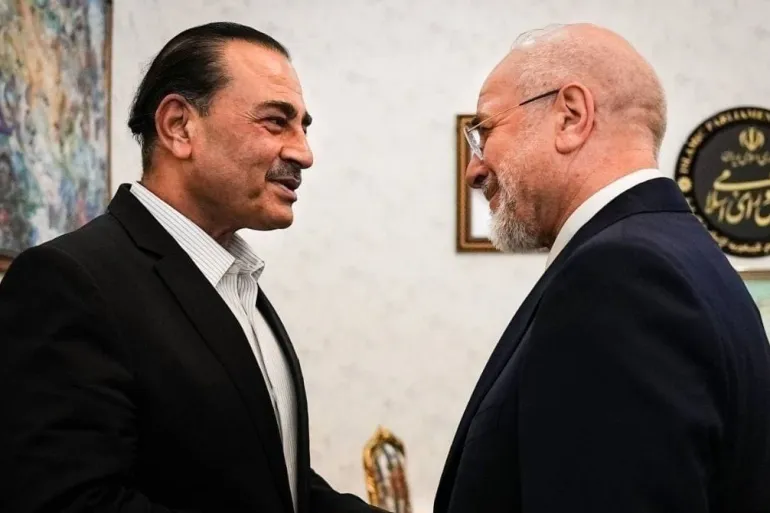
Field Marshal Syed Asim Munir, Pakistan’s army chief and chief of defence forces, and Interior Minister Mohsin Naqvi met Monday with Iranian President Masoud Pezeshkian and other senior Iranian officials as part of Islamabad’s continuing effort to broker an end to hostilities that have periodically flared between Tehran and Washington since February.
“Significant progress was made, and the meeting concluded on a highly positive note,” Naqvi wrote on social media platform X following the meeting with Pezeshkian. “We remain hopeful that this momentum will help pave the way for further progress and lasting peace in the region.”
Naqvi said the discussions centred on the broader US-Iran conflict, regional tensions across the Middle East, and the specific steps both countries would need to take to restore the Islamabad Memorandum of Understanding — an interim agreement Pakistan helped negotiate in June that has since collapsed.
Pakistan’s military, in a statement from its media wing, the Inter-Services Public Relations directorate, said the talks also addressed measures to prevent further escalation, the reopening of the Strait of Hormuz to commercial traffic, and what it called an “expedited termination” of the conflict.
During the visit, the Pakistani delegation also met with Mohsen Rezaei, the Iranian supreme leader’s representative on the Supreme National Security Council; parliament speaker and lead Iranian negotiator Mohammad Bagher Ghalibaf; Foreign Minister Abbas Araghchi; and Interior Minister Eskandar Momeni.
A Fragile Agreement, Unraveled
The visit represents the latest chapter in months of Pakistani mediation between the two countries, whose conflict has repeatedly disrupted shipping through the Strait of Hormuz, one of the world’s most critical corridors for oil and gas exports.
Fighting between Iran and the United States began in February. Islamabad brokered an initial two-week ceasefire in April, and by June had helped negotiate the more comprehensive Islamabad MoU, which called for a full cessation of hostilities, the reopening of the Strait of Hormuz to commercial vessels, and an end to a US naval blockade of Iranian ports.
That agreement broke down in July after the United States struck Iranian targets, accusing Tehran of firing on commercial vessels transiting the strait — an allegation Iran has denied. Iran responded with strikes on what it described as US military installations in neighboring Gulf states and in Jordan.
While the two countries have not exchanged direct fire in recent weeks, negotiations have remained stalled, and both governments have continued to issue public warnings.
Ghalibaf, Iran’s lead negotiator, told Munir on Monday that Tehran remains committed to the original agreement and placed responsibility for its collapse on Washington. “We are pursuing the implementation of the terms of the MoU, and it is America that must adhere to its commitments based on the Memorandum of Understanding,” Ghalibaf said, according to Iran’s state news agency, IRNA.
Washington Signals Strikes Remain Possible
The renewed diplomatic push comes as the United States continues to apply both economic and military pressure on Iran. US Defence Secretary Pete Hegseth said Monday that Washington had not taken further military strikes off the table.
Asked directly whether so-called kinetic strikes were currently paused, Hegseth said: “No. If we need to use kinetic strikes, we’ll use them.” He said economic sanctions were presently inflicting the most significant damage on Iran’s government, but stressed that military options remained available “anywhere in the Strait of Hormuz or around Iran.”
President Trump has separately threatened what he termed the “greatest financial offensive ever marshalled” against Iran, warning of consequences for any nation offering Tehran economic support. Iran, in turn, has threatened to halt its own oil exports from the Gulf if outside pressure intensifies further.
The expanded sanctions were formally unveiled Monday by Treasury Secretary Scott Bessent, who said countries that continue trading with Iran risk being cut off from the dollar-based international financial system. Bessent did not name which countries might face penalties or specify when such measures would take effect, saying instead that affected nations would be given time to comply. The Treasury Department separately announced sanctions against 60 individuals, entities and vessels — though the list notably did not include Chinese financial institutions that US officials have previously suspected of facilitating Iranian oil sales.
Iran’s government responded defiantly. Economy Minister Ali Madanizadeh told state television that Iran was “fully prepared for the US sanctions,” adding: “Our defence is no longer so defensive; the enemies should wait for an attack.” Madanizadeh said neither China nor Russia had accepted the new US measures and predicted other nations would resist them as well. Separately, Brigadier General Hossein Mohebbi, a spokesman for Iran’s Islamic Revolutionary Guard Corps, warned of retaliation against US interests and energy infrastructure if Iran’s own infrastructure came under threat, according to Iran’s Press TV.
Shipping Toll Mounts
The monthslong conflict has exacted a steep toll on commercial shipping through the Gulf. According to an Agence France-Presse analysis of International Maritime Organization data published on Tuesday, the UN maritime agency has confirmed 68 incidents involving commercial vessels in the Gulf and surrounding waters over the six-month conflict — roughly one every 2.6 days. At least 20 seafarers and port workers have been killed, 35 wounded, and one remains missing. Nearly half the incidents involved oil tankers, and the United Kingdom Maritime Trade Operations has classified 47 of the incidents as attacks. The frequency of incidents dropped sharply while peace talks were active over the summer but rose again after negotiations collapsed in July.
Pakistan has positioned itself as a central broker in the standoff, maintaining what officials describe as both direct and indirect channels to both governments. Three Pakistani sources told Reuters that Trump spoke by phone with Munir last week, ahead of the army chief’s trip to Tehran, with one source saying Washington’s central request was for Pakistan to use its influence to bring Iran back to the negotiating table.
Copyright © 2021 Independent Pakistan | All rights reserved