By Staff Reporter
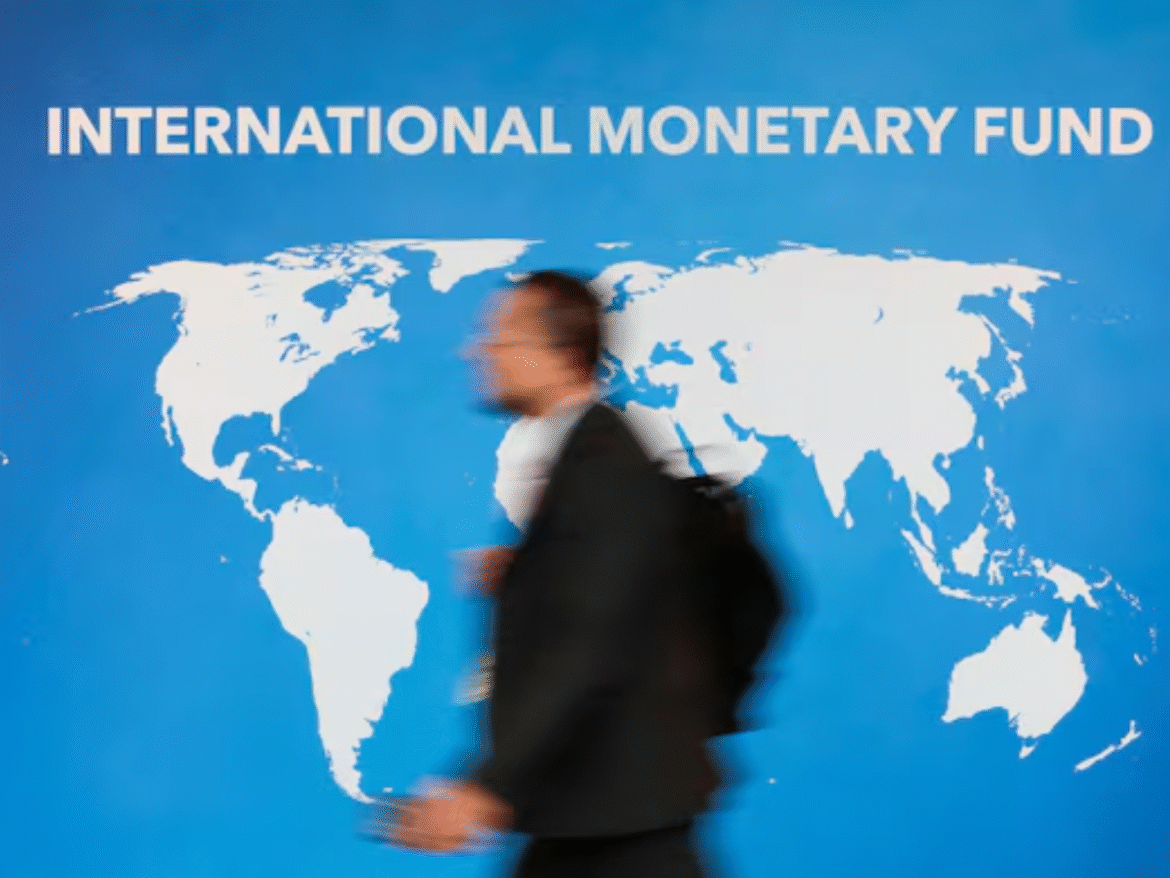
KARACHI: Pakistan has so far absorbed the shock from the war in the Middle East with growth intact and central bank reserves above $21 billion, but the International Monetary Fund said inflation running above 10% requires the State Bank to keep policy tight.
The Fund’s latest regional outlook, published on Thursday, projects Pakistan’s economy to expand 3.6% in the fiscal year that ended in June and 3.5% in the current one, both unchanged from its April forecast. That compares with a projected 1.3% contraction this year for the Middle East, North Africa, Afghanistan and Pakistan as a whole, a drop concentrated in Gulf oil exporters whose production and shipping were disrupted by the conflict. The IMF expects the region to rebound 6.6% in 2027, led by those same producers.
Pakistan sits on the other side of that divide. As a net oil importer, it has been spared the production losses that cut Gulf output, and the Fund cited steady remittances, stable or higher hotel occupancy and growth in the first half of the year broadly in line with the second half of 2025. Pakistan’s remittances held roughly steady as a share of output from a year earlier. Other emerging-market oil importers in the region have fared similarly. Egypt’s growth forecast for this year was raised about 1 percentage point from April, to 5.1%.
The cost has shown up in prices. Inflation in Pakistan reached 11.1% in August, among the sharpest increases in the region alongside Egypt, according to the report, which attributed the rise to higher food and energy costs. Consumer prices rose 10.26% in September from a year earlier, down from 11.15% in August, according to the Pakistan Bureau of Statistics. The reading matched the 10.2% estimate in a market survey and compares with 5.76% a year earlier. Prices rose 1.27% from August. Wholesale inflation accelerated to 13.3%. The State Bank’s target range is 5% to 7%.
The central bank was the only one among the region’s flexible-exchange-rate economies to raise its benchmark rate after the war began, the report said. It lifted the policy rate by 100 basis points to 11.5% in April, ending a pause that followed a cutting cycle from a 22% peak. Policymakers held at 11.5% on Sept. 14, with seven of 10 committee members in favor, and noted that business and consumer inflation expectations had risen while confidence weakened. The next decision is scheduled for Monday.
The IMF is pressing for more. The report singled out Pakistan and the Kyrgyz Republic as economies where inflation is above target and the real policy rate, based on the Fund’s projected 2027 inflation, sits below its estimate of neutral. Countries in that position should be ready to tighten, the Fund said, and should avoid using fiscal stimulus to offset the effect. Pakistan’s fiscal stance is projected to be restrictive this year, and almost all economies in the region are expected to tighten further from 2027.
The Fund’s staff made the same point a fortnight earlier. On Oct. 7, an IMF team led by Iva Petrova reached a staff-level agreement with Pakistani authorities on the fourth review of the country’s Extended Fund Facility and the third review of its Resilience and Sustainability Facility. Board approval would release about $1 billion under the first and about $210 million under the second, bringing total disbursements under the two arrangements to about $5.7 billion. The Executive Board has not yet announced a date. The programs total $7 billion and $1.4 billion.
The IMF team said implementation has stayed broadly on track despite a difficult external backdrop. Growth reached 4% in the first three quarters of fiscal 2026, the current account was roughly balanced, and rating upgrades and a return to international markets signal firmer policy credibility. Pakistan raised $3 billion in Eurobonds in September. The State Bank’s reserves stood at $21.47 billion in the week ended Oct. 9, up about $3 billion since the fiscal year began in July. The central bank has also been buying foreign currency. Saudi Arabia deposited $3 billion in April.
The Fund’s staff recommended that the government promptly phase out its fuel support scheme, citing its cost and broad targeting. Any future relief, if oil prices surprise to the upside, should be limited, time-bound and delivered through existing social assistance programs within the fiscal 2027 budget, they said. The budget is built around a primary surplus of 2% of gross domestic product. The regional report estimates that roughly three-quarters of the discretionary support measures adopted across the Middle East and Central Asia since the war began were untargeted, and urges governments to replace broad subsidies with temporary cash transfers.
Jihad Azour, who directs the IMF’s Middle East and Central Asia department, picked up the theme in Islamabad this week. “The next milestone is to turn this stabilisation into stronger and more durable growth,” he said at a tax-reform workshop. Reports of his remarks said he called for a broader, more predictable tax system.
The risks are pointed mainly at financing. The outlook report lists Pakistan, along with Algeria and Egypt, among economies with large gross financing needs that would be exposed if government borrowing costs rose. It also named Pakistan, Egypt and Tunisia as countries where banks hold large stocks of government securities, a link the Fund wants supervisors to watch. In its view, exchange-rate flexibility helps Pakistan and Egypt preserve reserves and adjust to shocks, though it also pushes up import prices.
Energy is the larger variable. Pakistan relies heavily on imported fuel. The IMF’s baseline assumes disruptions to energy trade continue through the first quarter of 2027, with flows through the Strait of Hormuz recovering gradually afterward. It assumes Brent-linked oil averages $95.74 a barrel this year and $87.39 in 2027. In an adverse scenario in which the conflict runs through the second quarter of 2027 and oil averages about $130, the Fund estimates oil importers in the region would see output about 0.5% lower and inflation about 1 percentage point higher in 2027 than in its baseline.
Beyond the immediate shock, the Fund expects Pakistan’s growth to edge up to 4.5% by 2031. It warns that the country’s current account is likely to weaken over the medium term as imports rise and remittances ease. Pakistan is one of several economies, with Egypt and Jordan, that the report credits for macroeconomic stabilization under IMF-supported programs.
Copyright © 2021 Independent Pakistan | All rights reserved