With so much at stake and a likely extended tenure, the office has assumed immense importance beyond the usual function of ensuring free and fair polls. Here is a high-level look at the key considerations likely to factor into the decision – and the leading contenders for the hot seat.
By Muhammad Ali
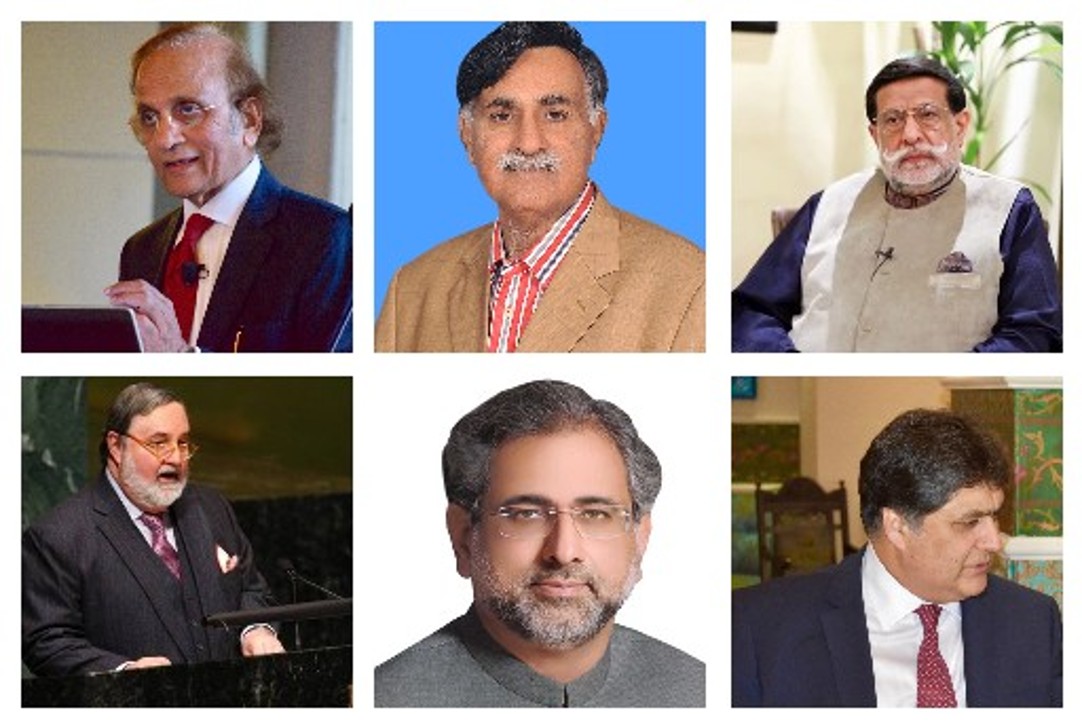
ISLAMABAD: With the term of the incumbent National Assembly nearing completion, the authorities’ headhunt for the all important office of the caretaker prime minister is at a fever pitch, with several names including Tassadaq Hussain Jillani, Mohammad Mian Soomro, Shahid Khaqan Abbasi, Aslam Bottani, Dr Abdul Hafeez Sheikh, and Dr Ishrat Ul Abad, and Humayun Akhtar Khan in contention.
A caretaker government in Pakistan is a unique feature of Pakistan’s democracy. It is a temporary government formed after the dissolution of a National Assembly, its purpose being to ensure a free and fair general election.
This time, however, the office of the caretaker prime minister has assumed immense importance in view of the wrangling prompted by Pakistan’s so-called Great Reset, under which the military has pledged to stay out of politics. The selected candidate will lead the stewardship of the Great Reset.
By the same token, forces inimical to the great reset – fronted up until now by former prime minister Imran Khan – will be looking to latch on to the caretaker prime minister to advance their agenda. The wrong kind of person reaching the office, therefore, could wreck untold havoc on Pakistan’s democracy and potentially reverse the gains made over the last year or so.
Generally, the caretaker government has a 90-day lifespan and is not authorised to make any major policy decisions. This time, however, the Parliament has undertaken legislation expressly to strengthen the hand of the caretaker government in view of its extended tenure as well as its potential role in ensuring continuity of the economic policy critical to the country’s well being in view of the compact made with the International Monetary Fund (IMF) to pull the economy back from the brink of default.
Top political sources say Dr Abdul Hafeez Sheikh had shown his interest to become the caretaker premier but he seemed no more interested to be appointed as caretaker Minister for Finance. Dr Sheikh had declined politely to become Minister for Finance. He has been currently staying in Karachi till the final decision of the selection of the caretaker premier.
Another contender for the post of caretaker prime minister is Tassadaq Jillani, a former judge of the apex court with a squeaky clean reputation. The only thing going against him at the moment is the fact that the ruling coalition seems more inclined to appoint someone having political background who is equipped to deal with the political ground realities.
In view of such preferences, Shahid Khaqan Abbasi, Mohammad Mian Soomro and Aslam Bottani become favourites for the hot seat. Mohammad Mian Soomro in particular may turn out to be the dark horse for any key position in the Center or Province of Sindh. He has also held meetings with key mainstream political leaders including Mariam Nawaz Sharif in recent weeks.
Dr Ishrat Ul Abad is another potential candidate for the top positions in the caretaker setup. His cause is also supported by the reports that the PDM leadership has determined that the caretaker prime minister will be chosen from a smaller province instead of from the Punjab.
Two other names being thrown around are Fawad Hassan Fawad, the former principal secretary to the prime minister Nawaz Sharif; and Abdullah Hussain Haroon, the former permanent representative to the United Nations.
Fawad is seen as an upright person immune to petty influences and ideally equipped to maintain the balance of his office – something that may as easily be seen as a strength as a weakness by the decision makers.
Haroon is a former technocrat who has experience in international affairs and as such may be seen as a good choice to help to manage the country’s relations with the international community.
For key ministries like the Ministry of Finance, there are certain names under consideration including Dr Waqar Masood, former Special Assistant to PM on Revenues and former bureaucrat who had served at key positions of Secretary in different ministries during his prestigious career.
Two former Governor SBP including Dr Ishrat Hussain and Dr Reza Baqir former are also among the contenders for the slot of caretaker Minister for Finance. This appointment has assumed huge importance in order to keep the IMF program on track.
Hussain and Baqir’s prior experience of economic management and their ties in the international financial institutions stand them in a good stead especially because the caretaker set up is likely to continue through the completion of the IMF’s USD 3 billion, 9-month Stand-By Arrangement (SBA).
Formally, the caretaker government is appointed by the President of Pakistan in consultation with the incumbent Prime Minister and the Leader of the Opposition in the National Assembly. In practice, Prime Minister Shahbaz Sharif and his Pakistan Democratic Movement (PDM) coalition will make the decision, and put it up to the figurehead president after taking Leader of Opposition Raja Riaz on board.
Copyright © 2021 Independent Pakistan | All rights reserved