By Staff Reporter
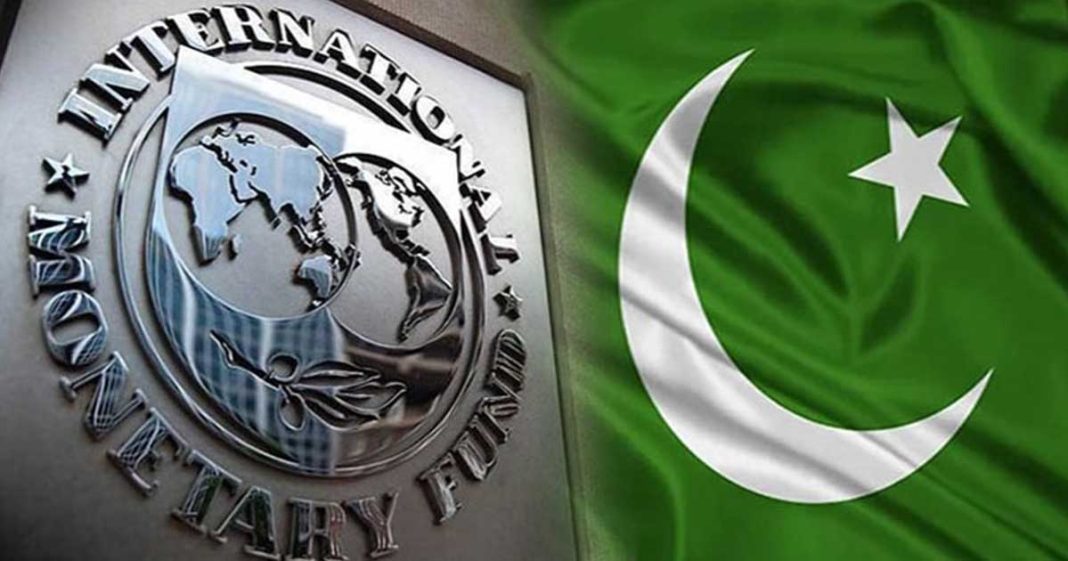
ISLAMABAD: Pakistan has agreed to seek approval from the International Monetary Fund (IMF) before providing any additional subsidies, local media reported on Thursday.
The IMF reportedly included the requirement in the draft Memorandum of Economic and Financial Policies.
The move resolves the issue of a proposed cross-fuel subsidy, which had caused a major stumbling block in the signing of the Staff Level Agreement (SLA).
Apparently, the move will shelve a government plan to charge affluent consumers more for fuel, with the money raised used to subsidise prices for the poor, who have been hit hard by inflation.
The plan involves a difference of around 100 rupees a litre between the prices paid by the rich and poor. The government termed it a relief programme and not a subsidy, but it turned into an issue.
The IMF complained Pakistan had not consulted the fund about the scheme and that a staff-level agreement would be signed once a few remaining points, including the fuel scheme, were settled.
Pakistani authorities have expressed frustration over the IMF’s prior actions before signing the SLA, which they claim were not imposed in the past.
The agreement’s execution has been on hold, although the Kingdom of Saudi Arabia and the United Arab Emirates have confirmed their commitment to providing external financing to Pakistan, another key step for the release of $1.1 billion tranche.
The IMF had been seeking confirmation of an external financing gap of $5 billion by the end of June 2023. The KSA has extended confirmation of $2 billion, while the UAE has confirmed $1 billion.
The remaining $2 billion of external financing is expected to come from the World Bank, which is expected to provide $450 million under the RISE program, and the Asian Infrastructure Investment Bank, which will co-finance $250 million. The remaining $1.3 billion is expected to be secured from commercial banks once the SLA between Pakistan and the IMF is signed.
Talks with the IMF to secure $1.1 billion as part of a $6.5 billion bailout have been ongoing since November.
The program, which was designed to help Pakistan address its balance of payments issues and implement structural reforms, has faced repeated delays and setbacks and the delay has exacerbated Pakistan’s economic problems.
With the program’s expiry deadline fast approaching, Pakistan’s options for reviving it are becoming increasingly limited.
The delays in completing the ninth review has raised concerns about Pakistan’s ability to complete the remaining reviews. With the expiry deadline fast approaching, it is unclear how Pakistan will proceed.
One possibility is that Pakistan could seek additional financing from friendly countries or other sources. However, given the current global economic climate, such financing may be difficult to secure. Moreover, relying on external financing alone is unlikely to address Pakistan’s deeper structural issues, such as its high levels of debt and weak institutions.
Another option for Pakistan is to work with the IMF to develop a new program that better addresses its economic challenges.
This could involve a more comprehensive approach to structural reform, including measures to address Pakistan’s energy crisis, improve tax collection, and strengthen the financial sector.
However, developing a new program would take time and require significant political will on the part of Pakistan’s leaders.
Ultimately, the best course of action for Pakistan may be to work with the IMF to revive the existing program. The IMF, as the lender of last resort, has an important role to play in helping Pakistan address its economic challenges.
However, Pakistan must also take responsibility for implementing the necessary reforms and addressing the underlying issues that have contributed to its current economic situation.
Without a concerted effort to address these issues, Pakistan’s economic prospects will remain uncertain, and its options for reviving the IMF program will continue to be limited.
Copyright © 2021 Independent Pakistan | All rights reserved