By Staff Reporter
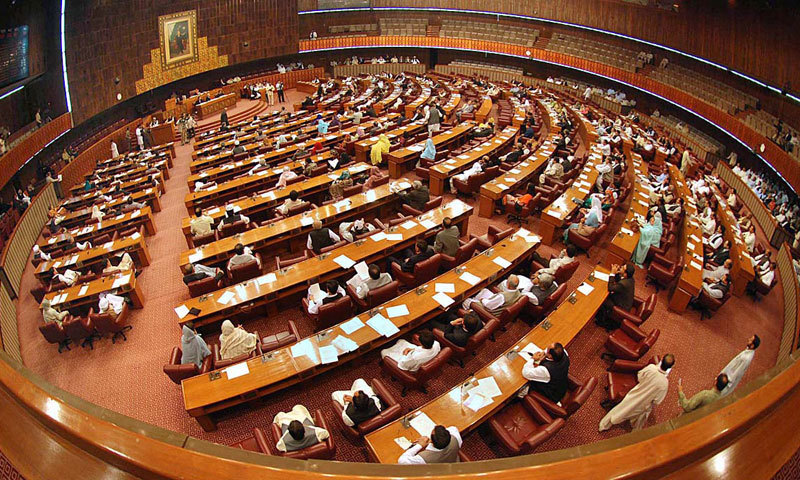
ISLAMABAD: The National Assembly has passed a resolution affirming that workplace harassment is not limited to sexual conduct, weeks after the Federal Constitutional Court (FCC) ruled that the country’s harassment law covers only behaviour of a sexual nature.
The resolution, approved on Friday, said harassment could also take the form of gender-based discrimination, intimidation, humiliation, degrading treatment, hostile behaviour and misuse of authority, “whether sexual or non-sexual in nature”.
It was presented by Dr Shahida Rehmani, a Pakistan Peoples Party MNA who is secretary of the Women’s Parliamentary Caucus. Records of the Assembly show she has previously sought leave to introduce bills amending the Protection against Harassment of Women at the Workplace Act, 2010.
The text did not refer to the court’s judgment or to any other specific case. But lawyers and journalists have in recent weeks voiced concern over the FCC’s decision, which set aside an Islamabad High Court judgement in a harassment case brought in 2012 by an employee of the National Bank of Pakistan.
The resolution reaffirmed Parliament’s commitment to protecting the dignity, equality and rights of every individual against workplace harassment and gender-based discrimination, citing Article 14 of the Constitution, which deals with the inviolability of human dignity, and Article 25, which guarantees equality of citizens.
It also restated the intent of the 2010 Act, as amended in 2022, which expressly brings gender-based discrimination, whether sexual or not, within the statutory definition of harassment. The absence of a sexual advance or demand, it said, does not lessen the seriousness of gender-based harassment or discrimination.
The dignity of individuals, the resolution said, cannot be made subject to narrow distinctions between different forms of harassment, and all conduct covered by the law must be dealt with seriously, fairly and with accountability.
The Assembly urged the federal government and all concerned institutions to ensure the law is implemented in its full scope, so that no one is denied statutory protection merely because the harassment or discrimination they report is non-sexual. A resolution of the House does not carry the force of law.
It concluded that a workplace free from harassment, humiliation and gender-based discrimination is “not a privilege, but a fundamental requirement of human dignity, equality and justice”.
The FCC judgment, delivered in late September by a three-member bench headed by Chief Justice Aminuddin Khan, was written by Justice Ali Baqar Najafi. It restored an order of the President and set aside the Islamabad High Court’s decision of 31 December 2024, in a case brought by two petitioners, Usman Shahid and Aqeel Abbas, concerning a National Bank of Pakistan employee, Nadia Sarwar.
The court reproduced the definition of harassment in the 2010 Act, which covers unwelcome sexual advances, requests for sexual favours and other conduct “of a sexual nature or sexually demeaning attitudes” that interferes with work or creates an intimidating, hostile or offensive environment. It also covers attempts to punish a complainant who refuses such a request, or making compliance a condition of employment.
Interpreting that wording, the court held that an act, conduct or attitude must be sexual in nature to count as harassment under the law. It ruled that the Federal Ombudsman had no jurisdiction over complaints without a sexual element, and said inappropriate behaviour could instead be dealt with through disciplinary action under service rules. The court also said the law could not be applied to every complaint of a general nature.
Lawyers criticised the decision, saying it could leave some forms of gender-based harassment outside the law’s reach. Critics noted that Parliament widened the definition in 2022 to include discrimination on the basis of gender “which may or may not be sexual in nature”.
Others have urged caution in reading the judgment. One legal commentary argued that it should not be taken to mean non-sexual gender-based discrimination can never amount to harassment, and that bullying, humiliation or misuse of authority may still warrant serious disciplinary action even where it falls outside the statutory definition.
Copyright © 2021 Independent Pakistan | All rights reserved