By Staff Reporter
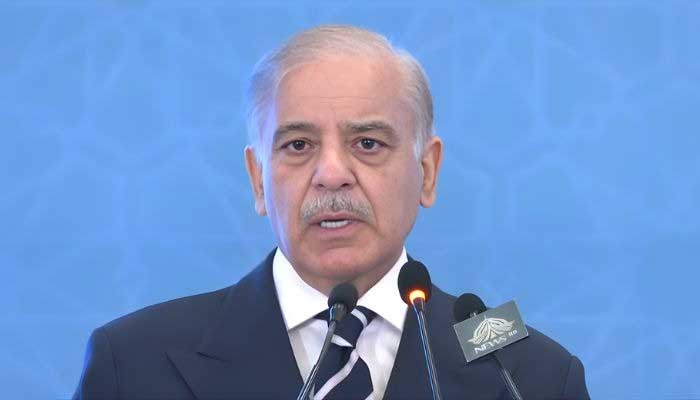
ISLAMABAD: Prime Minister Shehbaz Sharif called for across-the-board cuts in direct taxes in the upcoming federal budget, saying the country must prioritise growth, production, exports and investment over repeated tax increases to support businesses and restore its standing.
Speaking on Wednesday at the inaugural session of the two-day Pakistan Governance Forum 2026, Sharif told an audience of business leaders, investors, chief ministers, diplomats and officials that his government is united on delivering immediate relief. “I believe that in the upcoming budget — which will come a few months later — we must decrease direct taxes across the board so that businesspersons and investors are facilitated,” he said. “My entire team and I are united on this that we must reduce taxes immediately.”
Sustainable expansion cannot come from endlessly stretching the tax burden, he added. “How long can we keep stretching this? Unless there is growth and unless production and exports increase, and unless you invest and attract foreign direct investment, how much more tax can you continue to impose?”
Pakistan’s tax-to-GDP ratio has reached 10.5% thanks to recent initiatives, the prime minister noted. But he voiced regret that indirect taxes collected from consumers and end-users are sometimes not remitted to the government, calling it one of the biggest injustices to the nation. “You obtain the indirect tax from the consumers. But if you keep it in your pockets, then what can be a bigger injustice to the nation?” he said, comparing the practice to a carrot-and-stick approach that oppresses the public.
Without naming individuals but citing specific sectors, Sharif pointed to sugar, cement and tobacco. Tax recoveries rose 36 billion rupees in the sugar industry in 2025 compared with 2024, and 60 billion rupees in cement over the same period. Many “respected” industry leaders pay honestly, he acknowledged, but those who don’t create unhealthy competition. The solution requires a whole-of-government approach that includes the federal administration, provinces and military leadership working together, he said.
Sharif recalled convening meetings with business sectors to shape decisions through consultation, stressing that it is not the government’s role to run companies. “It is that of businesspersons,” he said. The state’s job is to facilitate them with whatever support it can provide for productivity, efficiency, research and development, and exports. “There is no lack of anything; if anything is lacking, it is will,” the prime minister said. “Hard work, day and night, is required. We do not have the luxury of time; we will have to act and act speedily if we want to regain our lost standing.”
The comments come two and a half years after Pakistan stood on the brink of default in June 2023. Through coordinated efforts by the federal and provincial governments and the military, the country pulled back from the edge and stabilized its macroeconomic situation, Sharif said. Inflation, which had hovered around 35%, has been brought below 7%, while the policy rate now stands at 10.5%. Some reforms have been entirely home-grown to break the boom-and-bust cycle, with no role for International Monetary Fund prescriptions.
In the power sector, the per-unit price has been slashed by 9 rupees while solar investments remain protected. Still, the country endures annual losses of 200 billion rupees from theft, an issue that only a unified approach can resolve. Sharif also cited the closure of the Utility Stores Corporation, which he called “a den of corruption and theft,” and the Pakistan Works Department as steps that saved billions for the nation. His government’s Ramazan Package is channeling 38 billion rupees to deserving families through digital wallets in a transparent and dignified manner.
Copyright © 2021 Independent Pakistan | All rights reserved