By Staff Reporter
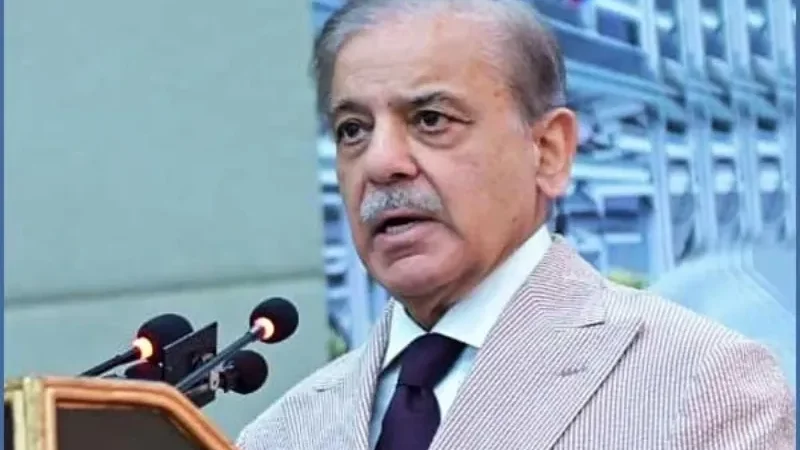
ISLAMABAD: Prime Minister Shehbaz Sharif told world leaders at the COP31 climate summit that Pakistan’s households had added nearly 22 gigawatts of rooftop solar in two years, then warned the transition would stall unless richer nations help pay for it.
Sharif said Pakistan needed about $138bn by 2035 for low-carbon power generation and a further $50bn to replace coal with solar. He put the figures to a high-level meeting on clean energy on Wednesday.
He called the solar surge “a quiet revolution” by ordinary citizens looking for cheaper, more predictable electricity. “Momentum without finance cannot be sustained,” he said. Grids must expand quickly, storage must keep supply steady and new technology must be affordable, he told delegates, but that burden falls on countries already heavily in debt.
Sharif said Pakistan fully backed the “35-by-35 Global Electrification Pledge”, under which countries aim to lift electricity’s share of final energy consumption to about 35 per cent by 2035. He said the goal could be met only if finance flowed “at the speed of ambition”, through concessional capital and the transfer of affordable technology.
He told the session he had inaugurated a key section of Pakistan’s seventh nuclear power plant, Chashma-5, before leaving for Turkey. The project will add 1,200 megawatts to the grid, he said, and clean sources now supply nearly 55 per cent of Pakistan’s energy mix.
He said a newly drafted auto policy builds on a target of 30 per cent of new vehicles being electric by 2030, with lower tariffs as the incentive. All future government buses and motorcycles will be electric, he added, and this year more than one in 10 motorcycles sold in Pakistan was electric.
The solar boom he described has been driven largely by consumers. Arab News reported that soaring grid tariffs pushed Pakistan into the ranks of the world’s biggest new solar adopters, with roughly 22GW of panels imported in 2024 alone. Pakistan’s Press Information Department put the country’s capacity at 12GW off-grid and more than 6GW net-metered by the end of 2025. The tallies use different yardsticks and do not map neatly onto one another.
The prime minister’s audience was thinner than organisers had hoped for. France, Germany, Italy, Canada and Japan all stayed away, leaving Britain’s Andy Burnham as the only G7 leader attending. Donald Trump has again kept the United States out of the talks, for a second year, after pulling Washington from climate cooperation following his return to office.
António Guterres, the UN secretary-general, set the tone on Wednesday. He told leaders the climate crisis was “outrunning us” and that the world was on a path to mutually assured destruction. He said an overshoot of the 1.5C Paris limit was now inevitable, but that how high, how long and how damaging it proved remained in humanity’s hands. He also pointed to three-quarters of humanity living in countries that import fossil fuels, and to the price shocks that followed the US and Israeli war on Iran.
Away from the podium, Sharif met Iran’s president, Masoud Pezeshkian, and said afterwards that dialogue, restraint and sustained diplomacy were the only route to lasting peace. Pakistan brokered an interim US-Iran deal in June, known as the Islamabad MoU, which included a 60-day ceasefire and the reopening of the Strait of Hormuz, but both sides resumed attacks within days. Mr Sharif said Pakistan continued to play a “sincere and constructive role”.
He also met Kuwait’s prime minister, Ahmad Al-Abdullah Al-Ahmad Al-Sabah, and the two sides welcomed the recent ratification of a Pakistan-Kuwait defence agreement. His other meetings included Bangladesh’s prime minister, Tarique Rahman, Palestinian prime minister Mohammad Mustafa, Syria’s president Ahmed al-Sharaa, Saudi energy minister Prince Abdulaziz bin Salman, World Bank president Ajay Banga and the secretary-general of the Organisation of Islamic Cooperation. The Pakistan Pavilion is hosting 54 events.
The 35-by-35 pledge is the centrepiece of the Turkish presidency’s agenda, but critics say it may do little to curb warming. It sets no requirement that new power come from clean sources, and governments have yet to agree a wider plan to move away from coal, oil and gas. Electricity currently supplies a little over a fifth of global energy use.
Money has already divided the talks. Jasper Inventor, head of Greenpeace’s delegation, called it “a difficult start” after negotiators worked late on Sunday over developing nations’ demands for finance items on the agenda. A compromise added a climate finance work programme, but African countries’ demand for a separate item on tripling adaptation finance was left out, as were trade matters.
Copyright © 2021 Independent Pakistan | All rights reserved