By Staff Reporter
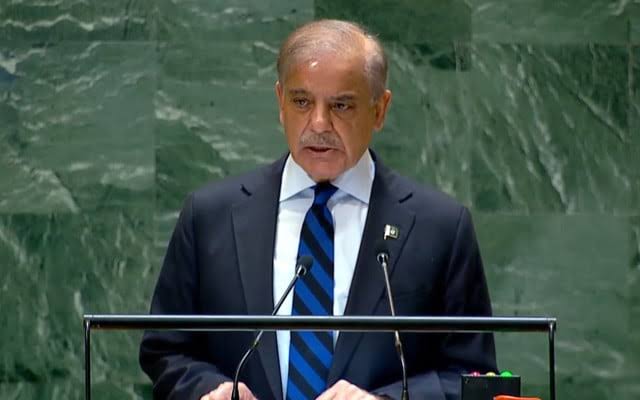
ISLAMABAD: Prime Minister Shehbaz Sharif will travel to New York later this month to address the United Nations General Assembly, where he is expected to press the case that the war between the United States and Iran should end at the negotiating table rather than the battlefield — a message Islamabad has delivered, with mixed results, since the conflict reignited this summer.
Sharif is scheduled to speak Sept. 25, according to media reports on Thursday, during the assembly’s 81st session, whose high-level debate runs from Sept. 22 to 26. He arrives in a diplomatic environment shaped almost entirely by the war, now in its seventh month, with world leaders expected to spend much of the week grappling with its consequences: disrupted shipping through the Strait of Hormuz, a fractured nuclear oversight regime, and a widening rift on the Security Council over how to respond.
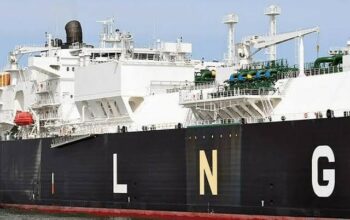
The conflict began in late February, when American and Israeli strikes on Iran killed the country’s supreme leader and set off a wave of retaliatory attacks across the region. A ceasefire brokered that spring, with Pakistan playing a central mediating role, gave way in June to a more formal memorandum of understanding between Washington and Tehran. That arrangement collapsed within weeks. Fighting resumed in July after Iranian forces struck commercial vessels in the Strait of Hormuz, and it has continued intermittently since, most recently this week, when American forces destroyed five Iranian oil tankers and Iran answered with a barrage of missiles aimed at a U.S. base in Jordan.
It is against that backdrop that Sharif intends to renew Pakistan’s diplomatic pitch. According to diplomatic sources cited by Dawn newspaper, the prime minister plans to use his assembly address to argue that a negotiated settlement remains preferable to prolonged confrontation, and to detail the contacts Islamabad has maintained with governments involved in de-escalation efforts. Pakistan has more at stake than most in how the war ends: its proximity to the Gulf, and its economic and security ties to the region, give the fighting a more immediate cost than it carries for other nations weighing in from the assembly floor.
Sharif will travel with a full delegation of senior government officials and is expected to hold a series of bilateral meetings on the sidelines of the gathering, in keeping with the diplomatic choreography that surrounds the assembly’s high-level week. He is also expected to attend a reception hosted by President Trump on Sept. 22, the opening day of the general debate.
A crowded stage, and one uncertain guest
The assembly’s opening days carry their own diplomatic weight. Trump is scheduled to address world leaders on Sept. 22, following the traditional opening remarks from Brazil. Israeli Prime Minister Benjamin Netanyahu, representing the war’s other combatant, is set to speak Sept. 24. India, by contrast, is sending only its foreign minister, who addresses the assembly Sept. 26.
Less certain is whether Iran’s president, Masoud Pezeshkian, will attend at all. Tehran appears as the fifth speaker on the assembly’s tentative schedule for Sept. 23, the second day of the general debate, but Iranian officials have not committed to sending him. They have pointed instead to what they describe as onerous conditions imposed by Washington on the travel and credentialing of the Iranian delegation, suggesting Tehran is still weighing how — or whether — to show up.
The question of Iran’s presence is not merely a matter of diplomatic protocol. It will unfold alongside a parallel and more consequential fight at the Security Council, where members are scheduled to vote Sept. 17 on whether to renew the mandate of the panel of experts that monitors international sanctions on Iran. That mandate expires Sept. 26 — squarely in the middle of the assembly’s high-level week — and the vote is expected to reopen a familiar fault line, with the United States and its Western allies pushing for renewal and Russia and China arguing the council no longer has standing to pursue the matter as currently constituted.
The dispute traces back to last year, when Britain, France and Germany concluded that Iran was not meeting its obligations under the 2015 nuclear agreement and moved to restore United Nations sanctions through the deal’s so-called snapback mechanism. Iran has denied it is pursuing nuclear weapons. The disagreement over the panel’s future is likely to sharpen just as heads of state and government begin arriving in New York, adding another layer of friction to a session already contending with the war’s fallout.
A changing of the guard
The assembly convened Wednesday for the formal opening of its 81st session, with Khalilur Rahman of Bangladesh assuming the presidency. Rahman has said he intends to make peace and security, the restoration of trust in multilateral institutions, and broader UN reform the priorities of his tenure — themes that dovetail with the session’s official motto, “Restoring Trust, Managing Transformation: A United Nations That Delivers for All.”
This year’s gathering also marks the final assembly session under Secretary General António Guterres, whose second term concludes at the end of December. His successor is expected to be chosen before the year is out, adding a leadership transition to a session already freighted with the unresolved question of how, or whether, the war between Washington and Tehran will end.
Copyright © 2021 Independent Pakistan | All rights reserved