By Staff Reporter
ISLAMABAD: Prime Minister Shehbaz Sharif directed banks to accept export records, digital invoices and cash flows as collateral for small-business loans, pressing lenders toward a target of Rs2 trillion in financing to the sector by June 2028.
Sharif, chairing a meeting in Islamabad on Friday on credit access for small and medium-sized enterprises, called the sector the “backbone” of the economy. “Facilitating them will boost economic activity, employment and business opportunities,” he said.
He said SMEs with export data on the Pakistan Single Window, or those integrated into supply chains through Exim Insurance and digital invoicing, should be considered for loans against those records. Banks should also treat an SME’s cash flows as an alternative measure of collateral, he said.
Sharif called for a review of the prudential regulations that govern bank lending to SMEs. He also wants banks to get access to relevant data held by government institutions to speed up lending. Lenders should go beyond loans, he said, and help SMEs obtain letters of credit and bank guarantees. Banks that meet their SME lending targets would be encouraged, he added.
Separately, he asked officials to give SMEs effective guidance on improving access to financing, preparing business documentation and tapping export opportunities.
Banks told the meeting they are strengthening their institutional capacity to lend faster. They committed to lending 2 trillion rupees to SMEs and raising the number of borrowers to 775,000 by June 2028. The target includes 886 billion rupees in new loans, about $3.2 billion, and financing for 449,000 new borrowers.
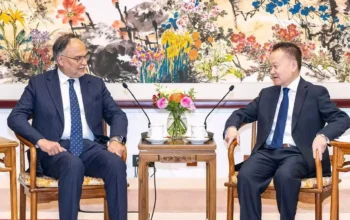
The meeting was attended by federal ministers Rana Tanveer Hussain, Ahsan Khan Cheema and Riaz Hussain Pirzada; Prime Minister’s Adviser Haroon Akhtar; Minister of State for Finance Bilal Azhar Kiyani; and State Bank of Pakistan Governor Jameel Ahmad. The chief executives of National Bank of Pakistan, Bank Alfalah and Bank of Punjab also took part, along with senior officials.
The target is a long way from where lending stands. Outstanding SME financing rose by 23 billion rupees, from 1.114 trillion rupees in June to more than 1.137 trillion rupees at the end of September, according to a government committee review reported by Business Recorder. On those figures, reaching 2 trillion rupees would take roughly 863 billion rupees of additional lending over 21 months, against the 23 billion rupees added in the latest quarter.
The push has been building for months. In October, Sharif directed that total SME financing be raised from 1.1 trillion rupees to 2.2 trillion rupees by 2028. Last week he approved district-level SME facilitation centres, with pilots in Lahore, Peshawar, Karachi and Quetta, and said 300 billion rupees had been allocated under the Export Finance Scheme for SMEs and new exporters. Under the Access to Finance Plan, the finance minister chairs a governance body with the central bank governor as co-chair, and Sharif said in July he would personally preside over monthly reviews.
The documentation problem is widely acknowledged in the industry. Zafar Masud, chairman of the Pakistan Banks’ Association, wrote in a local newspaper in May that the country has about 5 million SMEs, yet only 302,922 were formally banked by December 2025. He put the share of Pakistani firms reporting access to a bank loan at 2.1%, against a South Asian average above 31%. He argued that banks are short of information on SMEs rather than unwilling to lend to them, and that unbanked firms often borrow informally at 30% to 60% a year.
Borrowing costs have also moved the wrong way. The State Bank raised its policy rate by 50 basis points to 12% on Oct. 26, citing risks from the Middle East conflict and adverse weather linked to El Niño. The rate had been held at 11.5% in September.
Copyright © 2021 Independent Pakistan | All rights reserved