By Staff Reporter
ISLAMABAD: The Pakistan Peoples Party has made clear that any move to carve out new provinces or administrative units must run through Parliament, rejecting suggestions that such changes could be pushed through by executive fiat.
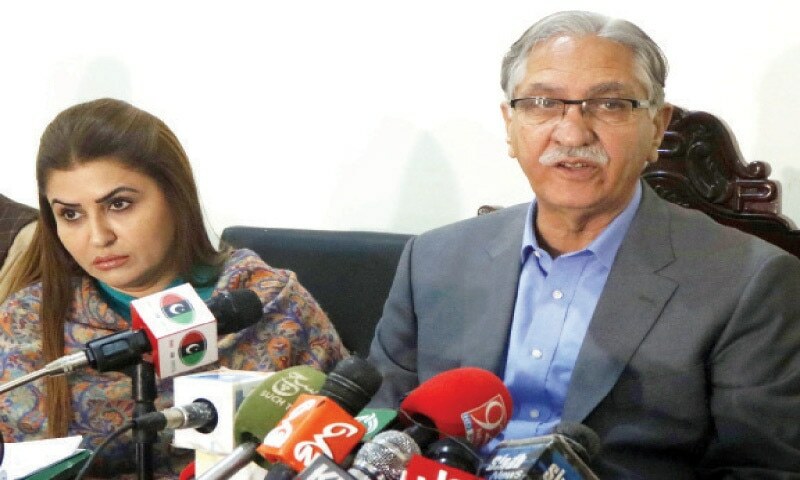
Nayyar Bokhari, the party’s secretary general, said the Central Executive Committee (CEC) would take up the issue, but stressed that the constitutional route was the only one available to the government.
“The Constitution of Pakistan has clearly laid down the complete procedure,” Bokhari said. “Without a two-thirds majority in the relevant provincial assembly, the National Assembly and the Senate, neither the creation of new provinces nor any alteration in provincial boundaries is possible.”
He was unambiguous on the point. “New provinces cannot be created through an executive order,” he said. “They can only be created through a constitutional decision of Parliament.”
His remarks followed comments a day earlier from interior minister Mohsin Naqvi, who lent his voice to calls from several political parties for the creation of new provinces or administrative units — calls that have gathered pace amid arguments that smaller units would deliver better governance to under-served regions.
The PPP’s own position is a study in contrasts. As the party running Sindh, it has firmly resisted any carve-up of the province, dismissing repeated calls from the Muttahida Qaumi Movement-Pakistan (MQM-P) for Karachi to be split off as a separate province. MQM-P is a coalition partner of both the PPP and the PML-N-led government at the Centre, a fact that has done little to soften the PPP’s opposition.
Yet the party has taken the opposite view on Punjab, backing the long-standing demand — shared with the Pakistan Tehreek-e-Insaf (PTI) — for a South Punjab province to be carved out of the country’s most populous province.
“If there is genuine seriousness about establishing new provinces, including South Punjab, the matter should be brought before Parliament and the constitutional requirements should be fulfilled,” Bokhari said.
He turned the pressure on defence minister Khawaja Asif, who sits at the heart of the ruling party’s power base in both Punjab and the Centre, urging him to set the process in motion from within his own province. Bokhari pointed out that a resolution calling for a South Punjab province has been sitting before the Punjab Assembly, awaiting action.
He went further, calling on federal ministers to place the matter before the federal cabinet and, once cleared there, for Prime Minister Shehbaz Sharif to consult PPP chairperson Bilawal Bhutto-Zardari on what he described as an “important national issue.”
Bokhari said the CEC would weigh the question in full, adding that “every decision will be taken with due regard to the Constitution, democracy and the will of the people.”
Sixteen provinces?
The push for new administrative units has drawn in other voices too. Abdul Aleem Khan, president of the Istehkam Pakistan Party (IPP) and federal communications minister, has called on political parties to embrace the idea of smaller provinces altogether, proposing that each of Pakistan’s four provinces be split into four more — sixteen in total. He has described the plan as an immediate and sustainable fix for the difficulties faced by people in remote and far-flung areas.
Naqvi, addressing the Pakistan Economic Summit 2026 in Islamabad on Thursday, framed the debate in starker terms, telling delegates there was “only one solution” to fixing the country’s broader troubles.
“You will have to take [the matter of] administrative units, provinces or whatever you may call it, to the public,” he said, calling for political parties to lock themselves in a room “for a day, a month or a year” until every outstanding issue — new units and provinces included — was resolved.
He did not spare the current system. “The system we are living under has collapsed. Problems cannot be solved through it,” he said, warning that without structural change, the country would still be grappling with the same questions a decade from now. Pakistan’s diplomatic gains, he added, were being celebrated internationally but amounted to little more than “firefighting” without deeper reform at home.
Bokhari hits back
Bokhari was quick to respond, arguing that any flaws in the system belonged in Parliament, not in press conferences. “Who should be held responsible if the system is not functioning properly?” he asked.
He was, however, more generous on the subject of Pakistan’s recent diplomatic record, crediting Chief of Defence Forces and Chief of Army Staff Field Marshal Syed Asim Munir with playing a central role in the country’s foreign policy successes. He also credited Prime Minister Shehbaz Sharif, deputy prime minister and foreign minister Ishaq Dar, and Naqvi himself for having “fulfilled their respective responsibilities.”
But he was pointed about where the burden now lay. It fell to the federal government, he said, to convert diplomatic gains into economic stability and relief for ordinary citizens.
“If the economy does not improve, responsibility will rest with the federal government,” he said.
Copyright © 2021 Independent Pakistan | All rights reserved