By Staff Reporter
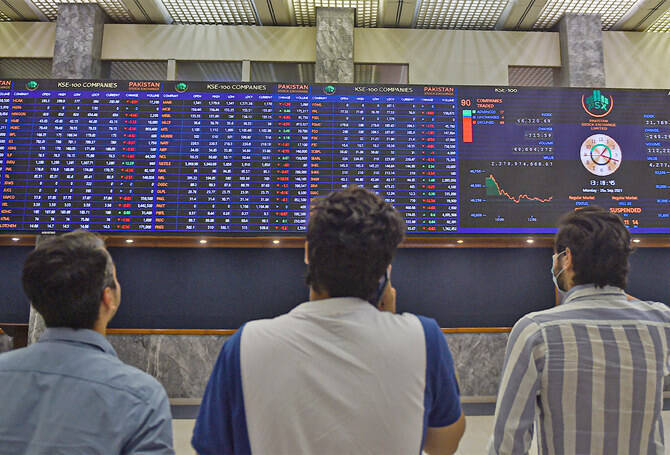
KARACHI: The number of investors at the Pakistan Stock Exchange crossed the half-million mark for the first time, the National Clearing Company of Pakistan said Thursday, capping a multi-year expansion fueled by strong returns and steady inflows of new retail accounts.
Naveed Qazi, chief executive officer of the NCCPL, which maintains investor data for the bourse, confirmed the milestone to media. “Good economic conditions, good returns [on investment in stocks] and growth trend at the PSX agreed a number of new people to join the investor community at the local bourse,” Qazi said. A major acceleration has come in the past two months. The exchange added more than 20,000 new investors in January 2026, with around 18,000 already registered in February, he said. That pace compares with about 10,000 new accounts a month in earlier periods and 5,000-6,000 monthly in recent years.
Khurram Schehzad, advisor to the finance minister, highlighted the figures in a post on X. “Pakistan Stock Exchange has just surpassed 500,000 total investors for the first time in history, reaching 502,024 as of February 2026 to date,” he wrote. Total investors across Pakistan’s public markets — including direct equity, commodities, mutual funds and others — now stand at around the 1.3 million mark. More than 227,000 new investors have entered the market since June 2022, he said, marking an 83% expansion in just over 3.5 years. Until June 2022, the total stood at 275,000.
“Most new entrants are young retail investors — a clear sign that confidence in macro stability and reform momentum is strengthening (esp youngsters),” Schehzad wrote. “Capital markets deepen when trust builds, policy clarity improves, and growth prospects gain credibility — and participation rises accordingly. It shows savings are increasingly moving toward productive assets — a key foundation for sustainable economic expansion (as over 16 new IPOs coming this year).” The benchmark KSE-100 Index delivered a 51% return in 2025, according to Arif Habib Ltd., extending a multi-year rally that included 55% gains in calendar 2023 and 84% in 2024.
Shariah Screening Rules Tightened
In a separate development announced the same day, the Securities and Exchange Commission of Pakistan approved revisions to the Shariah screening criteria and methodology for companies listed on the PSX. The changes, aimed at boosting investor confidence in Islamic-compliant instruments, followed a meeting chaired by the finance secretary to advance initiatives in line with the Federal Shariat Court’s 2024 ruling on eliminating riba, or interest, from the economy before Jan. 1, 2028.
“The revised framework is expected to support the development of the Islamic capital market, facilitate informed investment decisions, and encourage listed companies to adopt Shariah-compliant capital structures,” the SECP said in a statement. Under the new criteria, the non-compliant debt-to-total assets ratio has been lowered to 33% from 37%. A new Shariah compliance rating mechanism will assign three-, four- or five-star ratings to qualifying companies to improve transparency.
The regulator said a list of Shariah-compliant companies for the PSX-KMI All Share Index — which tracks all such listed firms — will be published with a five-working-day window for evidence-based objections. A mechanism was also introduced for interim inclusion of newly listed companies, subject to screening by the KMI Index Committee. The SECP further advised the PSX to consider additional steps, including cutting the non-compliant investments-to-total assets ratio to 30% from 33%, shifting to quarterly index updates and automating data collection.
Islamic finance has grown into a meaningful part of Pakistan’s financial landscape as officials seek to broaden inclusion and offer alternatives to conventional interest-based products. Last month, the Central Directorate of National Savings recorded Rs23.6 billion ($84 million) in Islamic finance inflows between July 1, 2025, and Jan. 23, 2026. That brought the state-run institution close to its Rs25 billion ($89 million) target for the fiscal year ending in June.
Copyright © 2021 Independent Pakistan | All rights reserved