By Staff Reporter
ISLAMABAD: Two major opposition forces moved into open alignment on Sunday, with the Pakistan Tehreek-e-Insaf declaring its support for Jamaat-e-Islami’s month-long campaign against a fuel levy, as authorities in Islamabad and Punjab responded to the prospect of simultaneous mass marches on the capital with a sweeping security clampdown.
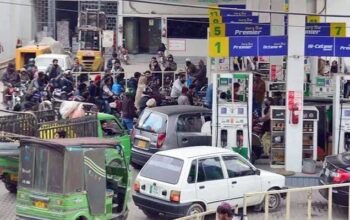
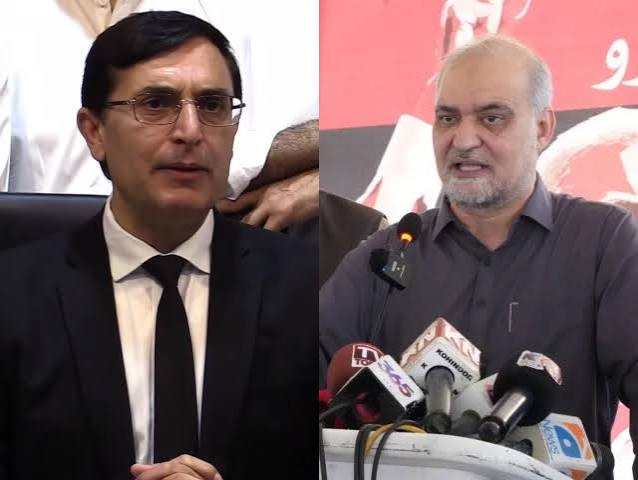
PTI chairman Barrister Gohar Khan said his party would back Jamaat-e-Islami’s sit-ins against the petroleum levy and the wider cost of living crisis, and confirmed the JI would be invited to join PTI’s own planned “long march for justice”. He also welcomed comments from JI emir Hafiz Naeemur Rehman on the release of jailed PTI founder Imran Khan, saying the two parties’ campaigns against rising prices would now run in tandem.
The overture came as Jamaat-e-Islami’s nationwide sit-ins entered their 29th consecutive day, with protest camps still standing at more than 35 locations nationwide, from Lahore and Karachi to Peshawar, Rawalpindi, Haripur and Swat. The party is pressing ahead with plans for a long march on Islamabad on 20 September, which Rehman has cast as a turning point in the campaign.
Speaking at the party’s sit-in in Batkhela, in Malakand district, Rehman said demonstrators would converge on the capital from all four directions, warning that the government would struggle to contain crowds of what he called “passionate and patriotic” youth once they reached Islamabad. He called on the state to respect the right to peaceful protest, dismissed the petroleum levy as unjust, and credited public pressure with forcing the government’s hand on a separate relief package for motorcycles, rickshaws and small cars.
“This is only the beginning,” he told the crowd, vowing that the sit-ins would not end until the levy was scrapped. The party, he said, was seeking constitutional rights rather than concessions, and would press on with both the sit-ins and the long march regardless of the government’s response. He urged supporters to keep erecting shipping-container barricades in their way, declaring that protesters would break through any blockade to reach the capital from every approach road. Should the levy remain in place, he warned, the campaign would shift into a bid to topple the government outright, and cautioned that further delay in negotiations would only see the sit-ins spread further.
Second march, second flashpoint
The PTI’s own mobilisation is advancing on a parallel track, and has been complicated by the death of a party worker allegedly injured during a police raid in Lahore.
Khyber Pakhtunkhwa chief minister Sohail Afridi said he would travel to Lahore on Monday to condemn what he described as a crackdown on PTI activists ahead of the party’s planned protest on 27 September, and to unveil the next phase of what PTI is calling its “Punjab street movement”. Writing on X, Afridi alleged that raids on PTI workers during preparations for Eid Milad-un-Nabi celebrations in Lahore had led to the death of senior party worker Ishtiaq Ahmed, who he said had been pushed into a cauldron of hot oil and suffered severe burns from which he later died. Afridi condemned the alleged treatment of PTI workers in Punjab in strong terms, and said he would visit Ahmed’s family on Monday to offer condolences before setting out his strategy for the movement.
The claims around Ahmed’s death remain contested and have not been independently confirmed; police have not issued a corresponding account of the incident.
Afridi’s visit forced a late change to a mobilisation drive PTI had unveiled only a day earlier. The party had announced a tour taking in more than a dozen Punjab cities in the run-up to 27 September, with the KP chief minister due to travel from Daud Khel through Mianwali, Wan Bachran, Quaidabad, Khushab and Sargodha, then on via Lalian and Chiniot to an overnight stop in Faisalabad, before continuing through Shahkot and Sheikhupura to Lahore on Monday. In the Punjab capital, he is scheduled to meet opposition leaders in the provincial assembly, MPAs and party figures, and to be briefed on preparations for the 27 September protest — though the death of Ahmed has now added a condolence visit to the itinerary before that briefing takes place.
Police visit hundreds of homes
The mobilisation is unfolding against a backdrop of what PTI describes as a coordinated campaign against its membership. Lahore police have begun door-to-door visits to the homes of more than 450 party workers, obtaining written undertakings from some that they will not contribute to a breakdown in law and order, according to police sources. The visits were concentrated in four divisions of the city: 122 homes in Sadar, 111 in Model Town, 142 in Cantonment and 77 in Civil Lines. Police sources said a number of workers have since gone into hiding out of fear of arrest.
PTI’s Punjab information secretary, Shaukat Basra, alleged a systematic campaign against the party’s leadership and rank and file, claiming hundreds of workers — including women — had been detained in raids across the province. Other party figures accused provincial authorities of using force against activists during the Eid Milad-un-Nabi period, and alleged that a heavy police presence at Ahmed’s funeral procession had disrupted proceedings, with prayers conducted in haste and some relatives prevented from attending.
Separately, authorities in Rawalpindi have suspended leave for all police officers until October except in genuine emergencies, and have drawn up a list of 179 PTI figures, including both sitting and former lawmakers, for monitoring. District administrations elsewhere in Punjab have issued preventive detention orders against dozens of PTI workers under public order legislation, including 31 people named in one notification and a further 14 in Toba Tek Singh.
Islamabad seeks 23,500 police from the provinces
The federal government has moved to reinforce security in the capital ahead of both marches, directing Punjab to supply 15,000 police personnel, Sindh 8,000 and Balochistan 500 — a combined deployment of 23,500 officers that is due to be in place in Islamabad by 20 September, the date of the JI march.
The Punjab government, meanwhile, imposed a blanket ban on gatherings of five or more people across the province from Sunday until Thursday, 17 September, citing intelligence of a heightened terrorism threat. A notification from the provincial home department said law enforcement and intelligence agencies had reported a “serious and imminent threat” to public safety from militant groups and hostile intelligence agencies, citing the risk of suicide bombings, vehicle-borne explosive devices and targeted killings at large gatherings. It said crowds and demonstrations risked becoming “potential targets for such terrorist attacks”, and that the restrictions had been requested by Punjab police, the Counter-Terrorism Department, the force’s Special Branch and multiple district administrations as a preventive measure.
The order, issued under Section 144 of the Code of Criminal Procedure, also bars the carrying or public display of weapons, with an exemption for on-duty security personnel, and prohibits incitement to unlawful assembly. It carves out exceptions for weddings, funerals, religious worship, and court and government business.
Adviser to the prime minister on political affairs Rana Sanaullah went further in comments to journalists in Lahore, alleging that PTI intended to bring armed supporters into Islamabad and warning that militants from a group he described as “India-sponsored Fitna al-Khawarij” could exploit the march to deepen divisions between the public and the state. He predicted the protest would ultimately fail to achieve its aims.
Government and JI still talking
Despite the show of force, talks between the government and Jamaat-e-Islami over the levy have not collapsed entirely. Negotiations that had been expected to resume were pushed back to Tuesday, according to party sources, leaving open the possibility of a resolution before the 20 September march date.
Rehman, addressing a rally in Gujranwala on Friday — before the Punjab gathering ban took effect — said the government’s decision to offer Rs100-per-litre relief on petrol for motorcycles, rickshaws and small cars was itself a product of JI’s campaign, but insisted the concession would not alter the party’s demand for the levy’s outright abolition. The sit-ins, he said, would continue alongside preparations for the long march regardless of any interim relief measures.
With both PTI and JI now publicly aligned and Islamabad bracing for tens of thousands of additional police, the coming week is shaping up as the most consequential test yet of the government’s ability to manage street pressure from an opposition that, for the first time in months, appears to be moving in the same direction.
Copyright © 2021 Independent Pakistan | All rights reserved