By Staff Reporter
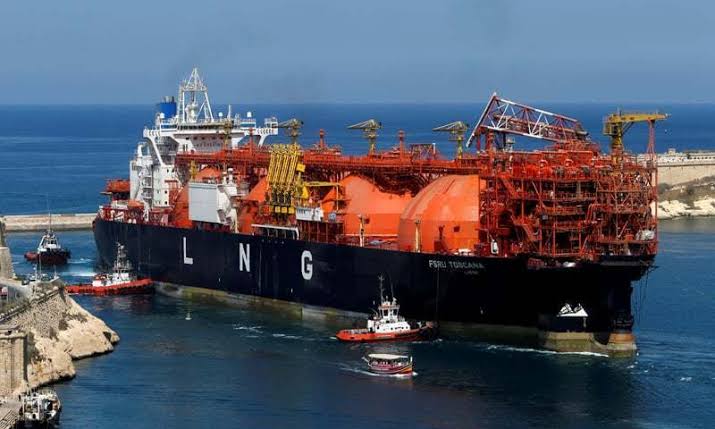
KARACHI: A liquefied natural gas tanker chartered by QatarEnergy docked in Pakistan on Monday, capping a three-week ordeal that saw the vessel idle in the Persian Gulf, get turned back once from the Strait of Hormuz, and ultimately require direct intervention from Islamabad to reach port.
The Al Areesh berthed at the Pakistan GasPort Limited terminal at Port Qasim at about 11:30 a.m. local time, according to Asad Warsi, a spokesman for the Port Qasim Authority. The ship was carrying 141,550 cubic meters of LNG procured under Pakistan’s government-to-government supply agreement with Qatar, a senior Pakistani official said.
The cargo’s journey illustrates how deeply the six-month-old war between the US and Iran has scrambled energy flows through the world’s most important oil and gas chokepoint — and how far import-dependent nations like Pakistan are having to go to keep fuel moving. Pakistan negotiated directly with Tehran to secure safe passage for the shipment, according to people familiar with the matter, leaning on diplomatic channels it has also used to help mediate between Washington and Iran during the conflict.
The Al Areesh loaded its cargo at Qatar’s Ras Laffan export terminal in early July and then sat in the Gulf for weeks as the war disrupted shipping. It finally exited the Strait of Hormuz on July 29 — the first departure by a QatarEnergy-controlled LNG carrier from the waterway since July 11, according to ship-tracking data from Kpler and LSEG. The gap followed an attack on a sister vessel, the Al Rekayyat, in early July that rattled shipowners already navigating a fragile ceasefire.
Even after crossing the strait, the Al Areesh’s path to Pakistan wasn’t straight. The tanker was diverted on July 31 as fighting between the US and Iran flared again, and shipping data showed it circling near a US naval blockade line in the Gulf of Oman for a period before resuming its course. Prime Minister Shehbaz Sharif, Petroleum Minister Ali Pervaiz Malik and officials from Pakistan’s National Crisis Management Cell were involved in the effort to get the shipment through safely, according to senior government officials.
Iran’s Grip on the Strait
The episode underscores the extent to which Iran has reasserted control over Hormuz since the war began in February, when the US and Israel launched strikes that killed Iran’s supreme leader and other senior officials. Iran responded by effectively shutting the strait to commercial traffic it hadn’t approved, laying mines, boarding vessels and firing on ships it deemed noncompliant with routes set by a body it created to oversee the waterway. Before the conflict, close to a fifth of the world’s seaborne oil and LNG moved through the passage.
A ceasefire and a memorandum of understanding reached in June briefly raised hopes that traffic would normalize, with Iran agreeing to make its best efforts to ensure safe passage for commercial vessels. That arrangement frayed in July after Iranian forces struck ships Tehran said had bypassed its approved routes, plunging the strait back into the same uncertainty that has now defined most of the year.
Iran said last week it had reached an agreement with Oman on a proposed shipping route through the strait, describing the talks as forward-moving, though Iranian officials have cautioned that any deal would not immediately restore normal traffic and that Tehran wants concessions from Washington — including an end to the war and compensation — before fully reopening the waterway. Oman has separately warned that continued attacks on shipping could still derail the process.
Costly Alternative
For Pakistan, the disruption has forced a reliance on expensive spot-market purchases to fill gaps left by delayed contracted cargoes. The Al Areesh shipment, priced at 13.37% of Brent under the long-term Qatar agreement, arrived well below prevailing spot rates, which have climbed above $21.12 per million British thermal units and could exceed $23 if Pakistan is forced back into the open market for additional supply.
Monday’s delivery was Pakistan’s 14th LNG cargo of the supply period that began in March, and its first from Qatar since June 22, when the seventh spot cargo of the year arrived. The added cost of replacing delayed contracted volumes with spot cargoes is also filtering into consumer prices: electricity generated from imported LNG currently costs about 35.5 rupees per unit, officials said, adding further strain to a power sector already grappling with tariff pressures.
Pakistan draws roughly 17% of its electricity from natural gas, with imported LNG accounting for about 6 percentage points of that total. The country typically needs four to five LNG cargoes a month between April and August to keep its roughly 5,000 megawatts of gas-fired power capacity running, making reliable Gulf shipping lanes a matter of basic grid stability rather than just cost.
Pakistan’s two LNG import terminals — the Engro Elengy facility and Pakistan GasPort — remain heavily booked, with existing cargoes sitting in floating storage and regasification units awaiting processing. One of the terminals is expected to free up capacity once that backlog clears, positioning it to receive the next QatarEnergy shipment.
Copyright © 2021 Independent Pakistan | All rights reserved