By Staff Reporter
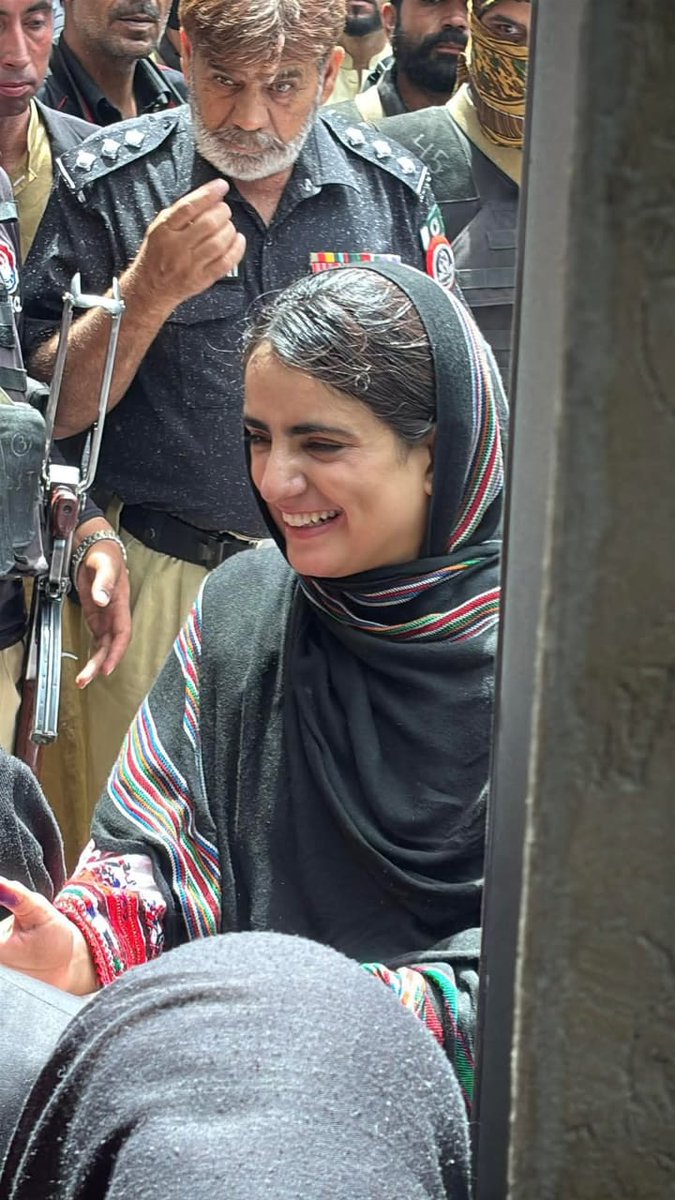
QUETTA: An anti-terrorism court in Quetta on Saturday extended the detention of Dr. Mahrang Baloch, a prominent Baloch activist and leader of the Baloch Yakjehti Committee (BYC), along with several colleagues, by 20 days, intensifying accusations of judicial overreach under state pressure.
The ruling, the latest in a string of extensions stretching over seven months, has sparked outrage among human rights advocates and sharpened scrutiny of justice in Balochistan, a province long plagued by separatist unrest.
Dr. Baloch and fellow BYC members were arrested in March, charged with attacking Quetta Civil Hospital and inciting violence during a protest against alleged enforced disappearances. Since then, their detention has been prolonged repeatedly under legal provisions critics argue are being exploited to suppress dissent.
Saturday’s decision, handed down despite objections from the activists’ legal team, highlights the deepening rift between Baloch advocates and a government grappling with a separatist insurgency and claims of systemic abuses.
The courtroom scene unfolded under Judge Muhammad Ali Mubeen, with advocates Israr Baloch, Shoaib Baloch, and Awais Zehri representing Dr. Baloch, Beebow Baloch, and Gulzadi. Israr Baloch told reporters that police had requested a 30-day extension but settled for 20. “Dr. Mahrang and the other BYC members’ remand was approved,” he said, noting their transfer to police custody.
The ruling provoked swift backlash. Sammi Deen Baloch, a well-known Baloch activist, took to X to condemn it as a stark illustration of judicial failure. “The court’s decision … is not merely an illegal action but also a reflection of the bitter reality that Pakistan’s judiciary, particularly in Balochistan, has been stripped of its freedom and autonomy,” she wrote.
She accused the courts of toggling between subservience to the Home Department and outright dismissal of cases, calling it a “highly dangerous judicial trend” rooted in “constitutional, legal, and moral bankruptcy.”
Dr. Baloch’s ordeal began on March 22, when she was detained under Section 3 of the Maintenance of Public Order (MPO) law, which permits authorities to hold individuals deemed a threat to public stability. She was initially confined at Hudda District Prison in Quetta for 30 days. In April, the Balochistan Home Department tacked on another 30 days. After serving three months, a fourth extension added 15 days in June. On July 8, the Quetta anti-terrorism court granted a 10-day extension, and Saturday’s order pushed her total detention past 200 days.
Other BYC activists, including Gulzadi, Beebow Baloch, Sibghatullah Shahji, Ghaffar Baloch, and Beberg Baloch, have endured similar prolongations. Though the BYC is not listed as a banned organization by Pakistan’s National Counter Terrorism Authority, Dr. Baloch’s inclusion among its proscribed persons reflects the state’s perception of her as a security threat.
The BYC, established in 2018, has become a powerful advocate against enforced disappearances in Balochistan, where a decades-long separatist conflict has left scars of violence and mistrust. The group’s protests have drawn attention to the anguish of families searching for missing loved ones, a cause Dr. Baloch, a doctor turned activist, has championed.
Sammi Deen Baloch framed the judiciary’s role as a continuation of colonial oppression. “The judiciary in Balochistan does not offer justice,” she wrote on X. “It is time for the judiciary to recognise its constitutional role, fulfil its duty to protect civil liberties and fundamental rights, and distance itself from this game of oppression.”
The case has rippled beyond Pakistan, catching the eye of global watchdogs. In July, Amnesty International urged Balochistan’s chief minister to drop the charges and free the activists, arguing that security laws were being twisted to muzzle legitimate protest. The group’s plea bolstered claims that Dr. Baloch’s detention is less about maintaining order and more about crushing a movement that challenges the status quo.
Copyright © 2021 Independent Pakistan | All rights reserved