By Staff Reporter
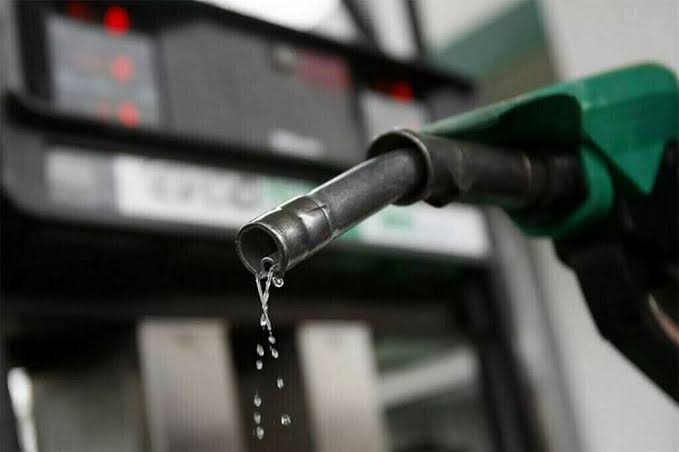
ISLAMABAD: Pakistan’s oil refiners said a surprise cabinet decision requiring them to fund a cut in the petroleum levy will force them to sell petrol below cost, the latest government move to hold down pump prices while the Middle East conflict keeps crude above $100 a barrel.
The cabinet decided on Friday night that a Rs14.71-per-litre reduction in the levy would be offset by a Rs49 contribution from refineries to the levy account, the Express Tribune reported on Sunday. Industry officials said the decision “has effectively shifted the financial burden of providing relief to consumers on to domestic refineries.” Refinery executives said they weren’t consulted.
A Petroleum Division letter dated Oct. 30 set out the mechanism. Refineries will receive an ex-refinery petrol price calculated by fixing the premium, incidentals and customs duty at their March 7, 2026 levels for the next 30 days. The gap between the import price, based on Pakistan State Oil’s actual import costs, and that revised price must be surrendered to the levy account. Industry officials said the formula would take about Rs49 a litre from refineries, more than three times the levy reduction it is meant to finance.
The effect at the pump is that petrol stays at Rs377.91 a litre. The notified levy remains Rs80, but Rs14.71 of it is now collected through refineries, which supply about 30% of the country’s petrol. A report by PakWheels, drawing on Topline Research, said the change could cost refineries as much as Rs15 billion a month.
Attock Refinery Chief Executive Officer Adil Khattak broke down the Rs49 figure. Folding pre-war premiums and incidentals into motor spirit pricing will cost refineries about Rs35 a litre, he said, and diverting Rs14 a litre of customs duty recovery toward the levy cut accounts for the rest.
“The refineries, which had already agreed on two occasions to cap their spread on high-speed diesel, first at $41.89 and subsequently at $38, are now confronted with yet another serious loss,” Khattak said. The government lowered the diesel cap to $38 a barrel from $41.89 on Oct. 20, short of the $30 it had floated, and the arrangement is to run for three months. That change followed talks between Petroleum Minister Ali Pervaiz Malik and the managements of the five refineries. Malik had cited those talks in defending the diesel reduction. Company officials said no such consultation preceded the petrol decision.
The vice chairman of Cnergyico Pk said the move could push the company’s gross refining margins negative. Cnergyico has been buying U.S. crude, which is pricier but yields more gasoline than the Middle Eastern grades it used to process.
“We are bringing US crude, which is high-priced, and we are already not recovering the actual diesel crack because of the government’s intervention in restricting diesel cracks,” he said. “US crude has more gasoline than the Middle Eastern grades we used to import. With this change in the pricing formula, our gross refining margins can go into negative territory.”
Industry officials warned that such interventions could discourage crude diversification, including imports from the U.S., at a time when Pakistan is trying to deepen its trade and energy ties with Washington.
The chief executive of another leading refinery questioned the government’s pitch to investors. “Nowhere in the world do policies change this quickly. The regulatory regime has become a joke and then the government expects foreign direct investment to flow into the country,” he said.
Khattak said the decision “strikes at the very foundation” of the Brownfield Refineries Up-gradation Policy, which requires that proceeds of a 10% customs duty be deposited into dedicated refinery accounts to help finance upgrade projects. It also undermines the policy’s assurance of protection against adverse changes during project execution, he said, calling such assurances “fundamental to establishing the financial viability and bankability” of the multibillion-dollar investments. Pakistan’s five refineries have been preparing upgrade spending of $5 billion to $6 billion under the policy.
The government has little room to give up levy revenue. Planning Minister Ahsan Iqbal ruled out an immediate cut on Thursday, saying only that a gradual reduction could be considered from the next budget. Malik told the National Assembly that levy collections reached about Rs4.4 trillion over fiscal 2022-23 to 2025-26, and the target for the current year is Rs1.676 trillion, part of the fiscal goals agreed with the International Monetary Fund.
The inflation backdrop is also against the government. The State Bank of Pakistan raised its policy rate by 50 basis points to 12% on Oct. 26, with nine of 10 Monetary Policy Committee members in favor, after September inflation came in at 10.3%, above the committee’s expectations. The committee said the increase was needed to “keep inflation expectations anchored, contain second-round effects of the ongoing supply shock” and bring inflation back to its 5%-7% target. Its statement pointed to the “recent intensification of the prolonged Middle East conflict,” which it said had pushed up already elevated commodity prices. The committee called the hike important to “keep the real policy rate adequately positive on a forward-looking basis.” The next meeting is scheduled for Dec. 14.
Industry officials said that while consumer relief matters, the government shouldn’t pay for it by loading costs onto domestic refineries. The episode, they said, has again exposed regulatory uncertainty and policy inconsistency in Pakistan’s petroleum sector. Rupee figures are converted at the State Bank’s Oct. 30 revaluation rate of about 276.75 per dollar.
Copyright © 2021 Independent Pakistan | All rights reserved