By Staff Reporter
ISLAMABAD: India lacks the capacity to abruptly halt the flow of the Indus River or fully divert its tributaries in the near term. But a report warns that New Delhi could soon wield the timing of its dams to manipulate river levels in ways that could cripple Pakistan’s agriculture, at a moment when trust between the nuclear-armed neighbours has frayed to its lowest point in years.
The Ecological Threat Report 2025, released this week by the Institute for Economics and Peace, a Sydney-based think tank dedicated to measuring peace as a tangible metric of human progress, lays bare the precarious balance of the 1960 Indus Waters Treaty. The pact, a rare pillar of cooperation amid decades of enmity, has come under unprecedented strain this year after India suspended its participation.
“For Pakistan, the danger is acute. If India were truly to cut off or significantly reduce Indus flows, Pakistan’s densely populated plains would face severe water shortages, especially in winter and dry seasons. Indeed, about 80 percent of Pakistan’s irrigated agriculture depends on Indus basin rivers,” the report states.
Pakistan’s vulnerability stems from its limited infrastructure. Pakistan’s dam capacity can hold only about 30 days of Indus flow, the analysis notes, leaving Islamabad lacking sufficient storage to buffer variations. Even small disruptions at critical moments, planted deliberately by India through the strategic timing of water releases, can hurt Pakistan’s agriculture sector.
India’s own constraints temper the immediate threat. “All of India’s dams on the western rivers are run-of-the-river projects with minimal storage,” the report explains, meaning New Delhi cannot abruptly stop the flow or completely divert its tributaries without major new investments.
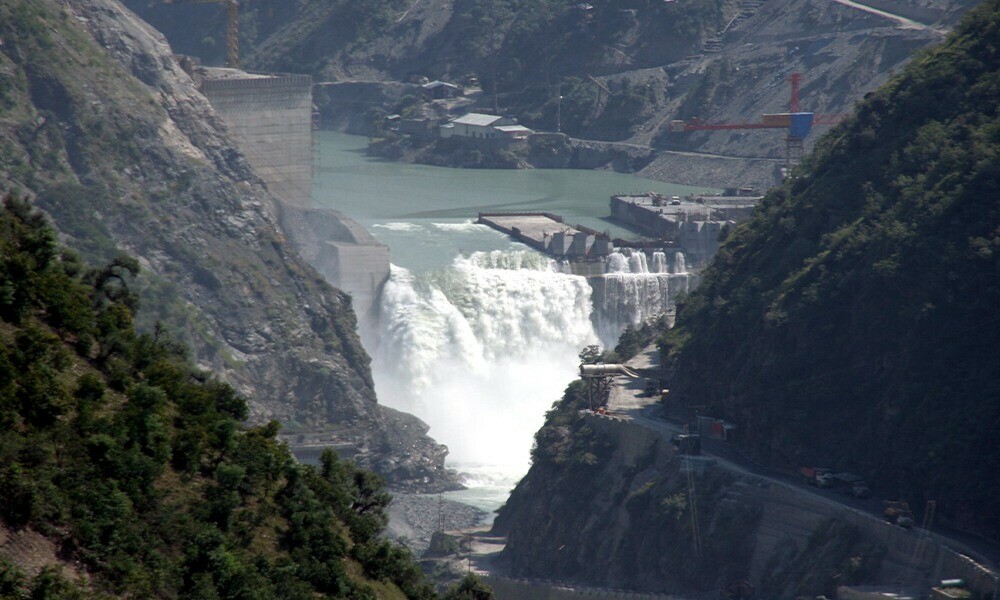
Yet the potential for mischief is real, and rising geopolitical tensions only heighten the stakes. This spring marked the first time India operated its dams outside the treaty constraints. In May, authorities conducted “reservoir flushing” on the Chenab River’s Salal and Baglihar dams without notifying Pakistan. The procedure, which empties reservoirs to scour out silt and restore capacity, had long been tightly regulated under the treaty to avoid sudden downstream surges.
The result was stark: Sections of the Chenab in Pakistan’s Punjab ran dry for a few days, as Indian gates held back the water before unleashing sediment-laden torrents upon reopening. No lives were lost, and the episode did not escalate to armed conflict. But it shattered a norm that had held for six decades.
The Indus Waters Treaty has long served as a core conflict resolution tool and point of cooperation. There was no armed conflict over water in these instances. In fact, the IWT often served as a safety valve, providing legal and diplomatic processes to address grievances that might otherwise provoke unilateral retaliation.
Over time, however, repeated arbitrations, including high-profile disputes over the Baglihar and Kishanganga projects, have accumulated… to reduce trust even as cooperation continued, the report observes. India’s suspension of the treaty, announced amid heightened border skirmishes earlier this year, has rippled far beyond the subcontinent.
Internationally, India’s suspension of the IWT raised concerns about setting a precedent. China, Pakistan’s close ally and an upstream power on other shared rivers, moved swiftly to signal its stake. In May this year, China’s state media announced an acceleration of the Mohmand Dam project in Pakistan, a Beijing-financed hydropower venture on the Swat River. Officials framed it as a gesture of support to Islamabad in the face of India’s water “threats”. The implication was clear: China signalled solidarity with Pakistan, effectively cautioning India against pushing Islamabad too far on water.
Pakistan, too, has burnished its defences. Following the signing of the defence treaty between Pakistan and Saudi Arabia, the kingdom will most likely support Islamabad in any conflict with India. The report suggests this dynamic is likely to be supportive of the continuation of the Indus agreement as India is more likely to think carefully before creating a pretext for war.
Should the treaty fully unravel, the fallout could draw in more actors. If the IWT unravels, the involvement of other players like China or even Afghanistan can further complicate matters. “For now, the IWT remains officially bilateral, but the 2025 episode showed that global powers have a stake in preventing water conflicts,” the report warns. While the implications are unclear, the rising tensions in South Asia and the Middle East are potentially linked to the future of water diplomacy for the Indus. For two nations that have fought three wars since partition — and eyed each other warily across a heavily militarised frontier, water has always been the ultimate shared vulnerability.
The report’s authors, drawing on satellite data, hydrological models and diplomatic records, urge a return to the treaty’s mechanisms before technical provocations tip into catastrophe. “In the near term, a greater threat looms for Pakistan with New Delhi in a position to use the timing of its dam operations to manipulate river flows within the range of its technical capacity,” it said. “Even small disruptions at critical moments can hurt Pakistan’s agriculture sector as Islamabad lacks sufficient storage to buffer variations.”
Copyright © 2021 Independent Pakistan | All rights reserved