By Staff Reporter
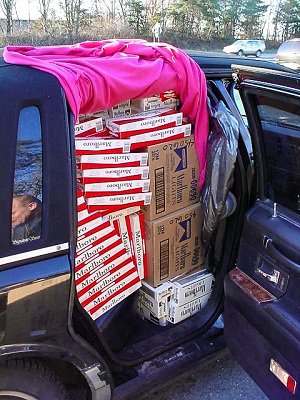
The Federal Board of Revenue (FBR) has identified tax evasion due to smuggled tobacco as a key factor of tax losses to the national exchequer. The FBR estimates that tax-evading sectors result in a revenue loss of Rs 7 trillion annually.
Out of the major revenue potential sectors identified by the FBR in its presentation before Prime Minister Shehbaz Sharif, tax evasion due to illicit tobacco is one of the primary sources causing massive losses to the national coffers.
This staggering figure underscores the urgency for Pakistan’s government to address the illicit tobacco trade. The FBR’s proposal to hire independent experts for ten major sectors — Textile, Financial and Insurance, Chemical and Fertilizer, POL, Tobacco, Iron and Steel, Beverages, Tea, Cement, and Real Estate activities — is a step in the right direction.
Experts argue that more comprehensive measures are needed to combat tax evasion.
The role of independent experts will be crucial in identifying sources of leakage and designing value-chain interventions. Their expertise will help the FBR develop effective strategies to tackle tax evasion. These experts should have over 10 years of experience working in the sector, with knowledge of manufacturing processes, financial reporting, audit, risk, fraud, assurance, and banking.
However, the FBR’s enforcement actions against illicit cigarettes have been put on hold, with no seizures reported after May this year. The tax machinery’s official website does not provide details about any seizures after May 2024.
Previous enforcement measures taken six months ago against untaxed cigarettes in certain parts of the country and in AJK did not result in convictions. This lack of accountability raises concerns about the effectiveness of the FBR’s efforts.
Pakistan’s total cigarette production stands at 81 billion sticks annually. In contrast, the FBR’s confiscation of a few million sticks in the last financial year seems insignificant. In the financial year 2022-23, the FBR conducted 1,447 seizures against the illegitimate tobacco sector, seizing 303.5 million sticks.
Despite these efforts, the tax machinery has failed to take decisive actions, including making arrests and prosecuting those involved in massive tax evasion. A single-day enforcement operation resulted in 429 raids and the seizure of 16 million sticks, but this achievement is overshadowed by the sector’s total volume.
The formal sector has contributed Rs 265 billion to the national kitty by paying duties and taxes, while the share of illicit tobacco has increased to Rs 340 billion annually. If the share of illicit tobacco does not decrease, it will continue to cause significant losses to the national exchequer.
Experts suggest that more needs to be done to discourage tax evaders and incentivize those contributing to the national exchequer through tax payments. The government must prioritize reform and enforcement to recover lost revenue and stimulate economic growth.
Pakistan’s economic stability hinges on addressing tax evasion and smuggling. The FBR’s efforts to hire independent experts and enhance enforcement actions are steps in the right direction. However, a comprehensive approach addressing tax evasion, smuggling, and counterfeiting is essential to reviving Pakistan’s economy.
Industry stakeholders emphasize the need for effective track-and-trace systems, increased penalties for smuggling and counterfeiting, and enhanced public awareness campaigns. They also stress the importance of protecting legitimate businesses and revenue streams.
Furthermore, experts recommend that the government consider reforming tax policies to reduce the incentive for smuggling. A simplified tax regime with minimal exemptions would help reduce tax evasion.
Pakistan’s struggle with illicit tobacco demands immediate attention. The government must act decisively to address tax evasion, strengthen enforcement, and protect legitimate businesses.
Moreover, the government should consider implementing international best practices to combat illicit tobacco trade. This includes collaborating with international organizations and neighboring countries to share intelligence and best practices.
Copyright © 2021 Independent Pakistan | All rights reserved