By Staff Reporter
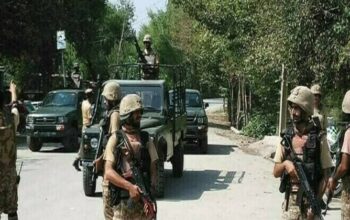
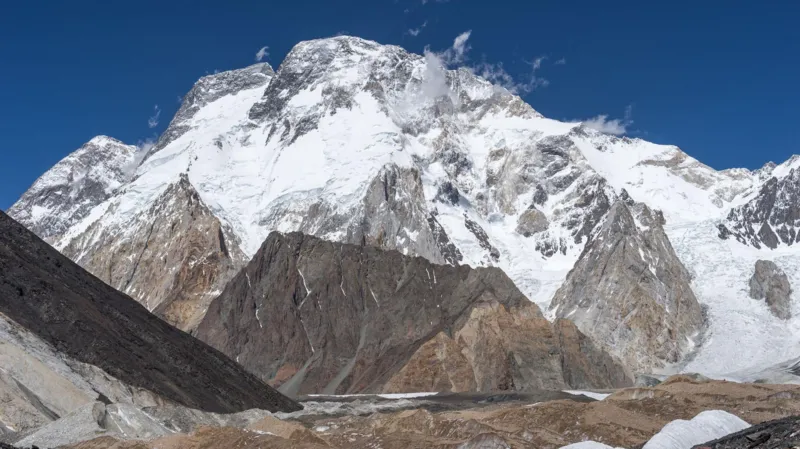
ISLAMABAD: Rescue teams backed by Pakistan Army helicopters resumed the search on Saturday morning for seven climbers still missing on Broad Peak, two days after an avalanche tore through a 10-member international expedition on one of the world’s most formidable 8,000-metre peaks.
The renewed effort follows the discovery overnight of a fourth body, which has yet to be formally identified, in addition to the three climbers whose remains were confirmed and airlifted off the mountain on Friday. Among those still unaccounted for is Nirmal Purja, the British-Nepali mountaineer whose speed-record ascents made him one of the sport’s best-known figures.
The avalanche struck at around midday on Thursday as the team, drawn from Nepal, Pakistan, Oman, the United States and China, pushed toward the summit at an altitude of roughly 6,600 metres. Contact with base camp was lost that morning, and reports of the slide began filtering through by evening.
Naila Kiani of Pakistan’s Alpine Club told Le Monde that tracking data recovered from the climbers’ devices showed the force of the impact. Data from their devices, she said, indicated they had been swept hundreds of metres down the mountainside.
The bodies of Omani climber Nadhira Ahmed Abdullah Al Harthy, Nepal’s Pur Bahadur Gurung and American climber Mallory Geis were located by a three-member civilian rescue team on Friday and flown by Pakistan Army Aviation helicopter to a military hospital in Skardu, where formal identification procedures are under way. Geis, who ran a pilates studio before shifting her focus to mountaineering, was reportedly climbing Broad Peak for the first time.
A fourth body was subsequently located, though officials have not confirmed whether it belongs to a member of the expedition. The rescue operation was suspended late on Friday because of deteriorating weather, a recurring hazard in the Karakoram range at this time of year, before ground teams resumed their mission early on Saturday.
Irfan Arshad, president of the Alpine Club of Pakistan, said the operation remained centred on Broad Peak, with military helicopters continuing to work the search area alongside teams on the ground. The club’s general secretary, Ayaz Shigri, said drone footage had identified signs of further climbers at an altitude of around 6,000 metres, though the mountainous terrain, the threat of further avalanches and continuing snowfall were complicating the rescue effort considerably.
Also missing are Kili Pemba Sherpa, Nima Sherpa, Nawang Thindu Sherpa and Gyalu Sherpa, all from Nepal; Pakistani climber Sohail Sakhi, who was guiding Geis and had summited Kanchenjunga, the world’s third-highest peak, earlier this year; and Wang Zhong, a climber from China. China’s foreign ministry has said it is working to verify the circumstances and has offered assistance to Pakistani authorities.
Sherpas from other expeditions stationed at Broad Peak’s base camp have joined the search, working alongside Pakistani military personnel and high-altitude rescue specialists. Sajid Hussain, deputy director of the tourism department in Gilgit-Baltistan, described the search area as remote and difficult, reflecting the technical severity of a mountain long regarded as one of the most demanding of the world’s 8,000-metre peaks.
Purja, 43, built his reputation on a punishing 2019 expedition in which he climbed all 14 of the world’s peaks above 8,000 metres in just six months and six days, smashing a record that had stood for decades. The feat, along with his military background in the Brigade of Gurkhas and later the Royal Marines’ Special Boat Service, formed the backbone of the 2021 Netflix documentary “14 Peaks: Nothing Is Impossible,” which introduced him to audiences far beyond the climbing world.
He had arrived in Pakistan this summer chasing a still more demanding target: becoming the first person to climb all 14 of the so-called super peaks twice, without supplemental oxygen. Posting on X in the days before the avalanche, he described Broad Peak as an unplanned addition to his schedule, one final climb standing between him and history. His message to the mountain proved prescient. “Broad Peak, I ask for nothing but safe passage up and back down,” he wrote. “I take zero mountains for granted. Not one. The moment my foot leaves basecamp, it’s 100 per cent. Always has been. Always will be.”
Broad Peak, at 8,047 metres, ranks as the world’s 12th-highest mountain and sits within Pakistan’s Karakoram range, home to five of the planet’s 14 peaks above 8,000 metres. It was first summited in 1957 by an Austrian team and has since acquired a reputation among mountaineers as one of the more technically demanding ascents in that elite category, owing to its exposed ridgelines and unpredictable weather systems.
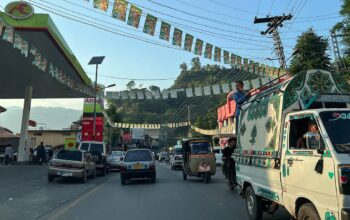
Fatal accidents are not uncommon on the mountains of northern Pakistan, where avalanches and abrupt shifts in weather have claimed climbers for decades. Moving Mountains, the Pakistan-based travel company that organised the expedition, had wished the team a safe journey as they set out for the town of Askole late last month, the traditional starting point for approaches into the Karakoram’s high peaks.
Copyright © 2021 Independent Pakistan | All rights reserved