By Staff Reporter
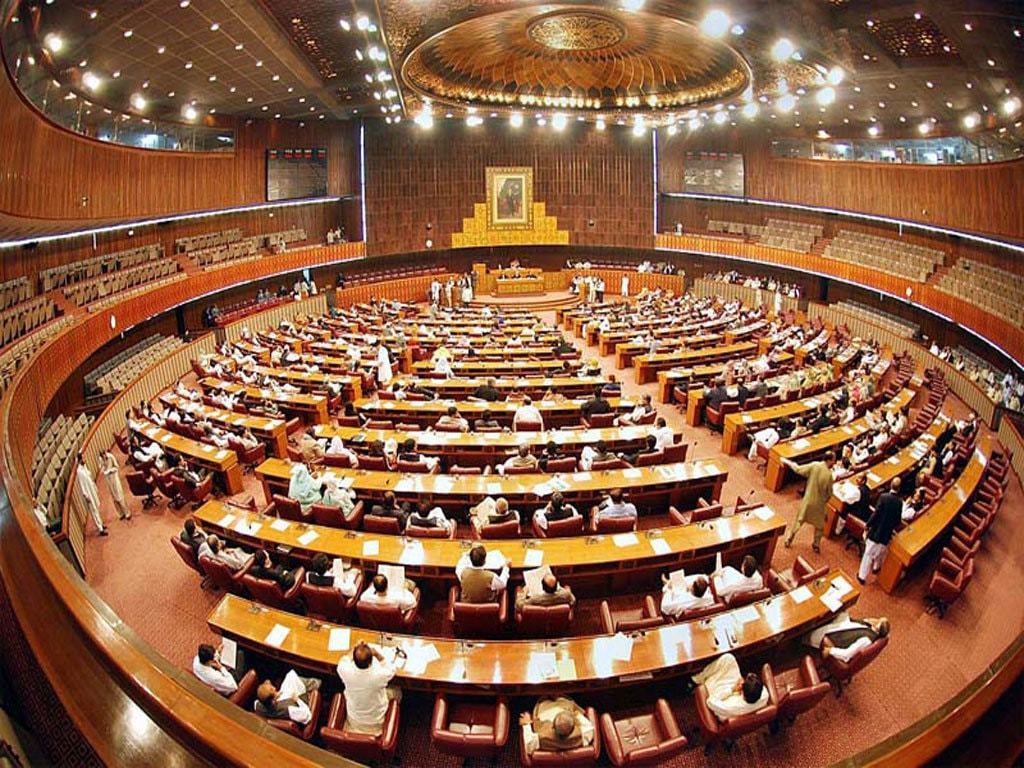
ISLAMABAD: The Senate passed a bill this week that seeks to abolish the death penalty for harboring hijackers and for publicly stripping a woman of her clothes, a move aimed at aligning the country’s laws with its international obligations under the GSP+ trade agreement with the European Union.
The decision, however, met with sharp dissent from lawmakers across the political spectrum who argued that such serious crimes warrant the harshest punishment. The Criminal Laws Amendment Bill, introduced by Minister of State for Interior Talal Chaudhry, proposes replacing the death penalty with life imprisonment under Sections 354-A and 402-C of the Pakistan Penal Code.
The change aligns Pakistan’s laws with the European Union’s GSP+ trade agreement, which restricts the death penalty to only the most serious offenses. Section 354-A currently allows death or life imprisonment for anyone who “assaults or uses criminal force against a woman, strips her of her clothes, and exposes her in public.”
The decision drew immediate backlash across party lines. “This crime is as grave as murder,” said Barrister Syed Ali Zafar, the Pakistan Tehreek-e-Insaf (PTI) parliamentary leader in the Senate, arguing for retaining the death penalty.
Senator Muhammad Abdul Qadir questioned whether terrorism-related death penalties might also be at risk, while Balochistan Awami Party’s Samina Mumtaz Zehri warned the shift could embolden criminals. “This is not right. This is not going to help the country or its people,” Zehri said, highlighting low conviction rates tied to weak prosecution and calling for broader police and judicial reforms.
Law Minister Azam Nazeer Tarar countered that harsh penalties don’t guarantee deterrence, pointing to European nations with no death penalty and crime rates as low as 2 percent.
Pakistan applies capital punishment to over 100 offences
Tarar explained that the punishment for stripping a woman in public was originally a seven-year prison term, only escalated to capital punishment during General Zia-ul-Haq’s regime in 1982.
The Senate’s passage of the Criminal Laws Amendment Bill was one of four legislative actions taken that day. Lawmakers also approved the Extradition (Amendment) Bill, designed to address procedural delays in extradition requests, and the Pakistan Citizenship Act (Amendment) Bill, which allows members of the Pakistani diaspora to resume their citizenship.
Copyright © 2021 Independent Pakistan | All rights reserved