By Staff Reporter
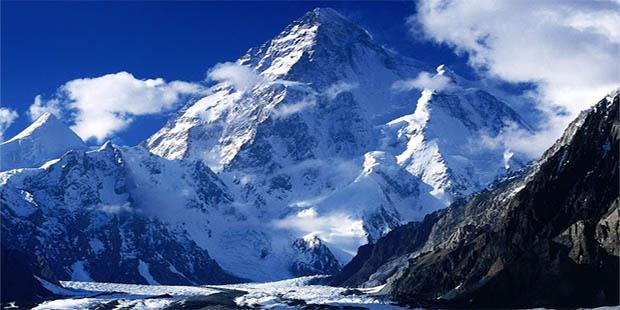
ISLAMABAD: The jagged peaks of the Karakoram Range, home to some of the world’s most formidable mountains, have long beckoned the bravest of climbers. This year, however, the dream of scaling K2, Broad Peak, Gasherbrum I, and Gasherbrum II is fading fast.
Climate change has turned these 8,000-meter giants into unpredictable adversaries, stranding dozens of expeditions at base camps amid wild weather, scarce snow, and rising risks of avalanches and rockfalls.
The situation reached a critical point on Friday when Polish mountaineer Waldemar Kowalewski suffered a leg fracture in an avalanche incident, Dawn newspaper reported on Sunday. Kowalewski is in stable condition, resting in a tent at 6,500 meters with a colleague by his side.
A rescue helicopter has been requested from the Pakistani army, but the treacherous conditions have made even that operation uncertain.
“This year, the weather at the peaks is not normal,” said Iqbal Qadri, a tour operator overseeing five foreign expedition groups now idling at base camps. “Less snowfall was received in winter, and there are risks of rockfall and snow avalanches.”
Traditionally, the prime climbing window for these peaks spans from late June to mid-August, a period when the weather is typically more stable. But this year, the mountains are proving anything but predictable.
Sakhawat Hussain, another tour operator, confirmed that progress on the 8,000-meter peaks has been significantly delayed. “Even ropes have not been fixed at K2, owing to unstable conditions,” he said. “There are threats of rockfall at K2 and other eight-thousander peaks this year.”
Experts attribute the chaos to shifting weather patterns driven by climate change. Low winter snowfall, followed by intense summer heat, has led to rapid snowmelt rather than the gradual consolidation into stable ice that climbers rely on. The result is a landscape fraught with hidden crevasses, unstable seracs, and loose rocks, a nightmare for even the most seasoned mountaineers.
The clock is ticking for the stranded climbers. The traditional climbing season is short, and each day of delay increases the likelihood that expeditions will have to abort their attempts altogether. But the risks of pushing forward are stark. “The mountains are not in a condition to be climbed safely right now,” said Hussain. “We’re advising teams to wait for a stable weather window, but it’s hard to predict when that might come.”
The turmoil on the mountains is mirrored on the ground in Gilgit-Baltistan, where the impacts of a warming planet are being felt with devastating clarity. A ferocious cloudburst unleashed a deluge over Gilgit-Baltistan on Saturday, sparking flash floods that tore through homes, swallowed farmlands, and severed vital roadways in this rugged northern region of Pakistan.
Local authorities, grappling with the aftermath, described the event as “unprecedented,” a stark illustration of how extreme weather is increasingly pummeling a region already strained by record-breaking heat and melting glaciers.
The sudden downpour hammered the Gilgit and Ghizer districts, leaving at least 13 homes damaged, alongside crops, agricultural land, and critical infrastructure like water and irrigation channels. The floodwaters also choked off the Naltar Highway, the Gilgit-Ghizar road, and numerous smaller link roads, stranding communities and complicating early response efforts.
“This cloudburst is unprecedented,” said Raja Zahooruddin Babar, Deputy Director of the Gilgit-Baltistan Disaster Management Authority (GBDMA). “Cloudbursts have happened in GB before; however, the scale of the disaster this time was unprecedented.”
The devastation was swift and widespread. In Gilgit’s Shiroot and Shakyot areas, floodwaters surged through residential zones, damaging homes and sweeping away livelihoods tied to the land. In the Bargo Pari area, a flash flood paired with landslides battered a car, two motorcycles, and a tractor, while falling rocks blocked the Gilgit-Ghizar road, halting traffic for hours until crews cleared the debris and reopened the route.
In Ghizer district, the villages of Biarchi and Gulapur bore the brunt of the deluge, with farmlands and infrastructure taking heavy hits. The Naltar Expressway, a key thoroughfare, remained clogged at 10 separate points between Nomaal and Naltar Valley, further isolating the region. “The authority is working to restore link roads in the area,” Babar said.
Remarkably, no deaths or injuries were reported. “No loss of human life or injury was recorded,” Babar said, a rare bright spot amid the chaos. The disaster follows a punishing week in Gilgit-Baltistan. On Thursday, floods in the Babusar area of Chilas wrecked 20 homes and ravaged crops, adding to the region’s mounting toll from extreme weather.
Record-high summer temperatures have fueled the crisis, accelerating glacial melt and swelling rivers to dangerous levels. Last week, Chilas hit 48.5°C (119.3°F), the hottest day since July 17, 1997, when it reached 47.7°C. In Bunji, the mercury climbed to 46.1°C, a peak not seen since July 1971.
GBDMA Director General Zakir Hussain ordered an urgent push to repair damaged irrigation channels, warning of a looming drought risk as water supplies falter. “The extensive damage to farmlands and crops and the unavailability of water posed a risk of drought in the region,” he said.
Hussain stressed the agency’s commitment to protecting vulnerable residents. “GBDMA is prepared to protect vulnerable communities and dozens of households have been relocated to safer places.” Affected families across Nagar, Gilgit, Ghizer, and Diamer districts have received food and essential supplies as recovery efforts ramp up.
Copyright © 2021 Independent Pakistan | All rights reserved