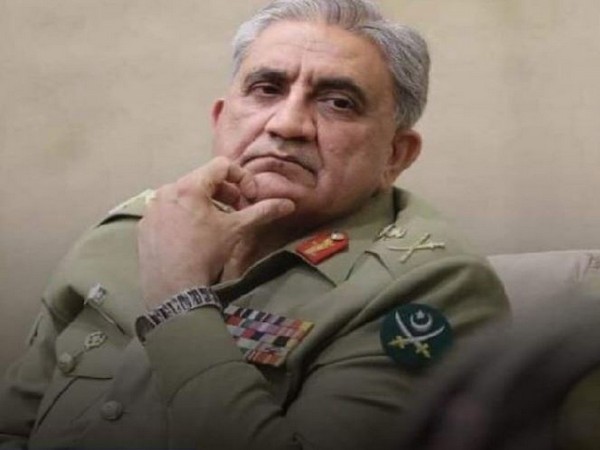
The army Gen Bajwa leaves behind is a far cry from the army he inherited, and this will be the defining feature of his legacy as the military leader of a nation struggling to walk the walk of democracy.
By Ahmer Kureishi
ISLAMABAD: It is official: Army Chief Gen Qamar Javed Bajwa is ready to walk into the sun on November 29, 2022 – the day he completes his extended term in office, after passing the baton of command to his successor, named by Prime Minister Shehbaz Sharif on Thursday.
Over the six years he served as Pakistan’s Chief of the Army Staff (COAS), Gen Bajwa led his institution through highly tumultuous waters. He allegedly ousted an elected prime minister from office through a judicial coup to install a demagogue into office through a rigged general election, then ditched the demagogue and rallied to the democratic forces.
This loop of sorts has exposed him to criticism from all sides, and to his credit, the veteran general showed considerable strength in taking this criticism in the stride.
What is more, although known to be a softie in personal matters, Bajwa showed the guts to take bold positions and to speak his mind publicly. Take for instance, the speech he made at the Defence and Martyrs’ Day ceremony at the General Headquarters (GHQ), Rawalpindi, the other day.
It was what he called his last address as Army Chief and soldier after 44 years of military service, Gen Bajwa said he is proud to have been the Chief of Army Staff for six years. And he highlighted how the military has rode to the nation’s rescue in every crisis, above and beyond its call of duty.
But this did not stop him from openly admitting to an audience packed with his subordinates that the military had been in the wrong in interfering with politics. It is not easy for a general to tell his force he has been leading them down the wrong road.
But he felt obliged to defend the honour of his mother institution from what he seems to believe is misplaced criticism for the 1971 debacle. He asserted it was not a military but a political failure.
On the face of it, the argument seems to be deflecting blame from the military to the politicians – and this is how much of the media reported it and much of the commentariat responded to it.
On close examination, however, the general may be on to something. It was indeed a political failure – of generals who had held the Pakistani polity in their hands since 1958. Who were the key political decisionmakers of Pakistan in 1971? (Hint: All of them were generals.)
And he was right to point out that people – especially people in uniform – generally avoid talking about the breaking away of East Pakistan. It was gutsy of him to approach it head on and make his opinion known, irrespective of how correct or popular it turns out to be.
Also, there is little doubt that the ranks of the military disposed themselves honourably in the 1971 war. But if the forces stationed in East Pakistan were inadequate to defend that flank of the country, it is on the generals who were making all the decisions.
The outgoing army chief pointed out that the sacrifices of the ghazis and martyrs of East Pakistan have not been acknowledged by the nation, and paid rich tributes to them, saying they are our heroes and the nation should be proud of them.
But the most significant part of his speech concerned the army’s newfound resolve to stay away from politics in the future. He said the determination had been made in February 2021 after thorough deliberations.
He seemed hurt that instead of welcoming the decision of non-intervention in politics, some political actors had severely criticised it, even using rude language. But he left no doubt as to his institution’s commitment to the policy.
“I assure you that we are strictly committed to this and will continue to do so in the future”, said Gen Bajwa, and added that criticism of the army is the right of the people and political parties, although he wished people would be careful in their choice of words.
Bajwa did not shy away from calling out former Prime Minister Imran Khan over his used of underhanded tactics to jazz up his politics. He related how Khan created a fake and false narrative to create a state of agitation in the country.
In particular, he ceased on Khan’s recent admissions that there has been no foreign plot, nor had the establishment conspired to oust him from power.
“If there is a foreign conspiracy in the country, will the armed forces sit idly by?” he roared. “It is impossible. It will be a deadly sin and those who think they can create a rift between the army and the people will always fail.”
The legacy of Gen Bajwa, then, is an army sworn stay away from politics, which is the best the institution can do for the nation. This is diametrically opposed to the army he inherited, which was deeply mired in politics.
Copyright © 2021 Independent Pakistan | All rights reserved