By Staff Reporter
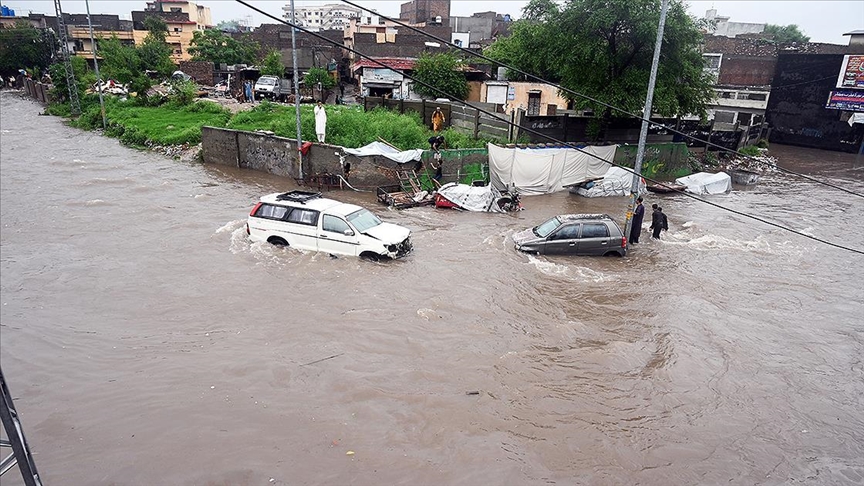
ISLAMABAD: At least eight people were killed in heavy downpours that lashed Dera Ismail Khan district in Pakistan’s Khyber Pakhtunkhwa (KP) province, pushing the rain-related death toll across the province to 406 since August 15, rescue officials said on Sunday.
Torrential rains, which began sweeping through KP on August 15, have unleashed widespread destruction, devastating homes, displacing families, and crippling infrastructure in districts including Buner, Swat, Shangla, and Mansehra. Last week, the provincial government declared an emergency as the deluge left a trail of destruction.
A spokesperson for Rescue 1122 in Dera Ismail Khan said in a statement that “torrential rains claimed the lives of eight people in DI Khan last night,” with 48 others injured in roof collapse incidents across the city, according to a report by the KP Provincial Disaster Management Authority (PDMA). The statement added that “heavy rains and strong winds caused widespread infrastructure damage as multiple incidents of damage to trees, walls, and solar panels were reported.”
Rescue 1122 teams were “actively engaged in rescue operations in the affected areas,” rushing the injured to nearby hospitals and working to clear debris caused by the deluge, the statement said.
The PDMA reported that the latest fatalities in Dera Ismail Khan have raised the province’s rain-related death toll since August 15 to 406, comprising 305 men, 55 women, and 46 children. Buner district recorded the highest toll at 237 deaths, followed by Swabi with 42 deaths due to flash floods. Mansehra reported 25 deaths from flash floods, landslides, and roof collapses, while Battagram saw three fatalities. Abbottabad and Nowshera each reported two deaths, with one death each in Mardan, Upper Kohistan, Torghar, and South Waziristan.
The PDMA also noted that 247 people have been injured in rain-related incidents, including 175 men, 38 women, and 30 children, with Buner reporting the highest number of injuries at 128. Infrastructure damage has been extensive, with 3,526 houses damaged, including 577 completely destroyed, and 5,727 cattle perished.
The National Disaster Management Authority (NDMA) issued a red alert on Friday, warning of potential flooding across Pakistan from August 23 to 29 due to a fresh monsoon spell. Since the monsoon season began on June 25, at least 788 people have died and over 1,000 have been injured in rain-related incidents and flash floods nationwide.
The Pakistan Meteorological Department (PMD) said heavy downpours are expected in Islamabad, Rawalpindi, north-eastern Punjab, Kashmir, and Dera Ghazi Khan, raising concerns about overflowing seasonal waterways. Low-lying areas in cities such as Lahore, Faisalabad, and Peshawar face risks of waterlogging, while intense showers are forecast for north-eastern Punjab, with southern Punjab, north-eastern Balochistan, and south-eastern Sindh also likely to see rain and thunderstorms.
In Punjab, the provincial PDMA raised concerns over rising water levels in the Ravi, Chenab, Sutlej, and Jhelum rivers, warning of possible flooding in northern and north-eastern districts. The Sutlej is already flowing at a high level near Ganda Singh Wala and is expected to remain elevated for at least 48 hours. Rescue teams have been deployed to vulnerable areas, and announcements via mosques and local authorities are alerting at-risk communities. The public has been advised to contact the Punjab PDMA helpline at 1129 in emergencies.
In Gilgit-Baltistan (GB), a glacial lake outburst flood (Glof) in the Talidas village of Gupis Valley on Friday morning displaced over 3,000 people from 330 households, marking the second-largest displacement since the 2010 Attabad disaster, according to Israruddin Israr, the Human Rights Commission of Pakistan’s GB coordinator. A shepherd’s warning enabled the safe evacuation of at least 200 people.
A lake formed by the glacial outburst in GB’s Ghizer district has reduced to 40 feet and poses no immediate threat to nearby settlements, said GB government spokesperson Faizullah Faraq. “For now, there is no danger from the lake,” he said, noting that the lake had earlier threatened downstream areas in Ghizer, Gilgit, and Diamer. Relief operations are underway, supervised by GB Chief Secretary Abrar Ahmed Mirza, with affected residents relocated to a tent settlement.
Faraq praised three shepherds for their life-saving alerts, including Wasiyat Khan from Rawshan village, who used his mobile phone to warn the community. “We have been told by the PM Secretariat to send the three shepherds to Islamabad. It seems that [Prime Minister Shehbaz Sharif] will meet the shepherds and encourage them,” Faraq said. The shepherds were scheduled to travel to the capital on Sunday but faced delays due to a cancelled flight caused by bad weather. GB Chief Minister Haji Gulbar Khan announced a cash reward for the shepherd who raised the alarm.
The GB Disaster Management Authority (GBDMA) said standard operating procedures have been prepared to safely release water from the artificial lake. Work on an alternative route for the Gilgit-Shandur Road is underway, with traffic expected to resume within 48 hours, though permanent restoration depends on stabilizing the mud in the area.
A fresh rain spell began in scattered areas of GB on Sunday, heightening fears of additional Glofs and landslides. The Astore Valley Road was blocked due to landslides, and key roads in Shigar, Ghanche, Hunza, and Ghizer remained disconnected. Flood-affected areas also faced disruptions to drinking water and irrigation systems, severely impacting agriculture.
The PMD warned of an increased risk of Glofs, flash floods, and landslides in vulnerable glaciated regions of GB and KP, with scattered rain and isolated heavy falls expected through August 29.
Copyright © 2021 Independent Pakistan | All rights reserved