By Staff Reporter
ISLAMABAD: President Donald Trump has reiterated his offer to mediate the longstanding Kashmir dispute between India and Pakistan, following a recent escalation of tensions that saw both nuclear-armed neighbors engage in military actions before agreeing to a US-brokered ceasefire.
The latest flare-up began on April 22 when gunmen attacked and killed 26 tourists at the Pahalgam tourist resort in occupied Kashmir. New Delhi, without providing evidence, blamed Pakistan for the assault, accusing it of supporting “cross-border terrorism.” Pakistan rejected the allegations and demanded a credible, international investigation into the incident.
Tensions simmered for weeks until, on the night of May 6, India launched missile strikes on multiple Pakistani cities, asserting that it had targeted “terrorist” camps. Pakistan denied the Indian claims, reporting that the strikes killed innocent children and pledging retaliation. For four days, the two nations traded artillery fire, missile barrages, drone strikes, and fighter jet sorties, raising fears of a broader conflict between the nuclear powers.
The violence subsided when President Trump announced a ceasefire on May 10. The United States reported that both India and Pakistan had agreed to meet at a neutral venue to address their differences, though New Delhi has publicly dismissed the prospect of bilateral talks with Islamabad.
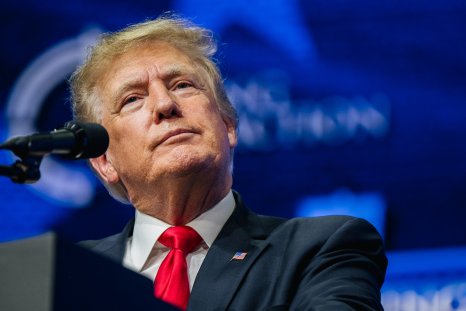
Speaking to reporters on Thursday before signing a bill in the White House’s East Room, Trump took credit for de-escalating the situation.
“I told them, India and Pakistan, they have a longtime rivalry over Kashmir. I said, I can solve anything,” he said. “I’ll be your arbitrator.”
Trump said he had halted the conflict last month through “phone calls and trade,” noting, “and India’s here right now negotiating a trade deal and Pakistan’s coming I think next week.”
Trump’s assertion that he leveraged Washington’s trade relationships to persuade both countries to stand down underscored his claim of preventing an all-out nuclear war. “Washington was going to get those two getting together,” he told reporters, framing his intervention as a diplomatic triumph.
The US State Department this week lent further weight to Trump’s offer. Spokesperson Tammy Bruce confirmed that Under Secretary of State for Political Affairs Allison Hooker met with a Pakistani delegation, led by Bilawal Bhutto Zardari, chairman of the Pakistan Peoples Party, during their visit to Washington from May 31 to June 6.
The delegation urged the United States to use its influence to bring India to the negotiating table, sustain the fragile ceasefire, and tackle unresolved issues, including Kashmir.
Bruce, addressing reporters on Tuesday, acknowledged the talks. “State Department officials, including Under Secretary for Political Affairs Hooker, met with the Pakistani parliamentary delegation during a visit they had to Washington last week,” she said. “She reiterated U.S. support for the ongoing ceasefire, as you might imagine, thank God, between Pakistan and India. They also discussed important issues to the bilateral relationship, including counterterrorism cooperation.”
Asked about the administration’s next steps following Trump’s mediation offer, Bruce remained circumspect. “So, while I can’t speak to his plans, the world knows his nature, and I can’t speak to any details of what he might have in that regard,” she responded, suggesting that the White House would elaborate further.
The Kashmir dispute traces its origins to 1947, when India and Pakistan gained independence from British rule. Both nations claim the entirety of the scenic Himalayan region, home to a Muslim majority and a sizable Hindu minority, but each administers only a portion. The territory has sparked two of the three wars fought between the neighbors since partition, cementing its status as a persistent flashpoint in South Asia.
India has consistently rejected outside mediation on Kashmir, maintaining that the matter must be resolved directly with Pakistan. This stance complicates Trump’s proposal, despite his confidence in brokering a resolution.
As tensions persist between India and Pakistan, Trump’s offer has thrust the decades-old conflict back into the international spotlight.
Copyright © 2021 Independent Pakistan | All rights reserved