By Staff Reporter
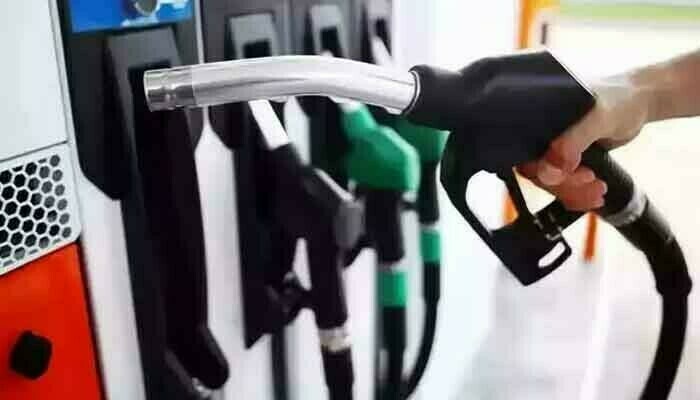
ISLAMABAD: The government raised petrol prices by Rs1.82 a litre and cut diesel by Re0.91 for Thursday, the second straight day the two fuels moved in opposite directions under a daily pricing system introduced in July.
Petrol will retail at Rs396.65 a litre, up from Rs394.83, while high-speed diesel falls to Rs394.94 from Rs395.85, according to a Petroleum Division notification effective Oct. 8. The change leaves petrol dearer than diesel, reversing the ranking of a day earlier. The government continues to levy Rs114 a litre in taxes and duties on petrol and Rs100 on diesel.
The adjustment follows Tuesday, when the government raised petrol by Rs1.19 a litre and cut diesel by Rs1.91 for Oct. 7.
Petroleum Minister Ali Pervaiz Malik announced on July 17 that prices would be fixed daily, replacing the weekly revisions the government had issued since early March, after renewed hostilities between Iran and the U.S. rattled global oil markets. The cabinet and the prime minister gave the Oil and Gas Regulatory Authority responsibility for setting prices each day based on international trends. Ogra has begun publishing the daily prices on its website, and Malik has said they are calculated on a seven-day average of international market prices.
Pump prices remain well below their spring highs but far above where they stood before the war. Diesel peaked at Rs520.35 a litre on April 3, having started its climb from Rs281 after the U.S.-Iran war broke out on Feb. 28. Petrol peaked the same day at Rs458.41, up from Rs266 in the first week of March. At current levels, diesel is about 24% below its peak and 41% above its pre-war price, while petrol is about 13% below its peak and 49% above. Petrol was priced at Rs342.79 on Sept. 1, so it has risen by roughly Rs54 a litre in about five weeks.
Petrol is used mainly in private transport, small vehicles, rickshaws and two-wheelers, so price changes fall hardest on the middle and lower-middle classes. Diesel, used in heavy transport, power plants and large generators, affects the public more broadly. The two fuels are the biggest revenue earners, with monthly sales of about 700,000 to 800,000 tonnes, compared with about 10,000 tonnes of monthly kerosene demand.
The government has responded to the price surge with austerity and relief measures. On Sept. 17 it reintroduced fuel conservation rules. Under a Cabinet Division notification effective immediately, shops, markets, shopping malls, bazaars, departmental stores, grocery stores and general stores must close by 9 p.m. throughout the week. Marriage halls and marquees must close by 10 p.m. Restaurants, cafes, eateries and standalone fruit and vegetable shops can stay open until 11 p.m. Takeaway and home delivery services are exempt. Fuel allocations for official vehicles have been cut by 50% for three months.
Prime Minister Shehbaz Sharif also announced a relief scheme offering Rs100 a litre off petrol for motorcycles, three-wheeler rickshaws and cars with engines up to 800cc. The scheme is meant to ease the burden of higher global oil prices on lower-income consumers and would cover an estimated 11.8 million people. About 10 million two-wheeler users and 800,000 three-wheeler users would get relief on 20 litres a month, a maximum of Rs2,000 each. Another one million owners of cars up to 800cc would get relief on 30 litres, a maximum of Rs3,000 each. In April, the government also announced targeted measures to provide subsidized fuel.
Global prices remain elevated. Brent futures rose $1.29, or 1.28%, to $101.87 a barrel in New York on Wednesday. West Texas Intermediate gained 22 cents, or 0.25%, to $89.66. Traders weighed a surprise drop in U.S. crude inventories, bottlenecks tied to the war and a storm heading for U.S. oil-producing regions. Reports also pointed to attacks by Yemen’s Houthis on Saudi Arabia.
Supply through the Strait of Hormuz has improved from the worst of the conflict. Crude flows have recovered to about 13.2 million barrels a day, according to Kpler data, but markets remain cautious without a lasting agreement to end the war, with Tehran and Washington both claiming control of the waterway.
“The release of strategic oil reserves should help contain near-term price spikes by offsetting declines in commercial inventories,” UBS analysts wrote. “However, such releases provide only temporary relief, as they do not eliminate the underlying tightness in the global oil market.”
Copyright © 2021 Independent Pakistan | All rights reserved