By Staff Reporter
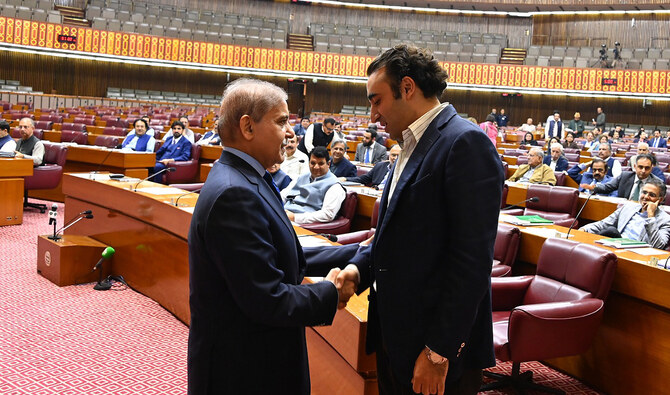
ISLAMABAD: Two senior ministers in Prime Minister Shehbaz Sharif’s government on Saturday pushed back against swirling speculations of a rift within the Pakistan Muslim League-Nawaz (PML-N) and the Pakistan Peoples Party (PPP) alliance, insisting that the coalition, bolstered by an unprecedented alignment with the military, remains intact and focused.
The partnership, forged after the 2024 elections, has weathered policy disputes and shifting allegiances, especially in the country’s most populous Punjab province, where Sharif’s niece ostentatiously rules.
Its position strengthened this week when the Election Commission, acting on a Supreme Court ruling, awarded the coalition the most reserved seats for women and minorities, positions allocated based on party performance in the general election.
The decision, which denied similar allocations to the opposition Pakistan Tehreek-e-Insaf (PTI) party of former prime minister Imran Khan, lifted the coalition’s numbers in the National Assembly from 218 to 235, securing a two-thirds majority.
In Lahore, Deputy Prime Minister and Foreign Minister Ishaq Dar praised the PPP’s loyalty. “The Bilawal-led party stood by us in tough times, and Nawaz Sharif has instructed us to honour that support now that stability has returned,” he told reporters. “We [the PML-N] had formed the government with the help of the PPP, and we must not abandon those who had supported us in challenging times.”
Dar said the PPP has a critical role in forming the current government, even though its leaders express reluctance to join the federal cabinet. “We [the PML-N] had formed the government with the help of the PPP.”
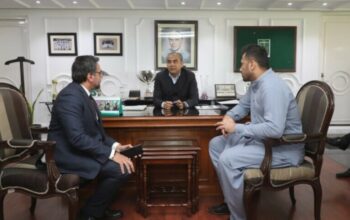
In Sukkur, Naqvi dismissed rumours of a plot to remove President Asif Zardari, a co-chairman of PPP, calling social media claims of military interference “baseless.”
“Some people are bothered as, for the first time, politicians, government, and military establishment are on the same page,” Naqvi told journalists. “Those elements are spreading misleading narratives.”
He dismissed social media claims, including a local journalist’s report alleging the military was plotting to replace Zardari with Army Chief Field Marshal Asim Munir, as baseless speculation.
The ministers’ remarks come against the backdrop of Pakistan’s evolving hybrid governance system, where civilian leaders and the military share power in an uneasy balance.
Defense Minister Khawaja Asif has been a vocal defender of this arrangement, arguing last month that it is “doing wonders” for the country. “This is a hybrid model. It’s not an ideal democratic government,” he conceded, yet maintained it functions “very well,” with decisions reached “unanimously with total agreement.”
The military’s influence was starkly evident in Munir’s recent solo meeting with President Donald Trump in Washington—a two-hour discussion that stretched beyond security to cover trade, economic development, and emerging technologies.
Conducted without Prime Minister Shehbaz Sharif or Foreign Minister Dar present, the visit fueled criticism that the military is encroaching on civilian domains, a charge Asif rejects. “There is no superimposed system or superimposed organisation on Shehbaz Sharif which dictates him,” he insisted. “He is making his decisions independently, and obviously, he is in regular consultation with the establishment on all levels.”
Pakistan’s history offers context: since 1947, the military has repeatedly asserted dominance, staging coups in 1958, 1977, and 1999, when General Pervez Musharraf toppled then-Prime Minister Nawaz Sharif, brother of the current premier.
Even in civilian-led eras, the army has shaped policy, particularly in security and foreign affairs. Today, with economic woes, political polarisation, and regional tensions, exacerbated by a May clash with India that ended in a US-brokered ceasefire, the military’s role looms larger than ever.
Talk of the PPP joining the federal cabinet persists. Defence Minister Asif hinted at “a growing possibility of an arrangement” to align the parties’ agendas, but PPP leaders remain noncommittal.
Senate Chairman Yousuf Raza Gilani has pushed for a decision, while some party members argue that after 17 months of support, including Chairman Bilawal Bhutto-Zardari’s diplomacy during the India crisis, they deserve ministries.
But PPP Secretary General Humayun Khan cited ideological differences, saying the party remains wary despite PML-N offers. “The PML-N has offered cabinet positions to us, but the party is not interested in joining the cabinet as it has reservations on some issues.”
Copyright © 2021 Independent Pakistan | All rights reserved