By Staff Reporter
ISLAMABAD: Scorching temperatures in Pakistan’s mountainous north have smashed decades-old heat records, stoking fears of catastrophic glacial floods that could imperil millions, weather officials warned on Saturday.
In Chilas, a town in the Gilgit-Baltistan region, temperatures spiked to 48.5 degrees Celsius (119.3 degrees Fahrenheit), topping the 1997 record of 47.7 degrees Celsius. Nearby Bunji hit 46.1 degrees Celsius (115 degrees Fahrenheit), surpassing its 1971 high of 45.6 degrees Celsius, the Pakistan Meteorological Department (PMD) reported.
The PMD, in a statement, said both cities recorded extreme temperatures that eclipsed historical highs, underscoring the intensity of the current heat wave gripping the region. The scorching temperatures are part of a broader pattern of extreme heat across Pakistan this summer.
In June, the PMD reported that “Feels Like” temperatures exceeded 50 degrees Celsius (122 degrees Fahrenheit) in four cities nationwide.
Gilgit-Baltistan, home to some of the world’s highest peaks and largest glaciers outside the polar regions, is particularly vulnerable to the effects of climate change, including rising temperatures and the associated risks of GLOFs.
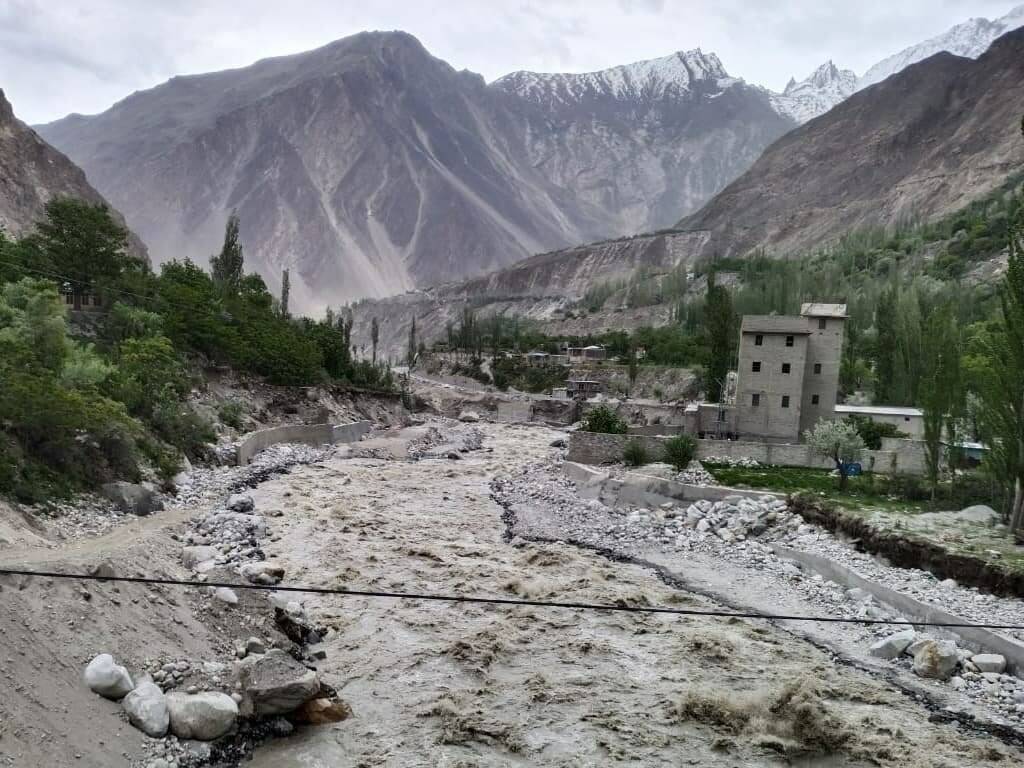
“These persistent high temperatures over northern areas may accelerate snow and glacier melt, triggering Glof (glacial lake outburst flood) and flash floods incidents, in vulnerable valleys and surrounding regions during upcoming week,” the statement added.
A GLOF occurs when a glacial lake suddenly releases its water, often due to the collapse of the ice or rock dam containing it. These events can unleash devastating floods downstream, destroying homes, infrastructure, and livelihoods in mountain communities.
The Ministry of Climate Change said over 7.1 million people in Gilgit-Baltistan and the neighboring province of Khyber Pakhtunkhwa are at risk from GLOFs, highlighting the scale of the potential danger posed by the rising temperatures.
In light of these concerns, local authorities are taking steps to mitigate the potential impacts. On Friday, the Khyber Pakhtunkhwa Provincial Disaster Management Authority (PDMA) issued an advisory to the administrations of five districts, Upper and Lower Chitral, Upper Dir, Swat, and Upper Kohistan, warning of the high risk of GLOFs due to the significant rise in temperatures and an approaching weather system.
The advisory noted that the PMD had formally informed the PDMA of the heightened risk in glaciated areas of the province. The PDMA urged district officials to take immediate precautionary measures to avoid any loss of human or animal life and damage to infrastructure and crops.
Among its recommendations, the authority called for proactive monitoring and surveillance of vulnerable GLOF sites to ensure timely early warnings and response. It also directed officials to conduct evacuation drills in at-risk communities to ensure full preparedness and to ensure that safe evacuation sites are fully stocked and ready for use in case of an emergency.
Copyright © 2021 Independent Pakistan | All rights reserved