By Staff Reporter
ISLAMABAD: Pakistan has secured a trade deal with the United States, locking in a 19% tariff rate, the lowest in South Asia, a government minister said Thursday, a move expected to significantly boost the country’s exports, particularly in textiles.
The agreement, hailed as a diplomatic breakthrough, comes amid improving bilateral relations and growing US interest in Pakistan’s energy sector.
Minister of State for Finance Bilal Azhar Kayani told the National Assembly during question hour that the 19% tariff rate offered to Pakistan stands as the lowest in the South Asian region. “At a time when cipher conspiracies were being floated, no one expected a deal like this with the US,” Kayani said. “Even the opposition will have to acknowledge that despite numerous challenges, our trade ties with the US have improved.”
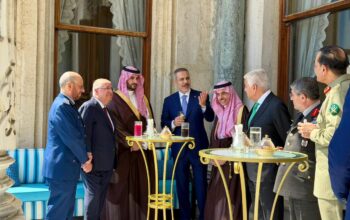
The deal follows high-level engagements, including a meeting between Chief of Army Staff Field Marshal Asim Munir and US President Donald Trump, as well as discussions by Deputy Prime Minister Ishaq Dar with senior American officials.
Kayani credited Prime Minister Shehbaz Sharif’s efforts for steering relations with Washington in a positive direction. “This trade deal is the outcome of coordinated efforts by key government leaders,” he said, accusing the opposition of hoping for deteriorating ties and pushing Pakistan toward default.
In a written response to the National Assembly, the commerce ministry said the reduction in the US tariff from 29% to 19% would save Pakistan at least $1 billion. “Instead of one billion dollars loss, Pakistan’s exports have the potential to increase share in the US market, especially in textiles,” the response attributed to Commerce Minister Jam Kamal Khan said. “The new tariff rates on Pakistan and other comparative economies will be instrumental in enhancing Pakistani goods penetration in the highly competitive US market.”
Pakistan’s textile sector, a cornerstone of its export economy, is poised to benefit most from the deal. The 19% tariff undercuts rates imposed on regional competitors, such as Vietnam, which faces a 20% US tariff, and India, now hit with a total 50% tariff after an additional 25% penalty this week due to its imports of Russian oil, according to Khurram Schehzad, an adviser to the Pakistani finance ministry.
Beyond trade, the United States has signaled interest in Pakistan’s energy sector. “…US showed its keen investment interest in Pakistan’s Oil & Gas sector to build massive reserves,” Schehzad wrote on social media platform X.
Last week, Trump highlighted the partnership, writing online: “We have just concluded a Deal with the Country of Pakistan, whereby Pakistan and the United States will work together on developing their massive Oil Reserves. We are in the process of choosing the Oil Company that will lead this Partnership.”
The energy ties are already taking shape. On August 1, Usama Qureshi, vice chairman of Cnergyico, Pakistan’s largest refiner, said the company would import one million barrels of West Texas Intermediate light crude from Vitol in October, the country’s first-ever purchase of US crude following the trade deal.
The shipment will be loaded from Houston this month and is expected to arrive in Karachi in the second half of October. Oil, valued at $11.3 billion in the year ended June 30, 2025, is Pakistan’s largest import item, making up nearly a fifth of its total import bill.
Qureshi said Cnergyico could consider importing at least one million barrels of US oil monthly after evaluating the initial shipment, given its current demand of 4.6 million barrels per month. “It aligns well with domestic market requirements. Demand typically strengthens in the October–November period,” he added.
Copyright © 2021 Independent Pakistan | All rights reserved