By Staff Reporter
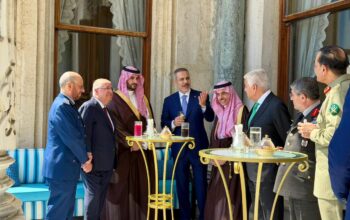
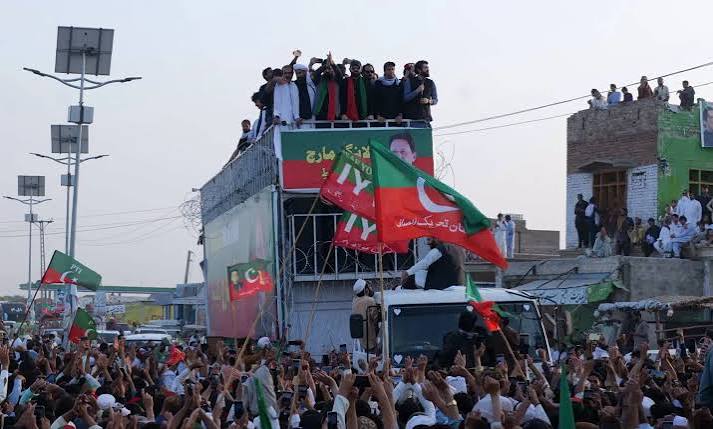
On Sunday, two things happened within hours of each other. In Lakki Marwat, Sohail Afridi, the chief minister of Khyber Pakhtunkhwa, stepped off a helicopter into a crowd of Pakistan Tehreek-e-Insaf (PTI) supporters and set off at the head of a long march. In Peshawar, Mohsin Naqvi, the interior minister, sat down with the provincial governor, Faisal Karim Kundi, and a Governor’s House statement afterwards said it would play “a full constitutional role” if the president and prime minister decided that governor’s rule or an emergency was needed to save the province.
One event is a protest and the other a threat, and each has become the other’s excuse. That is the real trouble with this week. Nobody is arguing any more about what is best for the province. A province that has buried a great many soldiers, policemen and civilians is being handled as a bargaining chip in a contest over one prisoner and one slogan about who owns the decision. They are arguing about who gave way first.
The talks that collapsed at about 3am on Sunday had run through three rounds, one of them lasting around 12 hours. By breakfast, each side had produced a version in which the other was entirely to blame. Naqvi said only one person was responsible for the breakdown and named Afridi. The PTI said the government had refused to write access to Imran Khan into the agreement. Both accounts are partly true, and both are incomplete.
Take Khan first, since he was the PTI’s one non-negotiable. His team says it was ready to drop every other demand in return for one: that party leaders be allowed to consult him. Khan, jailed since August 2023, is serving 14 years in the £190m Al-Qadir Trust case. The government offered to restore meetings with his family and lawyers from Tuesday and called that progress. It isn’t. The Islamabad High Court has already ordered visits on Tuesdays and Thursdays, and he has been kept from visitors for months regardless. Agreeing to obey a court is not a concession.
His health is harder for the government to defend. An eye condition, a retinal vein occlusion, came to light in January. In mid-August the Supreme Court told the government to move him to Shifa International within two days; the government later said he had been taken to Pims instead, which provoked a strong reaction from his family and party. The opposition’s minimum request, as its chief whip Malik Aamir Dogar put it, was that his own physicians be involved, to dispel ‘doubts and suspicions’. I struggle to see what the state loses by agreeing. A prisoner’s own doctor on a medical board costs nothing, and every refusal feeds the suspicion that there is something to hide.
But the PTI’s case has a hole in it, and the party keeps walking round it. Its statement argues that had access to Khan been arranged, Afridi could have consulted him directly on security policy and perhaps found common ground. Asad Qaiser made the same point in terms of party habit: the PML-N consults the Sharifs, the PPP the Bhuttos and Zardari, so why shouldn’t the PTI consult its leader? As a statement about parties it is fair enough. As a statement about government it is odd. A provincial administration with a commanding majority in its assembly, running a province under militant fire, shouldn’t need a prisoner’s say-so to settle a counter-terrorism policy. When a party says it does, Islamabad is entitled to wonder what any agreement signed by Afridi would be worth the morning after Adiala disagreed.
Then there is 72 hours, a number both sides invoke and appear to mean differently. The PTI says Islamabad wanted the province’s ‘unconditional support’ for its operations, with emergency measures in the merged districts and adjoining areas inside three days. The government says nothing of the kind was asked: the 72 hours were for the provincial government and the interior ministry to sit down and sign an agreed course of action. The PTI, for its part, proposed its own 72-hour meeting of authorised representatives from both governments, to be followed by consultation with the assembly parties and tribal elders. Salman Akram Raja, the party’s secretary general, said an English draft carried an emergency provision that had reportedly been dropped from the Urdu text. Asked whether an emergency had been decided, PMLN did not confirm it, and did not rule it out.
So two sides that both say they want a 72-hour joint process have fallen out over whether an emergency sits inside it. Somebody is misdescribing what is on the paper, and the paper exists. Publish both drafts.
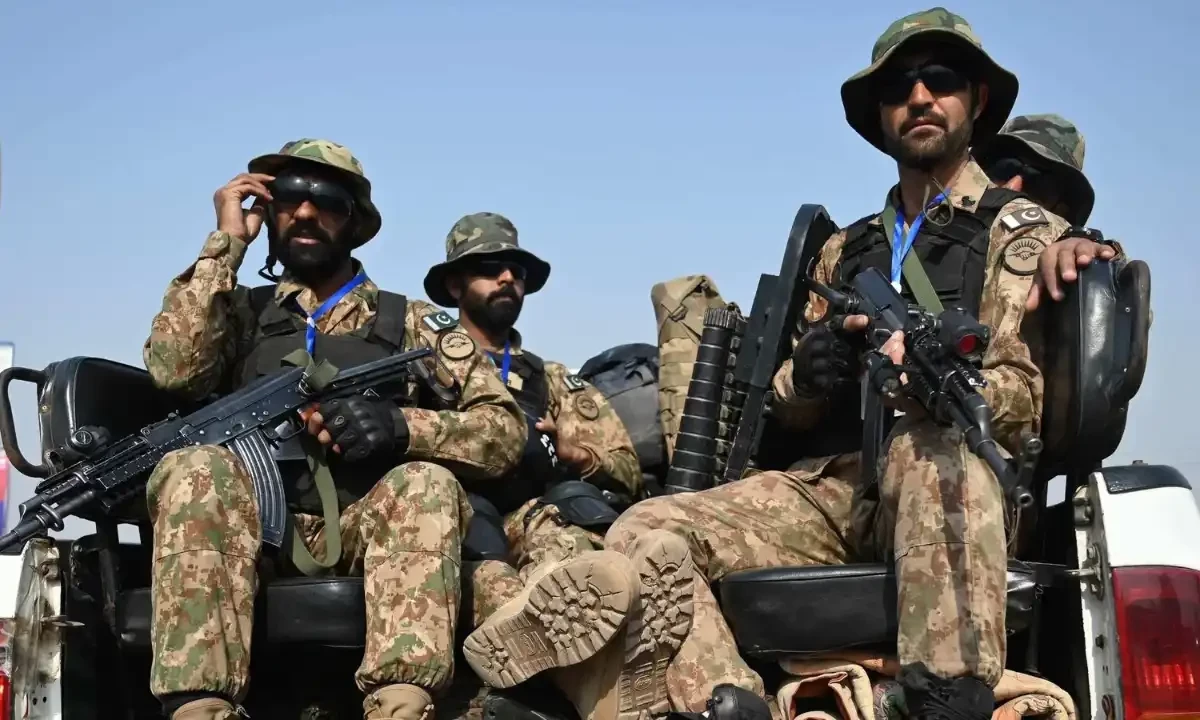
On security itself, the government’s case is the stronger one, and PTI supporters shouldn’t pretend otherwise. Terrorism in Khyber Pakhtunkhwa was not invented in Islamabad. This week’s Section 144 orders across several districts cite law and order, and in South Waziristan, the threat of vehicle-borne bombs. The information minister, Attaullah Tarar, asks why the provincial apex committee doesn’t meet, why National Action Plan commitments on police and counterterrorism capacity haven’t been met, and why PTI leaders don’t visit checkposts. He says the province has received more than Rs700bn for counterterrorism under the NFC Award, and that of Rs45bn earmarked this year for police capacity and counterterrorism, only Rs1.5bn has been released. Those are his figures, and I haven’t seen them audited. They deserve a straight answer, and so far the answer has been rhetoric.
Afridi says no to military operations, no to drone strikes, no to governor’s rule and no to an emergency, and promises peace within 100 days if his policy is adopted. Peace, he says, existed only under Khan. That is a hard sell to anyone who remembers Khan defending, in 2023, his own government’s plan to resettle members of the Tehreek-e-Taliban Pakistan, and harder still from a party that has governed the province for more than a decade. Raja himself concedes that the state’s writ has weakened in some districts and that militant groups hold significant influence there. A slogan about 100 days doesn’t answer that.
But the government goes about it in a way that wrecks its own argument. Tarar has called the PTI the ‘B-team’ of the Pakistani Taliban and the ‘C-team’ of the Afghan Taliban. Say that, then ask the same party for unconditional support, and see how far you get. Policing is largely a provincial matter, and in the districts concerned, intelligence comes from people who have to be persuaded, not ordered. Muqam says the National Action Plan is a national policy and can’t apply to one province alone, which is right, and Raja agrees there is no dispute over the plan itself. The dispute is over who sits at the table when it is applied, and who owns the consequences. If a district is cleared and families are displaced, somebody has to go and explain it to them. It is unlikely to be anyone in Islamabad.
Which brings me back to Peshawar. In the past week, ministers have said, in varying tones, that governor’s rule or an emergency remains available. The parliamentary affairs minister, Tariq Fazal Chaudhry, said the government was ‘seriously considering’ an emergency under Article 232, though Tarar had said earlier that Islamabad had no such intention. Article 232 covers internal disturbance beyond a provincial government’s power to control; if the president acts without a resolution from the provincial assembly, both houses of Parliament must approve within ten days. Article 234 deals with the failure of constitutional machinery in a province, and reports suggest an initial two months, extendable only with parliamentary approval. The PTI holds roughly 93 of the 145 seats in the provincial assembly, so a resolution from Peshawar is not going to arrive, and Afridi told the crowd in Lakki Marwat that his government accepts neither measure.
I don’t doubt that Islamabad has a legal route. I doubt it has thought about what comes after. Remove an elected government in the middle of a march, and you hand the PTI the one thing it has lacked, a clean grievance. You also lose the people you need. The districts that bear the brunt of militant violence will hear ’emergency’ and remember earlier operations and earlier displacement, which is precisely the memory Afridi trades on when he calls the province a laboratory. And a threat floated every few days as leverage in a negotiation stops being a constitutional power. It becomes a taunt.
None of this is hard to fix on paper. The government can accept a medical board that includes Khan’s own physician and obey the order on visits, because it is the law and not because anyone is bargaining. Both governments can publish their drafts and get on with the joint process each claims to want, with the provincial apex committee, the assembly parties and tribal elders in the room, and in writing what the province is being asked to own and what it may refuse. The talk of emergency can be set aside while that happens. And the PTI can stop running its protest on the machinery of the state it governs, and use Thursday to say something other than which road comes next.
Nobody has to admit to being wrong for any of that to happen. The PTI isn’t going to vanish because Islamabad disapproves of it, and Islamabad isn’t going to stop worrying about terrorism because the PTI tells it to. The only people who gain from a federal government at war with a province run by the opposition are the militants. Between now and Thursday there is one thing the state could do that costs it nothing: let a doctor the family trusts into the room.
Copyright © 2021 Independent Pakistan | All rights reserved