By Staff Reporter
ISLAMABAD: Pakistan’s foreign minister, defence minister and army chief travelled to Riyadh on Monday for emergency talks with Saudi and Turkish officials under their three-nation defence pact, after a sharp escalation in fighting between Saudi-backed forces and Yemen’s Houthis.
The meeting of the Strategic Political and Defence Committee (SPDC) of the Makkah Joint Defence Agreement is the body’s second gathering, following its inaugural session in Istanbul on 31 August.
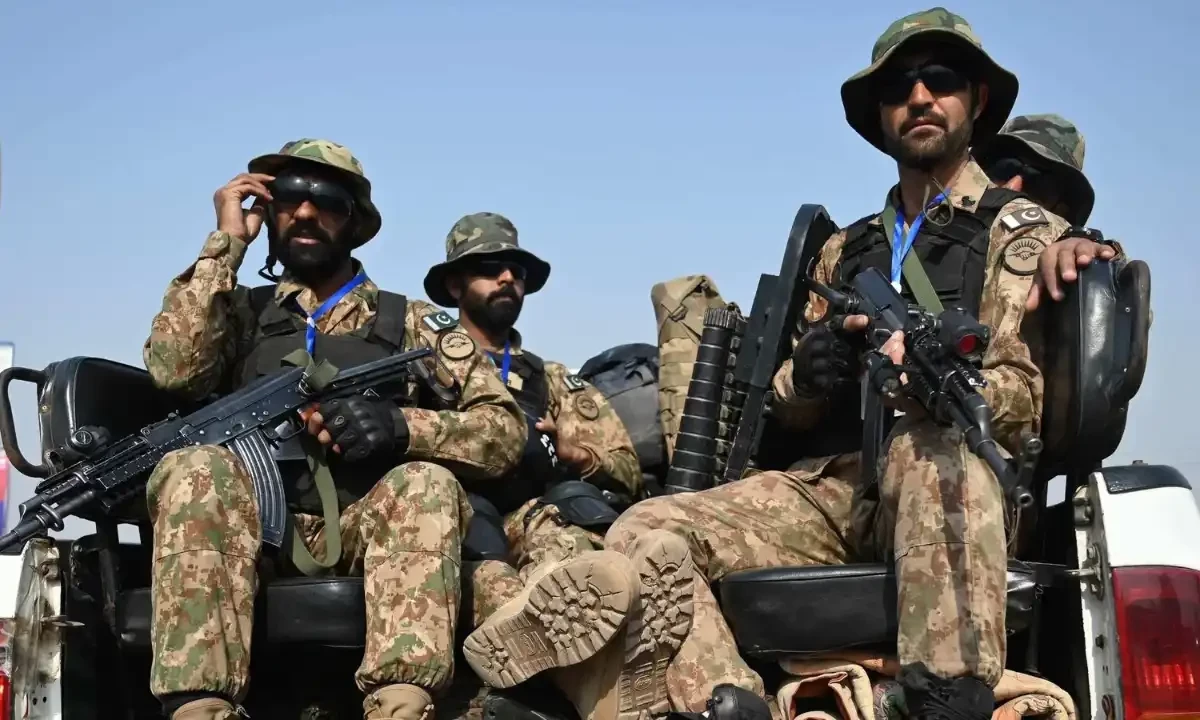
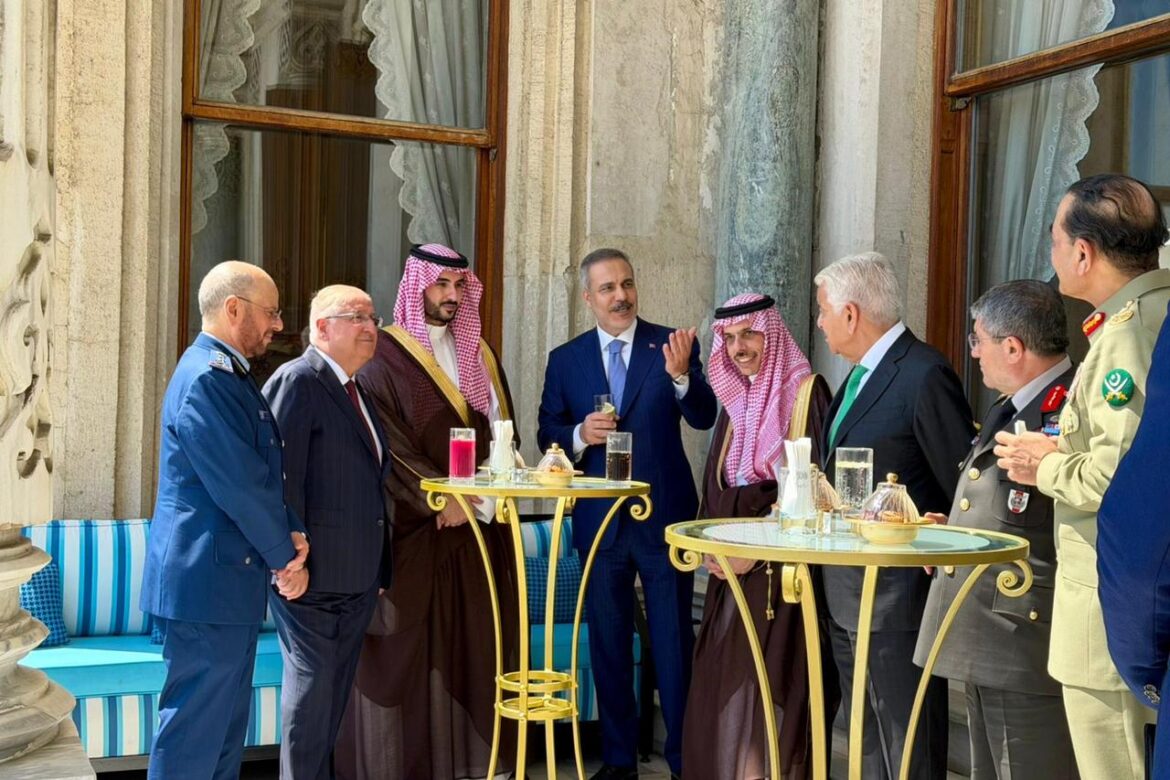
Pakistan’s Foreign Office said its delegation would be led by Ishaq Dar, the deputy prime minister and foreign minister, and include Field Marshal Asim Munir, chief of defence forces and army chief, and defence minister Khawaja Asif. The foreign and defence ministers and chiefs of general staff of Saudi Arabia and Turkey were also due to attend.
Turkey’s foreign ministry said its delegation would comprise foreign minister Hakan Fidan, defence minister Yasar Guler and General Selcuk Bayraktaroglu, the chief of the general staff. It said the talks would address recent regional developments and “the stage reached in the Alliance’s institutionalisation efforts”.
Turkish foreign ministry sources told Pakistani media that Fidan was expected to reaffirm Ankara’s solidarity with Saudi Arabia and to say that provocative actions targeting holy sites were unacceptable.
Dar arrived in Madina earlier on Monday, where he paid his respects at the Prophet’s Mosque and offered prayers before travelling on to Riyadh. The Foreign Office said Pakistan’s participation reflected its “resolve to continue contributing towards regional peace and stability”.
Last week, Dar described the session as an “emergency meeting” that would concentrate on Houthi attacks on the kingdom. He said Saudi Arabia had faced 17 to 18 such attacks. He also said Iran had suggested engaging the Houthis politically, an idea the committee was expected to discuss.
The talks follow a dramatic weekend in Yemen. On Sunday, the Saudi-backed, internationally recognised government announced a major military campaign to retake all territory held by the Iran-backed group. President Rashad al-Alimi said in a televised address that forces would press on “until the country is liberated from the grip of the terrorist militia”. A military spokesman called on the Houthis to lay down their weapons.
The Houthis said they fired ballistic missiles and drones at Saudi Aramco sites in Riyadh and the Khurais area, claiming the strikes caused major fires. They described the attacks as a response to 50 Saudi-led air and missile strikes in Yemen over the previous 12 hours. Saudi Arabia did not immediately confirm the claims.
The Houthis, who have held the capital, Sanaa, since 2014, launched a surprise offensive last month that captured the Bab el-Mandeb strait and about 150km of Red Sea coastline. That gave them new leverage over a vital shipping route.
On the ground, more than 70 people were killed in and around the western province of Taiz in the past day, sources on both sides told AFP. Four security sources said the Houthis had cut a key supply route linking Taiz with Aden, the government’s interim capital, effectively encircling Taiz city.
The Makkah agreement was signed on 7 August in Makkah by Turkey’s president, Recep Tayyip Erdogan, Pakistan’s prime minister, Shehbaz Sharif, and Saudi Arabia’s crown prince, Mohammed bin Salman. It states that an armed attack on one member will be treated as an attack on all three. It followed a bilateral defence pact between Pakistan and Saudi Arabia signed in Riyadh in September last year.
The Istanbul meeting decided that the alliance’s secretariat would initially be headed by Pakistan for three years. Retired Lieutenant General Nauman Mahmood was named its first secretary general.
On 25 September, the military chiefs of the three countries met in Riyadh for urgent talks under the pact, a day after their foreign ministers met in New York.
Pakistani officials have repeatedly pledged support to Riyadh. Lieutenant General Ahmed Sharif Chaudhry, director general of Inter-Services Public Relations, said last month that Pakistan would go to “any extent” to defend Saudi Arabia, calling its commitment “unconditional”. Asif has said Pakistan would stand by the kingdom “practically and diplomatically” if the situation escalated.
Dar has said more than six countries are keen to join the alliance, which he described as defensive in nature. Islamabad has said any decision on membership would be taken jointly by the three states. He said the committee would meet again at the end of October or the beginning of November.
The meeting also takes place against the backdrop of the wider confrontation between the US and Iran. Axios has reported that Washington has sent additional Patriot missile batteries to Saudi Arabia and Qatar to protect energy facilities from possible Iranian retaliation. Iran’s foreign minister, Abbas Araghchi, said on Sunday there was “no military solution” to the conflict.
Copyright © 2021 Independent Pakistan | All rights reserved