By Staff Reporter
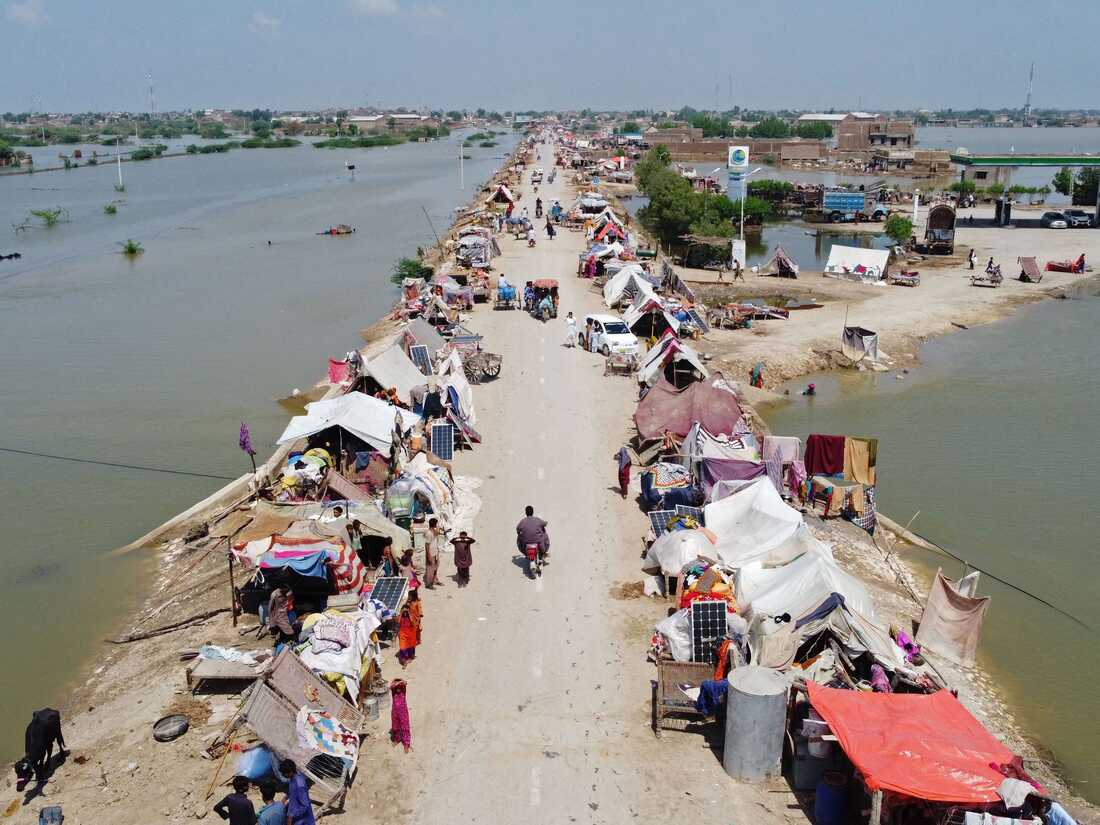
ISLAMABAD: Severe flooding triggered by overflowing Indus and Chenab rivers has displaced thousands of families across south Punjab, Pakistan, destroying homes, crops, and farmland, officials said Thursday.
Authorities have warned of an impending spell of heavy monsoon rains that could exacerbate the crisis, with the Pakistan Meteorological Department (PMD) forecasting torrential downpours, wind, and thunderstorms across multiple regions from August 23 to 29.
The worst-affected districts include Layyah, Taunsa Sharif, Kot Addu, Dera Ghazi Khan, Muzaffargarh, Rajanpur, and Multan, where floodwaters have inundated villages, forcing mass evacuations. In Multan, entire villages and mango orchards have been submerged, while in Kot Addu, residents of Ehsanpur and Hinjrai union councils fled with their livestock as waters rose.
“Houses are surrounded by water, crops have vanished, and land is eroding,” a rescue official told Dawn newspaper, noting that over 150 people and their cattle were evacuated by boat.
In Layyah, floodwaters breached protective bunds and washed away roads linked to the Layyah-Taunsa bridge, isolating communities. Residents of multiple union councils in Layyah and Taunsa have sought refuge under the open sky, with many reporting no government assistance. In Jampur tehsil, villages such as Shero Jadu, Jakhar Imam Shah, Lundi Pitafi, and Qabool Chowk are submerged.
“We have to leave on our own with our cattle,” said Khalil Malik, a Jampur resident, describing the lack of support. Muzaffargarh’s Jatoi and Alipur tehsils have also been hit hard, with locally built bunds breached and villages like Khairpur, Basti Laskani, and Kehal abandoned.
At Head Taunsa, water flows have reached 500,000 cubic feet per second, threatening downstream areas in Dera Ghazi Khan and Rajanpur. The PMD warned of a fresh monsoon spell starting August 23, driven by strong currents from the Arabian Sea and Bay of Bengal, coupled with a westerly wave.
Widespread rain, wind, and thundershowers, with scattered heavy falls, are expected in Azad Kashmir, Gilgit-Baltistan, and Khyber Pakhtunkhwa from August 23 to 27. Affected areas include Neelum Valley, Muzaffarabad, Peshawar, Swat, and Abbottabad.
Similar conditions are forecast for Islamabad, Rawalpindi, Lahore, and other parts of Punjab, with isolated heavy falls in Dera Ghazi Khan, Multan, and Rajanpur from August 24 to 27. Sindh and eastern Balochistan face heavy rains from August 27 to 29, impacting areas like Tharparkar, Umerkot, and Khuzdar.
The PMD cautioned that flash floods are likely in streams and nullahs of Khyber Pakhtunkhwa, northern Punjab, and Kashmir, with urban flooding risks in low-lying areas of Rawalpindi, Lahore, and Peshawar. Landslides and mudslides threaten hilly regions, and strong winds could damage weak structures, electric poles, and solar panels. Authorities have been urged to remain on high alert, with citizens advised to avoid vulnerable areas.
The Punjab Provincial Disaster Management Authority (PDMA) issued a high-alert warning as glacial melt and ongoing rains swell rivers. Medium-level flooding is reported at Taunsa Barrage on the Indus, with low-level flooding at Chashma, Kalabagh, Ganda Singh Wala, and Bed Sulemanki on the Sutlej River. Tarbela Dam is at full capacity, and Mangla Dam is 74% full, raising concerns about further water releases. “Citizens living in riverbeds should immediately relocate to safe areas,” said PDMA Director General Irfan Ali Kathia, emphasizing the need for compliance with evacuation orders.
A new assessment by Islamic Relief highlights the scale of devastation in Buner and Swat, where 60% of families have lost their livelihoods to flash floods. The organization reports that 73% of houses are destroyed or damaged, 80% of agricultural land in Buner is ruined, and nearly 50% of livestock have perished. Contaminated water supplies have led to a 40% rise in diarrhea cases, with waterborne diseases spreading rapidly. “The flood waters are receding, but the impact is enormous,” said Raza Narejo, acting country director of Islamic Relief Pakistan. “The poorest communities have seen their jobs and income wiped out in a flash.”
Copyright © 2021 Independent Pakistan | All rights reserved