By Staff Reporte
ISLAMABAD: Prime Minister Shehbaz Sharif said on Saturday that a peace agreement to end the three-month war between the United States and Iran could be finalised within 24 hours, a statement of striking optimism that landed even as American warships were shooting down Iranian drones over the Strait of Hormuz.
“We are closer to a peace deal than ever before,” Sharif wrote on X. “With finalization likely expected in the next 24 hours, Pakistan is preparing for the electronic signing of the peace deal immediately after, followed by technical level talks next week.”
The announcement marked the most concrete public timeline yet from Islamabad, which has served as the principal mediator between Washington and Tehran since helping broker a fragile ceasefire in April — a truce that has held in name far more than in practice.
The war, which began in late February when the United States and Israel launched airstrikes against Iran and killed its supreme leader, Ali Khamenei, has killed thousands, sent global energy prices sharply higher, and effectively paralyzed shipping through the Strait of Hormuz, one of the world’s most critical maritime chokepoints. Iran has blockaded the waterway since the outbreak of hostilities, requiring vessels to obtain clearance from its armed forces before transiting; the United States has imposed a reciprocal blockade on Iranian ports in an effort to strangle Tehran’s energy revenues.
The latest chapter of violence unfolded on Saturday morning, when US Central Command announced that Iran had “launched multiple one-way attack drones in an attempt to strike commercial ships transiting the Strait.” American forces downed all of them, CENTCOM said in a post on X, adding that “traffic flow through the strait continues unimpeded.”
The episode showed the precariousness of a diplomatic process that has, for weeks, seemed perpetually on the verge of yielding a breakthrough — only to stall again.
A deal taking shape — but contested
Still, there were signs on Saturday that the logjam may finally be breaking. On Friday, Sharif said both governments had agreed on a final text for the proposed accord, describing the development as “the closest the sides have come to ending months of conflict.” Iranian Foreign Minister Abbas Araghchi had separately written on social media that “The Islamabad Memorandum of Understanding has never been closer,” a reference to the Pakistani capital where talks have been hosted.
Defence Minister Khawaja Asif said the expected agreement would be presented publicly as the “Islamabad Pact.” In an interview with a local television channel, he credited Islamabad with keeping both parties at the table through repeated crises — including what he described as deliberate efforts by Israel to derail the talks.
“On several instances, Israel adopted a negative role,” Asif said, pointing to ongoing Israeli military campaigns in Lebanon and Gaza. “It was in their interest to keep this conflict going and keep America engaged in this region.”
Asif praised both the United States and Iran for ultimately showing restraint. “The US administration demonstrated that it was judicious and behaved and led the way a world leader should do,” he said, while describing Iran as having marked a new chapter in its history “with bravery and love for their homeland.”
Yet for all the diplomatic momentum, the two sides appeared to be describing different agreements. President Trump, posting on Friday on Truth Social, denied that the deal being finalized was favorable to Iran, dismissing reports to the contrary as the work of “Fake News.” “The terms that Iran leaked out have NOTHING to do with the terms that were agreed to, in writing,” he wrote.
Araghchi, meanwhile, offered his own account of what the deal contains: a lifting of the American naval blockade, unspecified changes to the administration of the Strait of Hormuz, and a provision that Iran’s stockpile of enriched uranium — which Washington has characterized as part of a nuclear weapons program — would be diluted inside Iran rather than removed. On the broader question of whether a deal had been reached, he was carefully noncommittal.
“Until a complete agreement is reached on all issues,” Araghchi told Iranian state media, “it cannot be said with certainty that an understanding has been achieved with the United States.”
Iranian Foreign Ministry spokesperson Esmaeil Baghaei told the state media that while large portions of the negotiating text had been finalized, Iran would not compromise on its core positions.
Geneva, Islamabad, and a signing still being arranged
The logistics of a potential signing remained unsettled on Saturday. Araghchi indicated any deal would be signed “remotely.” Switzerland said it had proposed hosting a signing ceremony in Geneva. Pakistani Foreign Minister Ishaq Dar spoke by phone on Saturday with his Swiss counterpart, Ignazio Cassis — their second conversation in less than 24 hours — with both sides expressing hope that the diplomatic push would contribute to “peace and stability across the Middle East,” according to Pakistan’s Foreign Ministry.
Reports have circulated that US Vice President JD Vance may travel to Europe to participate in a signing ceremony, though no official confirmation has been issued.
In Tehran: skepticism on the streets, division in the press
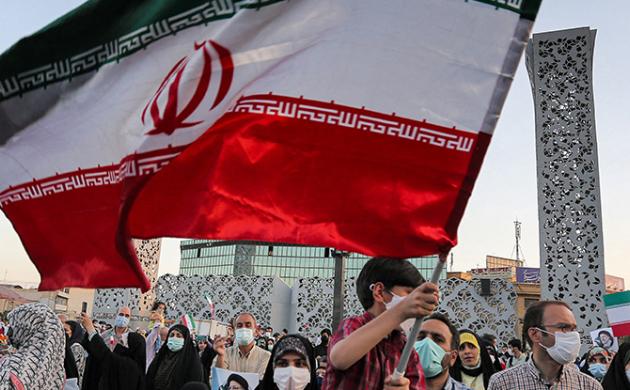
Whatever optimism filled diplomatic cables did not translate easily to the streets of the Iranian capital, where years of broken promises have hardened public cynicism.
“I don’t think there is any deal soon,” said Saeed Sadeghi, 49. “I don’t trust their word.”
Iran’s major newspapers reflected the country’s fractured politics. The reformist daily Etemad welcomed the prospect of a deal as a way to break what it called a “chronic geopolitical and economic deadlock.” The ultra-conservative Kayhan, by contrast, argued that Iran’s leverage in any negotiation lay precisely in its control of the strait — and that abandoning it would be a strategic blunder. “No sane person would bring their greatest strength to the negotiating table,” the paper wrote.
For Sharif, the prospect of ending that conflict remained the central preoccupation. Thanking both Washington and Tehran for their “ongoing commitment during the negotiations,” he expressed confidence that the agreement, if signed, would endure. “We are confident,” he wrote, “that this historic peace deal will form a strong foundation for lasting peace.”
Copyright © 2021 Independent Pakistan | All rights reserved