By Staff Reporter
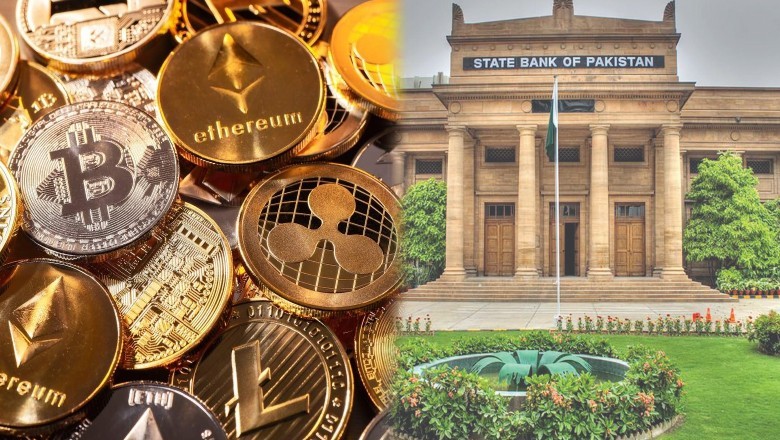
ISLAMABAD: Pakistan’s central bank has signalled its intention to legalise digital currencies, marking a reversal of its previous ban as the government advances plans to regulate the sector through the Virtual Assets Bill, 2025.
The move aims to align Pakistan with global standards while addressing risks like money laundering and investor protection.
Acting Deputy Governor of the State Bank of Pakistan (SBP), Dr. Inayat Hussain, briefed the Senate Standing Committee on Finance and Revenue on Wednesday, signaling a shift in the country’s stance on cryptocurrencies.
“Yes, as the SBP has agreed in principle to legalize digital currencies for which the legal framework is being put in place,” Hussain told the committee in response to a question from Chairman Saleem Mandviwalla on whether Pakistani citizens can now buy virtual assets. The SBP would withdraw existing orders banning cryptocurrency use once the regulatory framework is finalized.
The committee, chaired by Mandviwalla, convened to discuss the government’s Virtual Assets Bill, 2025, which aims to regulate virtual assets in line with international standards. The bill follows the promulgation of the Virtual Assets Ordinance on July 8, 2025, which established the Pakistan Virtual Asset Regulatory Authority (PVARA) as the primary overseer of the sector.
PVARA will license and supervise Virtual Asset Service Providers (VASPs), focusing on preventing money laundering, terrorist financing, and other illicit activities while fostering innovation and financial inclusion.
The Finance Division, in a written briefing to the committee, underscored the dual nature of virtual assets as both an opportunity and a challenge. “Virtual assets are an evolving component of the modern financial ecosystem, offering new opportunities for innovation, investment, and economic growth,” the briefing stated.
However, it highlighted significant regulatory hurdles, including ensuring investor protection, market transparency, and financial system integrity. To address these, the ordinance empowers PVARA to enforce a robust framework that aligns with global standards, promotes Shariah-compliant virtual asset services, and curbs illegal activities such as fraud. The goal is to create a secure environment for virtual asset transactions while positioning Pakistan as a competitive player in the global digital asset market.
The committee recommended placing PVARA under the Finance Division rather than the Cabinet Division, citing the subject’s financial nature. It also set qualifications for the authority’s chairperson, requiring an age limit of 55 and five years of experience in digital finance and technology.
Senator Anusha Rehman advocated for accommodating younger candidates with relevant expertise, warning against turning the role into a “parking lot” for less-qualified appointees.
Pakistan’s pivot toward regulating digital currencies aligns with global trends as countries grapple with the rise of cryptocurrencies. Nations like the U.S., Singapore, and the UAE have introduced frameworks to balance innovation with risk mitigation, while others, like China, maintain strict bans. For Pakistan, a regulated virtual asset market could attract investment and bolster financial inclusion, particularly in a country where digital payments are gaining traction.
However, challenges remain. The Financial Action Task Force (FATF), which monitors anti-money laundering and terrorist financing measures, has placed Pakistan under enhanced scrutiny in the past. A robust regulatory framework will be critical to meeting international compliance standards and avoiding sanctions.
The SBP’s in-principle approval marks a turning point, but the absence of a finalized regulatory framework leaves uncertainty for investors and businesses. The Virtual Assets Bill, once passed, will clarify the operational scope of PVARA and set guidelines for VASPs, potentially unlocking new opportunities in Pakistan’s financial sector. For now, stakeholders await the committee’s next meeting, where further refinements to the bill are expected.
Copyright © 2021 Independent Pakistan | All rights reserved