By Staff Reporter
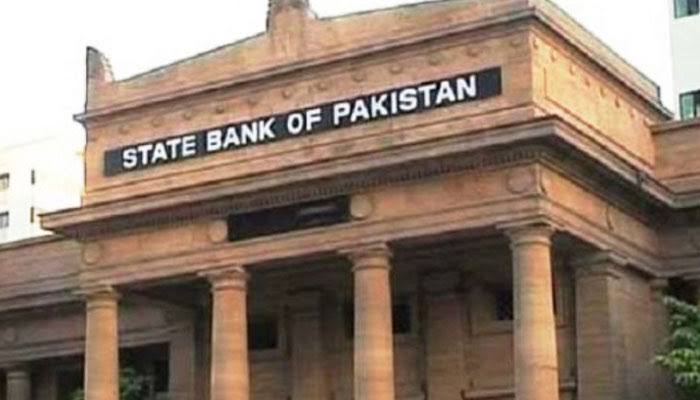
KARACHI: The central bank is set to keep its benchmark interest rate on hold at 11 percent when its Monetary Policy Committee convenes on Monday, as fresh flooding threatens to stoke inflation in a fragile economy already strained by energy costs.
The State Bank of Pakistan’s decision comes against a backdrop of moderating price pressures that have tempted calls for easing, but policymakers remain wary of upside risks. In its last review on June 30, the MPC left the policy rate unchanged, citing a deteriorating inflation outlook driven by steeper-than-expected hikes in energy tariffs, particularly for gas. That stance has held since May, when the rate was trimmed to 11%.
Trade and industry lobbies have pushed for deeper cuts to revive activity, even as inflation has eased sharply. The spread between headline prices and the policy rate now hovers just under 8 percentage points — a real rate that’s provided room for relief, yet officials are prioritising the longer view amid geopolitical strains and now, deluge-related disruptions.
A fresh survey by Topline Securities underscores the consensus: 72% of market participants anticipate no change, pointing to the floods’ potential to lift food costs and broader inflation through crop losses and supply snarls in the months ahead.
Analysts draw parallels to the 2010-11 inundations, when sown area for key staples like wheat, rice and cotton shrank 3% to 18%, and rice output plunged 30% in fiscal 2011, according to Pakistan’s economic survey.
The deluge has already rippled through markets, hammering agriculture-dependent goods and sending prices for rice and vegetables up Rs30 to Rs40 per kilogram, a stark break from August’s steadier levels. Such spikes could derail the single-digit inflation that’s prevailed since August 2024, forcing the MPC to err on the side of caution.
A separate poll by the Chartered Financial Analyst Institute reinforces the holdout: 92% of respondents see the rate staying pat in this review, with the MPC’s prior meeting having flagged energy-price risks and external tensions despite cooling core inflation. Just 6% foresee a 50-basis-point trim, while 2% eye a more modest 25-basis-point dip. The restrictive posture has exacted a toll on growth.
Mohammad Younus, chairman of the Policy Research and Advisory Council, highlighted how the SBP’s approach has yielded real rates around 8%, among the region’s priciest. “In comparison, India’s real interest rate is 4pc, Bangladesh’s is 1.7pc, China’s stands at 3.4pc, and Vietnam’s is at 1.3pc,” he said.
Younus argued the economy’s signals point to enfeebled demand. “Sustained low inflation in the 2-3pc range over six months indicates that restrictive policies have significantly constrained economic activity, suppressing demand,” he said.
High borrowing costs exacerbate the drag, with that 8% real rate eclipsing the nation’s real gross domestic product expansion. The fallout shows in scant investment, which has averaged a mere 0.6% of GDP over the past decade — lagging peers like India at 1.6%, China at 1.3%, Vietnam at 4.6% and Turkey at 1.4%.
Younus dubbed it “an investment famine” fueled by borrowing barriers that have choked private-sector momentum. For the MPC, the calculus boils down to balancing nascent recovery against flood-fueled perils. With imports ticking up and supply chains at risk, any easing now could invite a rebound in prices that undoes hard-won gains.
Copyright © 2021 Independent Pakistan | All rights reserved