By Staff Reporter
KARACHI: The central bank bought $7.8 billion of dollars from the interbank market over the past year, a move that helped avoid heavier foreign borrowing at elevated rates and lifted foreign exchange reserves fivefold in about two-and-a-half years.
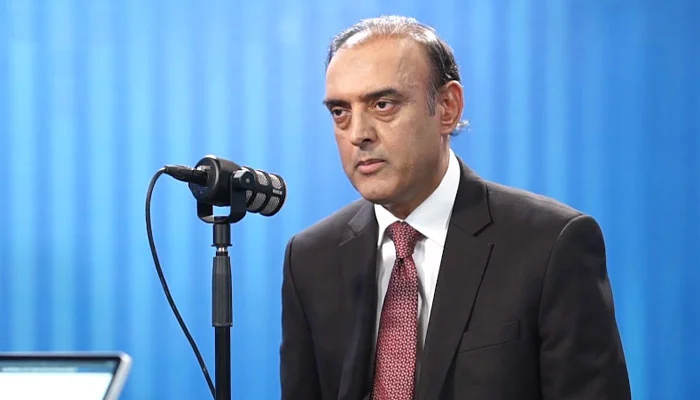
The timely purchases enabled the country to meet external debt obligations without tapping costlier funding, State Bank of Pakistan Governor Jameel Ahmad said Thursday at the ninth Annual Microfinance Conference in Karachi. “Had we not built up our reserves from inter-bank purchases, the government would have needed to borrow significantly higher amounts – at higher interest rates – to make timely debt repayments,” Ahmad said.
The acquisitions ran from June 2024 through May 2025. Reserves now stand at almost five times the level seen in February 2023, bolstered by the SBP’s strategic interbank buys to strengthen its buffers.
Ahmad credited tough but essential policy and regulatory steps in recent years for delivering macroeconomic stability. Inflation has dropped sharply and should stay within the government’s 5% to 7% medium-term target, despite short-term price pressures from recent floods, he said. Durable stability is key to inclusive growth that benefits all communities, the governor added.
Ahmad reiterated the SBP’s support for microfinance as a tool for broader prosperity. To adapt to changing demands and enhance sector durability, the central bank has overhauled prudential rules for microfinance banks, shifting from rigid guidelines to a principles-based framework. “These reforms included: removal of restrictions on microenterprise lending, allowing greater flexibility, introducing a dedicated Agriculture & Livestock loan category, enhanced loan limits up to Rs5 million for agriculture, microenterprise, and housing loans, and Rs500,000 for general loans,” Ahmad said.
The SBP is dedicated to partnering with the industry to build resilience, protect clients and widen access, he said. “Together, we can ensure that microfinance continues to play its vital role in fostering inclusive, resilient, and sustainable growth.”
Fiscal restraint from the government has supported the SBP’s monetary and oversight actions, curbing inflation and external account strains, Ahmad said. Debt trends have improved markedly over three years as a result. Growth is rebounding and poised to pick up in the current fiscal year, even with flood-related hits to agriculture, he said.
To counter climate vulnerabilities, the SBP rolled out a Climate Risk Fund via a World Bank-backed Resilient and Accessible Microfinance Project, offering liquidity to aid two million borrowers hit by shocks.
Separately, with government backing, the SBP introduced a Risk Coverage Scheme for Small Farmers and Underserved Areas, providing 10% first-loss protection and incentives to boost lending in regions like Balochistan, Khyber-Pakhtunkhwa, Azad Jammu & Kashmir and Gilgit Baltistan. The conference, organised by the Pakistan Microfinance Network, centered on the “Renaissance of Microfinance” theme, emphasising its role in equitable development.
Over two decades, Ahmad said, financial inclusion has climbed from 47% in 2018 to 67% by June 2025, with the gender gap shrinking from 47% to 30%. He attributed gains to digital efforts like Raast, Asaan Mobile Account, Roshan Digital Account and digital banks, plus the Banking on Equality Policy for women’s inclusion.Under the National Financial Inclusion Strategy 2028, the SBP aims to reach 75% inclusion and cut the gender gap to 25% by 2028.
Copyright © 2021 Independent Pakistan | All rights reserved