By Staff Reporter
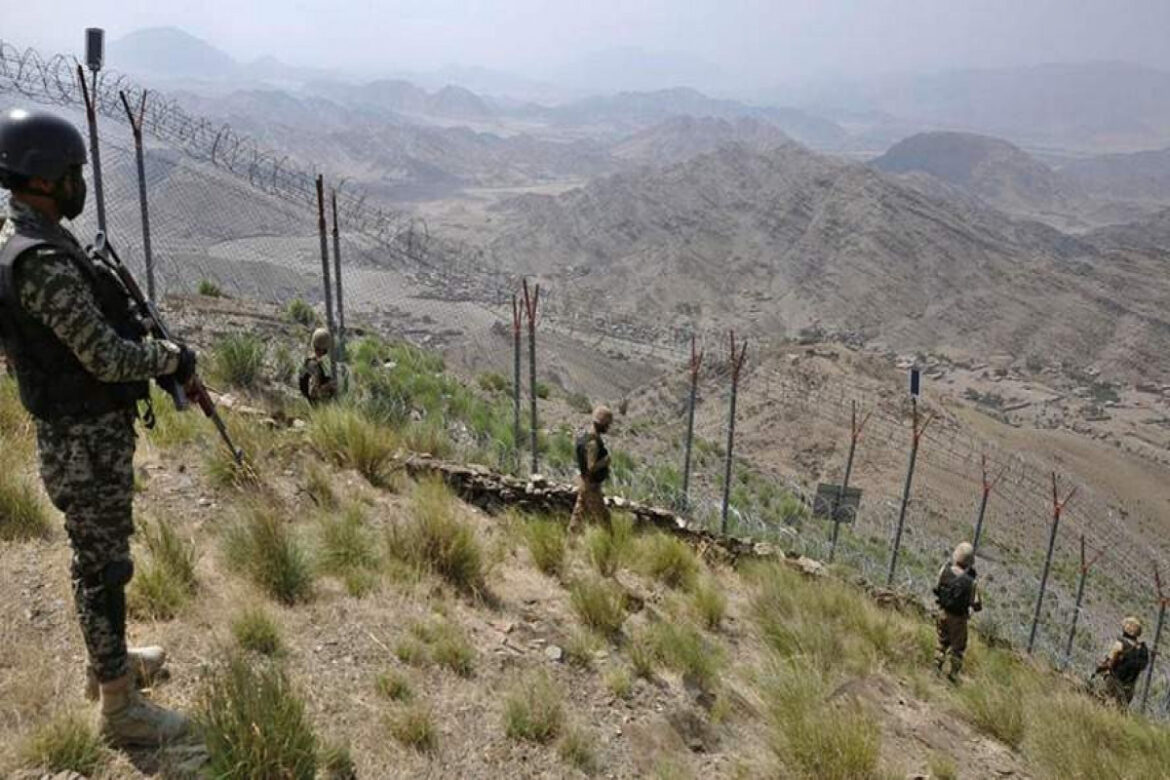
ISLAMABAD: Intense clashes broke out along the Pakistan-Afghanistan border on Saturday night after Taliban forces attacked Pakistani military posts, prompting a forceful response from Pakistan’s army that included artillery, tanks and airstrikes, according to security officials from both sides.
The violence marked a sharp escalation in tensions following Taliban accusations that Pakistan carried out airstrikes in Kabul earlier in the week, fueling fears of a broader conflict along the 2,600 km-long porous border between the two countries, once Cold War comrades against the former Soviet Union.
Taliban border forces initiated the reprisals, claiming retaliation for Pakistani airstrikes on Afghan territory, senior Taliban officials from provinces including Kunar, Nangarhar, Paktika, Khost and Helmand.
“In retaliation for the air strikes by Pakistani forces,” Taliban border forces in the east are “engaged in heavy clashes against Pakistani forces’ posts in various border areas,” the Afghan military said in a statement earlier.
“The operations ended at midnight. If the opposing side violates Afghanistan’s territory again, our armed forces are ready to defend their territory and will respond firmly.”
On Thursday, two explosions were reported in the Afghan capital and another in southeastern Afghanistan. The Taliban-run defence ministry subsequently accused Pakistan of “violating its sovereignty” in connection with the attacks. “Once again, Pakistan violated Afghan airspace, bombed a civilian market in the Paktika airspace near the Durand Line, and also violated the territory of the capital Kabul,” the ministry said.
Islamabad has not explicitly claimed responsibility for the attacks but called on Kabul “to stop harbouring the Tehreek-i-Taliban Pakistan (TTP) on its soil”, which is accused of killing hundreds of Pakistani soldiers since 2021 and is believed to have received combat training in Afghanistan, sharing ideological ties with the ruling Taliban.
Pakistani officials acknowledged fighting at multiple locations, including Angoor Adda, Bajaur, Kurram, Dir and Chitral in Khyber Pakhtunkhwa Province, and Baramcha in Balochistan. “Tonight, Taliban forces began firing at several border points. We retaliated with artillery at four locations along the border,” a Pakistani government official said. “We will not tolerate any aggression from the Afghan Taliban within our territory. Pakistani forces responded with heavy fire, effectively targeting several Afghan border posts.”
The forces used artillery, tanks, light and heavy weapons, as well as drones and air resources, to strike militant hideouts linked to the TTP, Islamic State affiliates known as Daesh, and other groups operating under the patronage of the Afghan interim government.
“Kharijites and Daesh hideouts inside Afghanistan, operating under the patronage of the interim Afghan government, are being effectively targeted,” officials said. “The headquarters of Afghan forces, which have been sheltering Daesh and Fitna al-Khawarij, are also being targeted.” They reported that “several Afghan soldiers were killed,” with militant formations retreating amid “heavy losses” among Afghan border posts, as Afghan forces failed to provide covering fire to the militants.
In Baramcha, near Afghanistan’s Helmand Province, “Afghan forces opened indiscriminate fire at Pakistani border posts with heavy weapons late on Saturday night,” a senior official said, adding that the exchange lasted two hours, destroying Afghan posts and inflicting casualties. Afghan forces also attempted infiltrations in Pishin and Zhob Districts but were repelled.
Interior Minister Mohsin Naqvi lauded the military’s response in a post on X. “Firing by Afghan forces on the civilian population is a blatant violation of international laws. Pakistan’s brave forces have given a prompt and effective response that no provocation will be tolerated,” Naqvi wrote. “Pakistan’s forces are alert, and Afghanistan is being answered with stones for bricks. The people of Pakistan stand with the brave armed forces like a lead wall. Afghanistan will also be given a befitting reply like India.”
Lt. Gen. Ahmed Sharif Chaudhry, the military spokesman, addressed the broader context without confirming the airstrikes. “To protect the lives of the people of Pakistan, we are doing, and will continue to do, whatever is necessary,” he said, urging Afghanistan to prevent its territory from being used for terrorism against Pakistan.
The past week saw heightened tensions, with both sides exchanging sharp statements. Pakistan suffered multiple casualties among security forces in intelligence-based operations against terrorists, while Afghanistan accused the former of violating its sovereignty. The issue of terrorists using Afghan soil against Pakistan, along with frequent border skirmishes, has long strained ties between the two countries, with Islamabad repeatedly urging the interim Afghan government to stop allowing its territory to be used for attacks. Kabul, however, denies allegations of providing safe havens to these groups.
Defence Minister Khawaja Muhammad Asif expressed frustration in Parliament on Thursday. “Enough is enough, Pakistan government and armed forces’ patience has worn out.” Kabul denies providing safe havens. This week, Afghan Foreign Minister Amir Khan Muttaqi, during a visit to India, marking New Delhi’s first high-level engagement with the Taliban since 2021, condemned the Kabul explosion at a news conference and blamed Pakistan.
Analysts said recent days showed just how deep the border tensions run. “Intensifying cross-border attacks on Pakistani forces, unusually intense Pakistani strikes in Afghanistan, and Taliban retaliations have created a perfect storm for trouble. If you throw in the fact that Afghanistan doesn’t recognise the border, as well as the proliferation of disinformation about the crisis, it all makes for a precarious situation.” Michael Kugelman, a South Asia analyst based in Washington DC, said.
“Fortunately, this crisis, serious as it is, is poised to de-escalate sooner rather than later. The Taliban lack the capacity to fight the Pakistani military head-on, and once the retaliations appease public anger, they’re likely to recede.”
Kugelman believes for Pakistan “the risk is that its recent strikes in Afghanistan will galvanise TTP to carry out reprisals, which could invite further and perhaps more intense Pakistani operations in Afghanistan.” “And then the cycle could play out again. There are no winners or easy long-term solutions here. If we see de-escalation now, we’re nowhere near being out of the woods.”
Iranian top diplomat Abbas Araghchi called on Afghanistan and Pakistan “to exercise restraint” amid ongoing clashes. “Our position is that both sides must exercise restraint,” Araghchi said during a live interview with state television, adding that “stability” between the countries “contributes to regional stability.”
Meanwhile, Saudi Arabia, with which Pakistan recently signed a mutual defence deal, expressed concern at the skirmishes. “The kingdom calls for restraint, avoiding escalation, and embracing dialogue and wisdom to contribute to reducing tensions and maintaining security and stability in the region,” it said in a statement. “The kingdom affirms its support for all regional and international efforts aimed at promoting peace and stability, and its continued commitment to ensuring security, which will achieve stability and prosperity for the brotherly Pakistani and Afghan peoples.”
Qatar’s Foreign Ministry urged prioritising “dialogue, diplomacy, and restraint” to contain differences, reduce tension and avoid escalation, while affirming support for peace efforts and commitment to security and prosperity for both peoples.
The ruling Taliban emerged in the early 1990s from religious seminaries in Pakistan’s northwestern Khyber Pakhtunkhwa province, many of them funded by conservative clerics and supported by elements of Pakistan’s security establishment. The group drew its ranks largely from Afghan refugees and students, who had fled the Soviet war in Afghanistan.
Copyright © 2021 Independent Pakistan | All rights reserved