By Staff Reporter
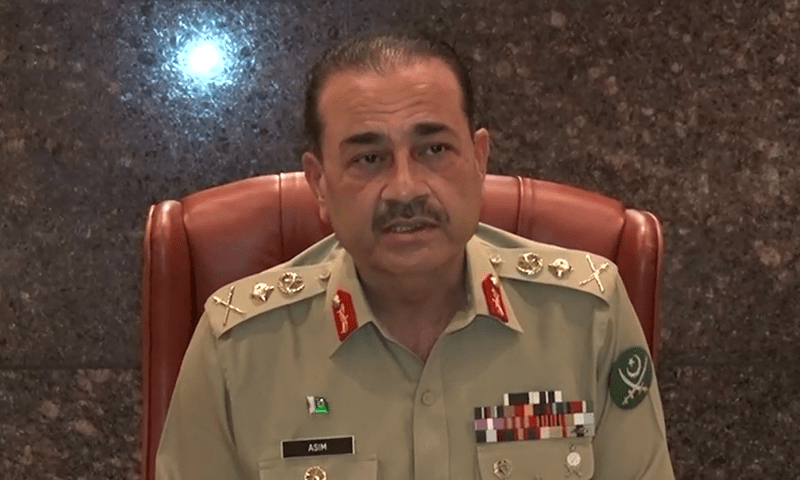
ISLAMABAD: Pakistan’s army chief on Tuesday accused India of sponsoring terrorist proxies in the restive province of Balochistan, warning that any violation of his country’s territorial integrity would prompt a “firm and decisive response,” as tensions between the two nuclear-armed neighbors remain heightened following a brief but deadly border conflict earlier this year.
Field Marshal Asim Munir, the chief of army staff, delivered the remarks during an interaction with participants at the 17th National Workshop Balochistan, held at the military’s General Headquarters in Rawalpindi. His comments, detailed in a press release from the Inter-Services Public Relations, the military’s media arm, underscored Pakistan’s longstanding allegations of Indian interference in its internal affairs, particularly in Balochistan, a resource-rich region plagued by insurgency and separatist violence.
“Indian sponsored proxies” known as Fitna al-Hindustan and Fitna al-Khawarij are “propagating anti-people and anti-development agendas in Balochistan with malicious intent to perpetrate violence,” Field Marshal Munir said. He added that “all necessary actions are being taken to pursue these terrorists and rid the province of this menace.” The terms reflect Pakistan’s evolving rhetoric on militancy. Fitna al-Khawarij is a label the government applies to members of the banned Tehreek-i-Taliban Pakistan. In May, Pakistani authorities designated all terrorist organizations operating in Balochistan as Fitna al-Hindustan, a phrase intended to highlight what Islamabad describes as India’s deliberate strategy to destabilize the region, potentially to rally domestic support against its eastern neighbor.
Field Marshal Munir’s address also praised Balochistan as “the pride of Pakistan, endowed with vibrant, resilient and patriotic people who are its true wealth.” He highlighted development initiatives by the federal and provincial governments aimed at improving the province’s socio-economic conditions through a “people-centric approach,” emphasising the need to tap into its “immense economic potential” for the benefit of local residents. Acknowledging the contributions of civil society, particularly in “engaging and empowering the youth,” the army chief described their role as pivotal in fostering sustainable development and countering “vested political agendas” for the long-term prosperity of Balochistan.
Balochistan and the neighboring Khyber Pakhtunkhwa province, both bordering Afghanistan, have borne the brunt of Pakistan’s terrorism challenges, accounting for more than 96 percent of the country’s violence-related incidents, according to recent data. A report from the Centre for Research and Security Studies, an independent think tank in Islamabad, recorded at least 25 percent of the nation’s total violence-linked fatalities, 230 deaths, and 85 incidents in Balochistan alone.
Tuesday’s statements come amid simmering cross-border frictions not only with India but also with the Taliban-led government in Afghanistan. Pakistan has repeatedly accused Afghan authorities of providing safe havens to militants who launch attacks across the porous frontier, exacerbating security woes in Balochistan and Khyber Pakhtunkhwa. Just days earlier, on Saturday, the army chief had issued a stark warning to India, declaring that there was “no space for war in a nuclearised environment” while hailing Pakistan’s “clear victory” in a May conflict with its neighbor.
He urged the Afghan people to prioritize “mutual security over perpetual violence” and called on the “Afghan Taliban regime to rein in the proxies who have sanctuaries in Afghanistan. “Rest assured, like our victory in the conventional domain, every state proxy of our neighbour will be razed to dust, God-willing,” Field Marshal Munir said then, vowing that Pakistan would not yield to “misguided terrorists having a perverted interpretation of Islam.”
The military’s top leadership had earlier this month cautioned India against entertaining any “imaginary new normal” in bilateral relations, promising a “new normal of swift retributive response.” These exchanges trace back to escalating hostilities in early May 2025, when an attack in Indian-occupied Kashmir’s Pahalgam area prompted New Delhi to initiate “Operation Sindoor” on May 7. Indian forces targeted sites inside Pakistan, resulting in civilian casualties. India attributed the initial attack to Pakistan without providing evidence, further straining relations between the longtime adversaries.
In retaliation, Pakistan launched “Operation Bunyanum Marsoos,” leading to intense artillery and drone exchanges along the Line of Control. The clashes subsided after diplomatic intervention, including a push by the United States, which helped broker a ceasefire.Pakistan and India, which have fought three full-scale wars since their partition in 1947, continue to trade accusations over terrorism and border incursions.
Copyright © 2021 Independent Pakistan | All rights reserved