By Staff Reporter
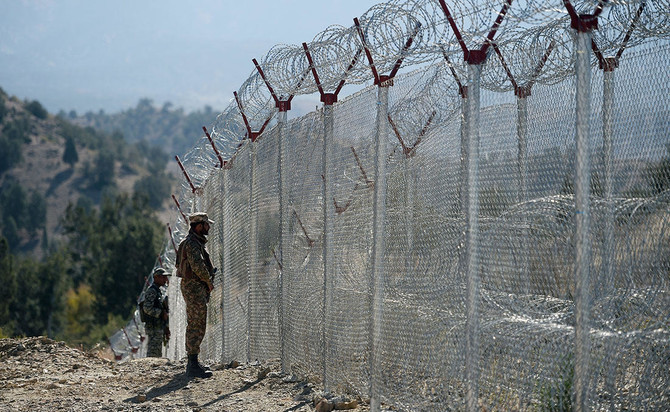
ISLAMABAD: Pakistan on Friday portrayed a fragile new truce with the Afghan Taliban as a hard-won step toward peace along their volatile border, but one laden with stern conditions and deep scepticism, as Islamabad demanded verifiable action against militants using Afghan soil to stage attacks inside its soil.
The agreement, hammered out over five gruelling days of talks in Istanbul mediated by Turkey and Qatar, commits both sides to sustaining a ceasefire, creating a monitoring mechanism to enforce it and imposing penalties for violations.
Yet Pakistani officials stressed that the deal was no panacea, merely a ‘conditional truce’ hinging on the Taliban’s demonstrable crackdown on groups like the Tehreek-e-Taliban Pakistan (TTP), which Islamabad derides as “Fitna al-Khawarij,” and the Balochistan Liberation Army, labeled “Fitna al-Hindustan.”
“Afghanistan should understand that this arrangement is a conditional truce, one which hinges on demonstrable responsibility by the Afghan side,” a senior security official said. “Still, the path to this accord was paved with fresh bloodshed.”
Last month, tensions erupted when Pakistan unleashed airstrikes on Oct. 9 against TTP sanctuaries in Afghanistan, prompting border clashes that raged for days until a ceasefire was sealed in Doha on Oct. 18 and 19. The Istanbul negotiations, originally slated for two days from Oct. 25 to 30, stretched into four as deadlock loomed and Pakistan’s delegation prepared to depart, only for mediators to coax them back.
“We would see these deliberations in Istanbul as comprehensive and all-encompassing as we move to the next stage,” Foreign Office spokesman Tahir Hussain Andarabi told reporters during his weekly briefing on Friday.
Operational details of the monitoring system are set to be nailed down when senior “principals” from both sides convene again in Istanbul on Nov. 6. For now, the border remains shuttered to Afghan transit trade, a decision rooted in ongoing security assessments. “The opening of the border for Afghan transit trade would depend on the evaluation of the security situation, and clearly that evaluation still warrants closure of the border,” Andarabi said.
Pakistan’s demands are unambiguous: concrete steps, including the dismantling of hideouts, severing supply lines, arresting or prosecuting TTP leaders, and transparent reporting through the new mechanism. Failure to deliver, officials warned, would void the truce.
“Pakistan reaffirms its commitment to peace and stability on its western border but equally emphasises that this ceasefire is not open-ended and not unconditional,” the security official said. “If Afghanistan fails to deliver verifiable proof of agreed steps, or if militants continue to launch attacks from Afghan soil, Pakistan will deem the ceasefire violated and reserves all options to safeguard its sovereignty and citizens.”
Even as diplomats touted progress, doubts lingered. Andarabi said the Taliban had privately conceded the TTP and other militants’ presence on Afghan soil during the talks, offering excuses for past inaction. “As far as the acknowledgement of their physical presence in Afghanistan is concerned, they agreed to it,” he added.
Defence Minister Khawaja Muhammad Asif also confirmed that the Taliban had accepted, at least privately, that their territory was being exploited for assaults on Pakistan. “The entire TTP leadership was present in Kabul,” he said. “The sanctuaries in Kabul must have been provided by the Afghan Taliban. They won’t be living in hotels.”
Asif floated the idea of enlisting multiple nations in the monitoring effort to avert collapse. “There is a ray of hope, but not because of Afghanistan and only so because of Qatar and Turkiye’s influence” over Kabul, he said, while noting recent ceasefire breaches from the Afghan side. “Until terrorism stops, the ceasefire cannot be effective.”
The Pakistani side in Istanbul leaned heavily on military and intelligence figures, though Andarabi insisted civilian leadership was fully invested. “Istanbul talks took place with full engagement from the Foreign Office,” he said. “The deputy prime minister and foreign minister gave guidance on numerous occasions. The foreign secretary and our Afghanistan Division were also engaged. We need to dispel this impression that there is some sort of fragmentation in our government apparatus.”
Turkey’s Foreign Ministry issued a joint statement post-talks, framing the outcome as a pledge for “lasting peace and stability.” But Andarabi downplayed it as a mere “preface to a book rather than as the book itself,” noting its omission of any nod to the TTP.
The military, too, projected resolve amid the diplomatic thaw. Inter-Services Public Relations Director General Lt. Gen. Ahmed Sharif Chaudhry told students and academics in Abbottabad on Friday that “any external aggression against Pakistan will be met with a firm and severe response.” His remarks, against the backdrop of Pak-Afghan friction, underscored Islamabad’s dual track: talks laced with the threat of force.
“Pakistan has taken effective steps against terrorism and Fitna Al Khwarij,” the general said, referring to the TTP. For Pakistan, the stakes are existential. Since the TTP abandoned a shaky ceasefire in November 2022, attacks have surged, especially in Khyber Pakhtunkhwa and Balochistan, claiming lives among security forces and civilians. Afghan assurances have rung hollow before, fueling a cycle of retaliation. “The single litmus test of Taliban sincerity is that Afghanistan will not allow its territory to be used for attacks against Pakistan,” the security official said.
Copyright © 2021 Independent Pakistan | All rights reserved