By Staff Reporter
KARACHI: The Asian Development Bank boosted its economic growth forecast for Pakistan in the current fiscal year, citing a milder-than-expected hit from flooding, stepped-up public investment and cooling inflation.
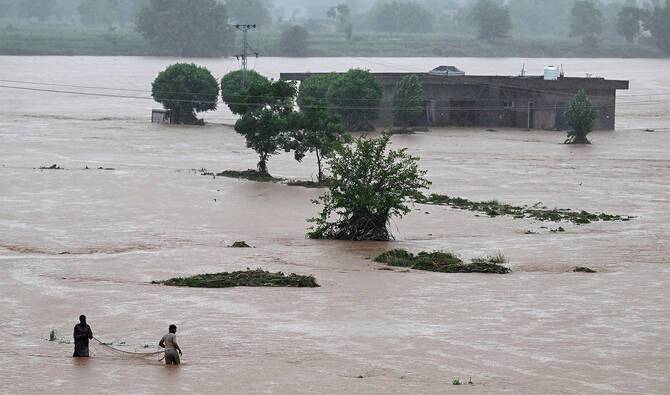
The Manila-based lender also lifted its outlook for South Asia as a whole in its Asian Development Outlook December 2025 report released on Wednesday, driven largely by upgrades for India and Sri Lanka. “In the case of South Asia, growth forecasts for 2026 have been revised upward for Sri Lanka and Pakistan, respectively, due to increased public investment and a less-severe-than-anticipated impact of flooding,” the ADB said.
The bank didn’t specify the new target for Pakistan’s 2026 growth, but noted that in July it had pegged the forecast at 3% and left it unchanged in September amid floods that struck Punjab’s agricultural core.
“The growth outlooks for Pakistan and Sri Lanka have improved for both 2025 and 2026,” the report said. It added that the government updated its estimate of GDP growth for FY25 to 3pc from a previously reported 2.7pc. “Despite disruptions that resulted from floods in June 2025, the economy grew 5.7pc in Q4FY25, and the country’s large-scale manufacturing expanded robustly in recent months in FY26.”
Pakistan’s inflation for the first four months (July-October) of FY26 was 4.7pc, down from 8.7pc in the same period a year ago, the bank said, adding “after a sharp increase in the months immediately after the floods, prices of key food items have begun to stabilise.”
For South Asia overall, the ADB now sees growth at 6.5% in 2025, up from a prior 5.9% estimate, while holding the 2026 projection steady at 6%. The revisions stem from robust domestic consumption in India, where the FY2025 forecast (ending March 2026) was hiked to 7.2% from 6.5%, reflecting stronger third-quarter expansion fueled by tax cuts. Indian GDP grew faster than expected at 8.2pc in the second quarter of FY25, with the 2026 outlook unchanged at 6.5pc.
Sri Lanka’s forecasts for 2025 and 2026 were revised upward due to robust credit expansion, buoyant consumption, and improved investor confidence following rating upgrades. In contrast, Bangladesh’s projection for the fiscal year ending June 30, 2026, was lowered due to weaker exports amid subdued global demand and supply disruptions, while the FY2025 forecast remains unchanged.
Pakistan’s fiscal year 2025 growth outlook is upgraded following a stronger-than-expected quarter (Q4). Despite disruptions that resulted from floods in June 2025, the economy grew 5.7 percent in Q4 fiscal year 2025, and the country’s large-scale manufacturing expanded robustly in recent months in fiscal year 2026.
Growth forecasts for the remaining South Asian economies are retained, although Nepal faces lingering uncertainty in the aftermath of civil unrest in September and the ongoing political transition, the ADB added.
On a broader scale, the ADB raised its growth forecasts for economies in developing Asia and the Pacific for this year and next, amid stronger-than-expected exports and reduced trade uncertainty following the conclusion of several trade agreements with the United States. Resilient exports — particularly of semiconductors and other technology products — moderating inflation, and stable financial conditions have strengthened the region’s growth outlook. “Asia and the Pacific’s solid economic fundamentals are underpinning robust export performance and steady growth, despite a global trade environment clouded by historic levels of uncertainty over the past year,” said ADB Chief Economist Albert Park.
“Trade agreements have partly eased that uncertainty, but external and other challenges could still weigh on the outlook. Governments in the region should continue to foster open trade and investment to sustain resilience and growth.” Risks to the regional outlook include renewed trade tensions and financial market volatility, as well as geopolitical pressures and a worse-than-expected deterioration in the People’s Republic of China’s (PRC) property market.
Inflation in developing Asia and the Pacific is expected to ease further to 1.6percent this year, compared with a 1.7percent projection in September. This mainly reflects lower-than-anticipated food inflation in India. The region’s inflation forecast for next year remains at 2.1percent. China’s growth forecast for this year has been raised slightly to 4.8pc from 4.7pc, amid resilient exports and continued fiscal stimulus. The outlook for 2026 was kept unchanged at 4.3pc. Southeast Asia’s growth projection for this year was also upgraded by 0.2 percentage points to 4.5pc, reflecting a strong third quarter in Indonesia, Malaysia, Singapore, and Vietnam.
Copyright © 2021 Independent Pakistan | All rights reserved