By Staff Reporter
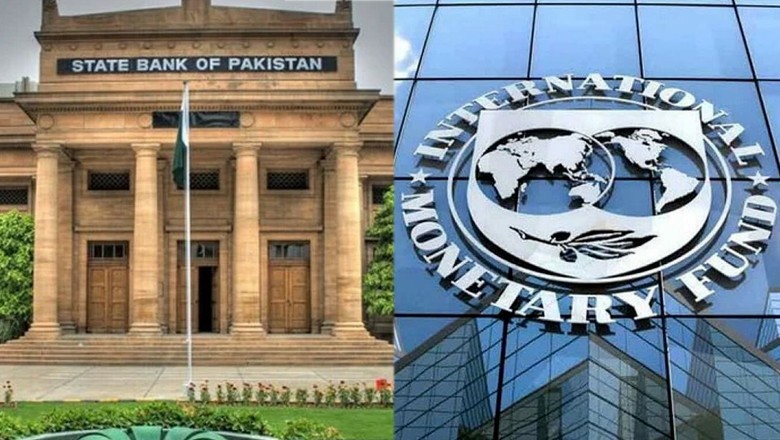
KARACHI: Pakistan received $1.2 billion from the International Monetary Fund after the lender approved reviews of the South Asian nation’s bailout programs, providing a boost to its foreign reserves amid efforts to stabilise the economy.
The State Bank of Pakistan said on Thursday it had received SDR 914 million, equivalent to about $1.2 billion, under the Extended Fund Facility and Resilience and Sustainability Facility on Dec. 10. The amount will be reflected in the central bank’s foreign exchange reserves for the week ending Dec. 12.
The IMF’s Executive Board completed the second review of the 37-month EFF and the first of the climate-focused RSF in a meeting held in Washington earlier this week. With this tranche, total disbursements under the EFF and RSF now stand at approximately $3.3 billion, supporting macroeconomic stabilisation and long-term structural reforms for climate resilience.
Pakistan’s strong program implementation, despite recent devastating floods, has maintained stability and improved financing and external conditions, the IMF said in a statement. Policy priorities remain centered on maintaining macroeconomic stability and advancing reforms to strengthen public finances, enhance competition, raise productivity and competitiveness, bolster the social safety net and human capital, reform state-owned enterprises, and improve public service provision and energy sector viability.
Fiscal performance has been strong, with a primary surplus of 1.3% of gross domestic product achieved in fiscal 2025, in line with program targets. Gross reserves stood at $14.5 billion at the end of fiscal 2025, up from $9.4 billion a year earlier, and are projected to continue rebuilding in fiscal 2026 and over the medium term. Inflation has increased, reflecting the impact of the floods on food prices, but this is expected to be temporary. “In the face of an uncertain global environment, Pakistan needs to maintain prudent policies to further entrench macroeconomic stability, while accelerating reforms necessary to achieve stronger, private-sector-led, and sustainable medium-term growth,” IMF Deputy Managing Director and Acting Chair Nigel Clarke said.
Advancing reforms to raise revenues via tax policy simplification and base broadening is key to achieving fiscal sustainability and building the fiscal space necessary to boost climate resilience, social protection, human capital development, and public investment, Clarke said. “Reforms in the energy sector are critical to safeguarding its viability and improving Pakistan’s competitiveness,” he added. Timely power tariff adjustments had helped reduce the stock and flow of circular debt, while subsequent efforts need to focus on sustainably reducing electricity production and distribution costs and addressing inefficiencies in the power and gas sector.
Pakistan’s reform implementation under the EFF arrangement has helped preserve macroeconomic stability in the face of several recent shocks, Clarke said. Real GDP growth has accelerated, inflation expectations have remained anchored, and fiscal and external imbalances have continued to moderate. The authorities’ commitment to the fiscal 2026 primary balance target while accommodating urgent relief needs in response to the recent severe floods is a strong signal of their commitment to build fiscal policy credibility, the statement said.
An appropriately tight monetary policy stance has been pivotal in reducing inflation and should be maintained to ensure inflation remains anchored within the SBP’s target range. Further improvements in central bank communication will support effective monetary policy implementation. The SBP should continue efforts to deepen the interbank foreign exchange market, while allowing exchange rate flexibility to absorb shocks. Decisive financial regulation enforcement is necessary to maintain a sound and adequately capitalized financial sector. At the same time, promoting capital market development will help expand the public and private sectors’ financing options. Efforts to advance structural reforms should continue to unlock growth potential and attract high-impact private investment. To this end, the publication of the Governance and Corruption Diagnostic report is a welcome step in accelerating governance reforms. Additional efforts should focus on SOE governance reforms and privatization, enhancing the business environment and improving economic data and statistics.
The latest IMF projections for Pakistan suggest that the immediate risk of economic free fall has eased but the country remains locked into a narrow stabilisation path marked by weak growth, heavy debt and limited relief for households. Following the loan approval, Prime Minister Shehbaz Sharif said the IMF financial announcement highlights Pakistan’s progress in implementing the measures necessary for economic stability and growth. The IMF’s acknowledgement of the effective execution of economic reforms and initiatives in Pakistan is a clear recognition of the hard work of Finance Minister Muhammad Aurangzeb and his team.
Copyright © 2021 Independent Pakistan | All rights reserved