By Staff Reporter
ISLAMABAD: The long-delayed local government elections in the capital, Islamabad, are poised for yet another postponement, the fifth in a row, after the federal cabinet on Friday approved a raft of amendments to the law governing the polls, casting fresh doubt on a vote already scheduled for Feb. 15.
The changes, which include scrapping the Metropolitan Corporation Islamabad in favour of three new “Town Corporations” aligned with the city’s National Assembly constituencies, have effectively upended preparations for the elections, according to officials and political observers.
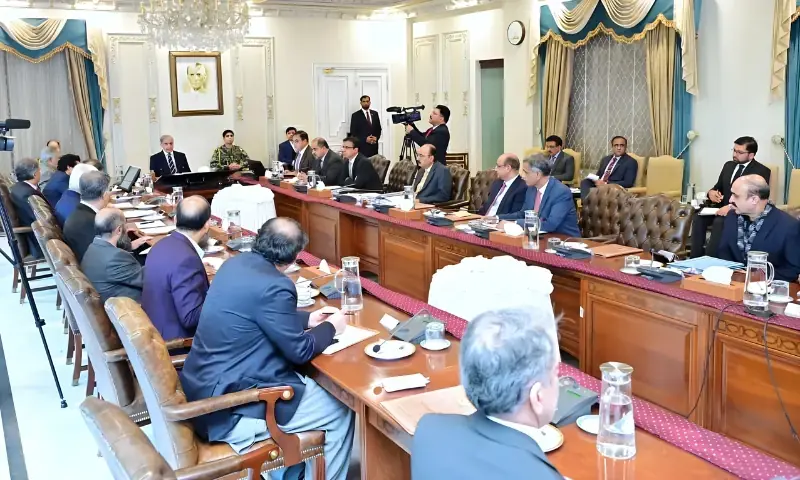
The Election Commission of Pakistan has not yet formally announced a delay, but experts say the revisions make holding the vote next month all but impossible. The cabinet’s decision, detailed in an official statement released after the meeting, endorsed 14 amendments to the Local Government Act of 2015. Among them is a proposal to divide Islamabad into three town corporations, each encompassing, as far as practicable, the boundaries of one of the capital’s three National Assembly seats.
“The cabinet endorsed the decisions made in the meeting of the Cabinet Committee for Legislative Cases on December 30, 2025, which also include confirmation of action regarding the Islamabad Capital Territory Local Government (Amendment) Ordinance, 2025,” the statement said.
The move has reignited partisan tensions in the capital, where around 2.5 million residents have endured persistent problems like water shortages and unpaved streets since the last local government’s term expired in February 2021. Without elected local bodies, basic services have languished under bureaucratic oversight, and repeated election delays have fueled accusations of political maneuvering.
When the Election Commission announced the latest schedule last month, the local wing of the opposition Pakistan Tehreek-i-Insaf party claimed the government would seek an “escape route” to avoid the polls. Leaders of the ruling Pakistan Muslim League-Nawaz dismissed the allegation, insisting that the amendments were essential for enhancing service delivery and that their party, which triumphed in the last vote, would prevail again.
The history of these delays stretches across multiple administrations, underscoring a broader reluctance to devolve power to grassroots levels in the federal territory. The PTI, led by former Prime Minister Imran Khan, was in charge when the previous local government’s term expired in 2021. Under the law, fresh elections were required within 120 days, but the government took few concrete steps to organize them.
The subsequent coalition under the Pakistan Democratic Movement (PDM), inherited the impasse and extended it. Initially, plans called for voting in 50 union councils — the basic units of local representation. But officials argued for expansion to 101 councils, prompting fresh boundary redraws and further postponements.
Even after settling on 101, the PDM pushed to increase the number to 125. Elections were tentatively set for that configuration, only for the government to propose more seats per council in September of last year. The Election Commission eventually committed to proceeding with 125 councils last month, but the latest amendments have upended that timeline by dismantling the metropolitan structure in favor of the town corporations.
The commission has redrawn constituencies repeatedly and issued multiple schedules over the years, each scuttled by legal or administrative hurdles. In one particularly dramatic episode a few years back, a vote was called off just a day before polls were to open.
Islamabad’s experiment with local democracy remains limited. The first — and so far only — such elections unfolded in 2015 and 2016, under a system with just 50 union councils. The PML-N dominated, installing Sheikh Anser Aziz as the city’s mayor.
Copyright © 2021 Independent Pakistan | All rights reserved